
Abstract
Despite the growing application of machine learning models in coronary artery disease prediction, there remains little or no evidence on the equity-aware and interpretable machine learning models, techniques, approaches to address bias, and performance metrics. Therefore, using a systematic review of literature, this study examines equity-aware and interpretable machine learning models for coronary artery disease prediction. The study adopted the systematic review approach, collecting data from five (5) databases, which include Scopus, Web of Science, Taylor and Francis, Emerald, Sage, and EBSCOhost. Using the PRISMA framework, a total of seventeen (17) articles were finally selected and formed the basis for the analysis. Findings showed that there are different types of machine learning models that have been applied to coronary artery disease (CAD), which include TransFair, explainable AI (XAI), deep learning models, and machine learning algorithms. Results showed that the adoption of XAI techniques are prevalent techniques in interpretable machine learning models. Findings revealed that there are several strategies used by machine learning models to address bias and improve equity in CAD prediction. The findings showed that there is a wide range of performance metrics to evaluate predictive models, which include accuracy, sensitivity, specificity, F1 score, area under the receiver operating characteristics curve (AUC), and Brier score. Results showed that there are several clinical and health system applications of interpretable and equity-aware machine learning models. The study concludes that different equity-aware machine learning models integrated with interpretable techniques demonstrate potential for enhancing coronary artery disease prediction, which support clinical decision-making and promote equitable healthcare delivery.
Keywords
machine learning models equity-aware machine learning models interpretable machine learning models performance metrics of equity-aware
1. Introduction
Generally, the prevailing disease in the world is “heart disease” in the human being. According to the survey of each year, 18 million people worldwide is dying due to the cardiovascular diseases [13]. Meanwhile, this coronary artery disease (CAD) exacerbates to be a leading global health, and this is driven by complicated risk factors which include: Genetics, lifestyle, and socioeconomic determinants that contribute to its onset and progression [21]. Rapidly, the evolution of machine learning (ML) models has come to transformed the coronary artery disease (CAD) prediction by leveraging massive and ubiquitous datasets to spots patterns and predicting risks more accurately than the conventional scoring systems like ‘Framingham Risk Score’ in some cases [14]. Yet, the deployment of these models raises some significant questions regarding the “equity and interpretability” because the biases entrenched in training data may propagate the health disparities across the demographic groups; while the opaque “black-box” algorithms impede the clinical trust, and adoption [27]. Therefore, the equity-aware approaches may be used to address the possible biases in gender, race, and socio-economic status for the fair outcomes, and how interpretable models can be used for transparency in decision-making so that it can promote the ethical healthcare interventions.
According to Stiglic et al. (2020), the interpretable machine learning models refers to the predictive algorithms which is designed to provide the transparent, and clinical explanations on how to input variables to support the specific outcomes. Contrarily, the conventional ‘black-box’ systems are models used to clarify the direction, and the magnitude of feature contribution so that trust, accountability, and the clinical applicability are in high stakes such as CAD predictions [25]. Drawing on the foregoing, the interpretable machine learning models are used to enhance CAD prediction by elucidating the contributions of individual features, then, bridge the gap between the algorithmic output and clinical understanding [23]. The authors indicated that there are techniques such as ‘SHAP’ have been widely incorporated with models like ‘XGBoost’ to decompose the predictions and illustrate the risk factors.
Several studies have used different datasets to develop machine learning models as it concerns coronary artery disease predictions. Rani et al. (2024) used the Z-Alizadeh Sani dataset to develop tmachine learning models for the detection of coronary artery disease (CAD), and among these, an XGBoost framework was employed. The study exemplified that XGBoost framework performed very well for CAD risk stratification alongside SHAP identifying valvular heart disease, hypertension, and diabetes as top predictor enabling the reliable productivity estimates for early screening. Similarly, the SHAP interpretations in a Japanese population-based showed the multifactorial influences on coronary artery disease (CHD) risk by emphasizing the role of traditional markers such as blood pressure and cholesterol in shaping the model decisions [28].
Furthermore, Tasmurzayev et al. (2025) established that an alternative methodological approach has involved the incorporation characteristic of decomposing techniques within the deep learning architecture. Noh and Cho (2022) established age as essential predictors, and thereby reinforcing the paramount of interpretability in substantiating cardiovascular disease risk assessment. Similarly, the coronary heart disease (CHD) risk modelling is often incorporated with Generative Adversarial Imputation Network (GAIN) to identify the missing data handling, and the interpretable machine learning integration with SHAP to demonstrated the performance in baseline models [4]. Sarra et al. (2022) supported that the transition toward the explainable artificial intelligence (XAI) frameworks collectively improve the predictive metrics, and advance the clinical trust in evidence-based decision making. Jointly, these aforementioned developments stressed the necessity of interpretability in CAD prediction especially where diagnostic transparency, clinical confidence, and patient safety are important.
Tran et al. (2025) postulated that the equity-aware machine learning models have arisen as an acute response to systemic biases embedded in cardiovascular datasets. The authors stressed that the equity-aware machine learning refers to predictive frameworks that is intentionally designed to ensure the fair performance across the protected attributes which include; Gender, race, and socioeconomic status. Alongside, in coronary artery disease (CAD) predictions, this concern is very vital because the historical clinical data usually reflect disparities in healthcare access, treatment, and diagnoses results [31].
Thus, when such imbalances remain open, the models’ risk might perpetuate and amplify the inequities [17]. The authors implied that the evaluation of large-scale cardiovascular showed measurable gender disparities, and this equal opportunity differences reaching 0.136, and disparate impact approximate to 1.587; so, stressing the need for structured debiasing strategies such as resampling, and equity optimization during model training is important. Sufian et al. (2024) argued that AI-driven cardiovascular imaging can be used to demonstrates that equity-aware algorithms which can substantially diminish demographic disparities. Mhasawade et al. (2021) emphasized the need for a methodical assessment of equity metrics in public health machine learning, measuring bias in heart disease models using metrics like “Theil Index, false positive rare (FPR), and positive predive rate (PPRP) to manage the protected attributes, adversarial debiasing, and using the federated learning framework to improve the privacy while decreasing the racial and gender disparities in prediction.
Therefore, the integration of equity-aware and interpretable machine learning models collectively has immense implication for coronary artery disease prediction management. Based on the foregoing, the interpretability techniques such as SHAP and local interpretable model agnostic are used to enhance the transparent, and clinical trust, equity-aware optimization, and ensures that predictive benefits are equitably spread across the demographic groups. Thereafter, these approaches support the bias-sensitive risk stratification, and ethically grounded on decision support, and inclusive cardiovascular care. However, there are still some persistent pitfalls that related to dataset representativeness, external validation, and balancing accuracy with equity to ensure equitable and clinical (CAD) prediction systems. Based on the foregoing discussion, this study seeks to examine equity-aware and interpretable machine learning models for coronary artery disease prediction using systematic review approach. Specific research questions for the study are as follow:
What equity-aware machine learning models have been applied in the prediction of coronary artery disease?
What interpretable machine learning techniques are used to explain predictions of coronary artery disease?
How do equity-aware machine learning approaches address bias in coronary artery disease prediction models?
What are the performance metrics and predictive accuracies of equity-aware and interpretable machine learning models for coronary artery disease prediction?
What clinical and decision support applications of equity-aware and interpretable machine learning models for coronary artery disease prediction?
2. Methodology
Using the systematic review approach, this study seeks to understand equity-aware and interpretable machine learning models for coronary artery disease prediction. The systematic review approach allows for structured synthesis of the literature in the focused area, which allows for methodological approach to answering identified of questions [20]. This aids repeatability and credibility, which enhances the transparency of the study. This approach is often used because it offers precise and illustrative guide that improve the accuracy of the findings, which is not obtainable in a narrative review. Meanwhile, some set of databases were consulted for this study owing to their relatedness with the studied area and the high probability of retrieving relevant literature from the databases. The databases consulted include Scopus, Web of Science, Taylor and Francis, Emerald, Sage, and EBSCOhost.
The study used the appropriate keywords and search terms to enhance the retrieval of relevant literature that would answer the identified research questions of the study [2]. The databases consulted were with a focus on the sample, phenomenon of interest, design evaluation, and research type (SPIDER) search technique (see Table 1). The reason for this is that the study is quite epochal and may need to focus on either quantitative or qualitative studies, or mixed methods. The SPIDER strategy is considered appropriate for this study as it seeks to allow for wider reach and studies [6]. This is due to the need to allow for a comprehensive data or information on colonial scientific forestry and its challenges in the Gambia. Meanwhile, in order to find enough evidence on the studied area, the search techniques involved the use of Boolean operators “AND” and “OR” to broaden the search scope [20].
| SPIDER | Content |
| Sample | Patients or individuals assessed for coronary virus disease and clinical datasets containing patient information on coronary virus disease |
| Phenomenon of Interest | Development and application of equity-aware machine learning models designed to reduce bias |
| Design | Published literature of both qualitative and mixed-methods research |
| Evaluation | Predictive performance metrics and model interpretability and transparency |
| Research type | Quantitative, qualitative, mixed methods research, and computational methodological studies |
Source: Author’s fieldwork (2025)
The SPIDER framework ensured a structured approach to understand equity-aware and interpretable machine learning models for coronary artery disease prediction. Using the SPIDER tool in the search query produced a large number of hits/results. Subsequently, inclusion and exclusion criteria were introduced, which appraise the search results to produce only the most relevant studies to the review (see Table 2). The criteria considered in the selection process of the final selected articles include studies published in any period. This is because the current study is epochal in nature and studies of any period may be of significant relevance or usefulness. Meanwhile, duplicated publications were expunged and those published in other languages other than English were deleted. Also, the studies selected are both primary and secondary research studies. This is because the current study is considered to be more of computational research methodological studies. Using all these inclusion and exclusion criteria, the final selected literature for this study is sixteen (16).
| Inclusion and exclusion criteria | No. of hits | Justifications for search criteria |
| Studies published (2015-2026) | 895 | This is to ensure that all relevant recent studies are included, which enhance the recency of the evidences |
| Duplicate publications removed | 452 | This is to avoid redundancy in the retrieved literature |
| Literature published in English language | 450 | This is to ensure that all the literature are in understandable language to allow analysis |
| Both primary and secondary research | 350 | This is to have both primary and secondary research findings |
| Studies focusing on machine learning models for coronary artery disease | 50 | This is to contextualize the literature analysis to studies that focused on equity-aware and interpretable machine learning models for coronary artery disease |
| Full-text only | 35 | Full-text allows critical review and analysis of the literature |
| Quantitative, qualitative, mixed-methods research, and computational methodologies. | 17 | This is to analyze research findings that provide deeper understanding of experience, phenomenon, and context. |
Source: Author’s fieldwork (2026)
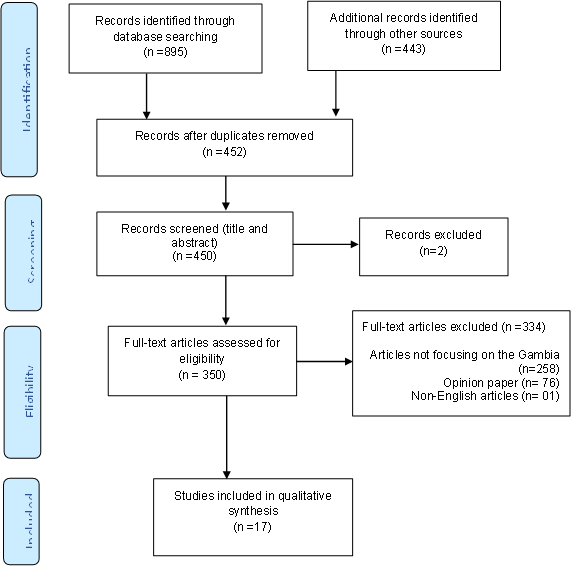
Meanwhile, the data collection process was ensured in similar structured manner through Preferred Reporting Items for Systematic Review and Meta-analyses (PRISMA) (see Fig. 1). The framework is appropriate for systematic review studies, which is one this study adopted. Meanwhile, the framework has four (4) phases, which include identification, screening, eligibility, and included. In the initial search of the different databases, a total of 895 items were extracted from the different databases. After this, duplications were checked and only 443 items from the collected data were expunged as having duplicates in the returns. Next, the titles and abstracts of the articles were checked for relevance and whether they are relatable to the current study, and only two (2) articles were removed. After all these, the remaining items were examined with the inclusion and exclusion criteria that were set for the study. From this, only sixteen (16) articles were finally selected for this study. These sixteen (16) articles serve as the datasets for the study. Moreover, the collected data were extracted on a data extraction sheet (see Appendix I). Data analysis was conducted using the “a priori” thematic analysis.
3. Results and Discussion
On the research question one, which focuses on equity-aware machine learning models applied in the prediction of coronary artery disease, evidence suggests that there are different types of machine learning models that have been applied to coronary artery disease (CAD). Lin and [11] used TransFair framework, which applies equity-aware transfer learning to reduce bias propagation while maintaining predictive performance and demonstrates the feasibility of embedding equity principles into predictive healthcare models. Deep learning models such as hybrid multitask BERT (MT-BERT) model was used by Liu et al. (2025) to integrate structured and unstructured health record data to predict 10-year cardiovascular disease risk. The model contributes to equitable cardiovascular risk assessment by supporting individualized risk stratification across demographics. Aside from the deep learning approach, Oluwagbade et al. (2024) used conventional machine learning algorithms (logistic regression, random forests, and gradient boosting machines) to predict cardiovascular outcomes among Medicare beneficiaries. The study used social determinants to improve the identification of vulnerable populations such as Hispanic, Black, rural, and low-income groups. Recently, Alisoufi et al. (2026) developed a CatBoost-based explainable AI model for CAD risk stratification using minimal clinical data. The model indicates good predictive performance, revealing disparities across demographics, especially with respect to gender. This underscores the importance equity evaluation before implementing predictive models in clinical practice.
On the research question two, which focuses on interpretable machine learning techniques used to explain prediction of coronary artery disease, evidence indicates that explainable artificial intelligence (XAI) techniques are used for interpretable machine learning models. Among the different types of XAI techniques, SHapley Additive exPlanation (SHAP) are the most used applied interoperability approach. Using SHAP to interpret predictions from machine learning models, Wang et al. (2021) identified key contributing risk factors and provided individualized explanations for model predictions, thereby improving transparency and clinical understanding. Similarly, Tasmurzayev et al. (2025) applied SHAP to interpret an XGBoost-based coronary artery disease prediction model, which revealed that hypertension and valvular heart disease were the common predictors of CAD. Kiran et al. (2025) combined multiple explainability techniques to provide both local and global explanations to illustrate feature importance and prediction pathways. Studies ([3]; [7]; [8]; [32]; [33]) have employed SHAP-based interpretability across multiple CAD prediction to reveal the influence of risk factors such as blood pressure, cholesterol levels, age, and imaging-derived features.
On research question three, which focuses on how equity-aware machine learning approaches address bias in coronary artery disease prediction models, evidence indicates that there are several strategies through which machine learning models address bias and improve equity in CAD prediction. Lin and [11] used TransFairframework as an application of equity-aware transfer learning, which ensures equity constraints embedded in initial classification models are preserved when the model is adapted to new prediction tasks. This would help prevent the transfer of algorithmic bias. Oluwagbade et al. (2024) incorporated socioeconomic and environmental variables into machine learning models predicting medication adherence and cardiovascular outcomes. The models help improve sensitivity in identifying underserved populations. Liu et al. (2025) detected bias through subgroup performance analysis. The study shows significant heterogeneity in model performance across ethnic groups, with lower predictive accuracy observed among South Asian and Black populations. Alisoufi et al. (2026) showed that differences have also been observed in model sensitivity between male and female patients in a CAD prediction model. These disparities emphasize the necessity of equity assessment and recalibration prior to real-world deployment.
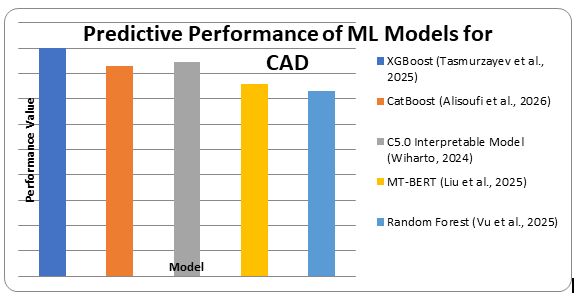
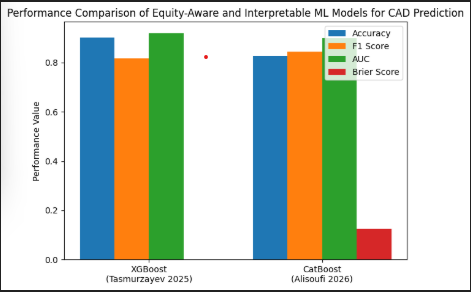
On research question four, which focuses on the performance metrics and predictive accuracies of equity-aware and interpretable machine learning models, evidence suggests that there is a wide range of performance metrics to evaluate predictive models, which include accuracy, sensitivity, specificity, F1 score, area under the receiver operating characteristics curve (AUC), and Brier score. Tasmurzayev et al. (2025) showed that an XGBoost model achieved 90.11% accuracy, an F1 score of 0.8163, and an AUC of 0.92, which indicates that there is excellent discriminative capability for CAD risk classification. Also, Alisoufi et al. (2026) found that a CatBoost model achieved an accuracy of 0.828, sensitivity of 0.841, F1 score of 0.844, and AUC of 0.90, while maintaining acceptable calibration with a Brier score of 0.125. Liu et al. (2025) revealed AUROC values ranging from 0.736 to 0.782 for the multitask BERT model across validation datasets. Other models indicate moderate to high predictive accuracy. [30] showed an accuracy of 84.64% using an interpretable C5.0 model for coronary heart disease detection, while Vu et al. (2025) found that a random forest model achieved an AUC of 0.73 with balanced sensitivity and specificity in a population-based cohort.
On research question five, which focuses on clinical and decision support applications of equity-aware and interpretable machine learning models for CAD prediction, evidence suggests that there are several clinical and health system applications of interpretable and equity-aware machine learning models. Studies ([25]; [33]; [7]) have shown that predictive models are capable of identifying individuals at high risk of CAD based on clinical, demographic, and imaging variables. This indicates that one important application is early detection and risk stratification of coronary artery disease. Two of the final selected studies ([9]; [29]) showed that using interpretable AI techniques, such as SHAP and LIME, clinicians can understand how specific factors influence risk predictions. This would enable more informed decision-making with respect to diagnosis, treatment planning, and patient monitoring. Oluwagbade et al. (2024) showed that machine learning models incorporate social determinants of health, which help to identify vulnerable population at higher cardiovascular risk and may guide relevant intervention programs. Fernandes et al. (2025) highlight the integration of electronic health records, wearable devices, and predictive analytics support patient-centered decision support systems. This helps to deliver personalized insights while maintaining transparency and clinician oversight.
4. Conclusion
The study concludes that there are several types of machine learning models that have been applied to coronary artery disease (CAD). Some of the models include TransFair, hybrid multitask BERT (MT-BERT) model, conventional machine learning algorithms (logistic regression, random forests, and gradient boosting machines), and CatBoost-based explainable AI model. The study recognized that the interpretable machine learning techniques used to explain the prediction of coronary artery disease include explainable artificial intelligence (XAI) with SHapley Additive exPlanation (SHAP) being the most commonly used. The study established that there are several strategies through which machine learning models address bias and improve equity in coronary artery disease prediction. The machine learning models help to prevent transfer of algorithmic bias and improve sensitivity in identifying underserved populations. The study established that there is a wide range of performance metrics to evaluate predictive models, which include accuracy, sensitivity, specificity, F1 score, are under the receiver operating characteristics curve (AUC), and Brier score. The study established that interpretable and equity-aware machine learning models have demonstrated substantial potential in enhancing CAD prediction, improving clinical decision-making, and promoting equitable healthcare delivery.
5. Implications
The study findings provide implications for policy, practice, theory, and society. The findings highlight the need for the design and implementation of policies that will promote the integration of artificial intelligence into cardiovascular healthcare systems. Government health agencies should implement guidelines that ensure equity, transparency, and accountability in the deployment of machine learning models used for coronary artery disease prediction. The study indicates that there is a need for national health policies that would encourage the adoption of equity-sensitive AI systems to reduce disparities in cardiovascular risk assessment among different demographics. Moreover, there is a need for government to invest in national health data infrastructures that ensure inclusive and representative datasets, especially for underrepresented populations. Regulatory bodies, like Department of Health and Human Services in the US and Medicine and Healthcare Products Regulatory Agency in the UK, should support in standardizing evaluation frameworks for interpretable machine learning models to ensure that AI-driven clinical decision support systems align with ethical standards and patient safety requirements.
The findings have implications for clinical practice as it suggests that interpretable and equity-aware machine learning models can enhance decision-making among clinicians involved in coronary artery disease care. Clinicians often require transparent predictive systems that provide understandable explanations for risk predictions, especially in high-stakes medical contexts such as coronary artery disease diagnosis and prevention. The study established that interpretable models can enable clinicians to better understand the contribution of clinical variables, such as cholesterol levels and blood pressure, to individual patient risk profiles. This transparency would enhance trust in AI-supported decision systems and improves the integration of predictive tools into routine clinical workflows. Moreover, equity-aware models may support clinicians in identifying high-risk populations that might otherwise be overlooked due to biases in traditional predictive approaches. Therefore, healthcare practitioners may be able to implement more personalized and equitable prevention strategies, which improves early detection, treatment planning, and patient monitoring for coronary artery disease.
The study has theoretical implications within the fields of machine learning, health informatics, and clinical epidemiology. The growing application of equity-aware and interpretable machine learning approaches demonstrates the theoretical shift from performance-driven predictive modeling toward ethically and socially responsible AI systems. This shift encourages the integration of fairness metrics, explainability frameworks, and bias mitigation techniques into predictive health modeling. The study underscores the importance of using interdisciplinary approaches that combines computational modeling with public health, health equity research, and medical knowledge. This development extends theoretical discourse of clinical decision support systems by incorporating accountability, transparency, and fairness in algorithmic design.
The findings have implications for the society as there is potential of equitable and interpretable AI technologies to improve public trust in digital health. Patients and communities would be open to accept and engage with AI-support healthcare systems when the predictive models are transparent and designed to reduce bias. Also, improved coronary artery disease prediction may help reduce mortality, morbidity, and healthcare cost, especially those that are associated with cardiovascular diseases. Moreover, equitable predictive models can help address agelong health disparities by ensuring that vulnerable populations received accurate risk assessments and timely interventions. Lastly, the application of equity-aware and interpretable machine learning models in coronary artery disease prediction contributes to inclusive healthcare systems.
APPENDIX
DATA EXTRACTION TOOL
Equity-Aware and Interpretable Machine Learning Models for Coronary Artery Disease Prediction: A Systematic Review of Literature
| S/N | Research titles and authors | Aims | Methodology | Findings |
| 1 | TransFair: Transferring fairness from ocular disease classification to long-term progression prediction.Lin and [11] | The study aims to use TransFair to transfer disease classification to long-term progression prediction. | This study proposes TransFair, a methodological framework for transferring fairness principles from ocular disease classification models to progression prediction tasks | Preliminary findings suggest that applying fairness-aware transfer learning enhances generalizability and reduces bias propagation, without significantly sacrificing accuracy.Moreover, the proposed methodology demonstrates potential in advancing personalized healthcare by integrating both predictive performance and ethical responsibility. This research contributes to the emerging paradigm of fairness in AI for healthcare by addressing a dual challenge: ensuring accuracy in glaucoma progression prediction and embedding fairness constraints during knowledge transfer.Ultimately, TransFair highlights the importance of equity-driven design in digital medicine, aiming to safeguard trust, inclusivity, and sustainability in clinical decision-support systems. |
| 2 | Improving access and outcomes in cardiovascular care for racial and ethnic minorities.Trans et al. (2025) | The study evaluates epidemiology, access disparities, and outcomes in minority populations, highlighting barriers such as workforce underrepresentation, insurance instability, referral bias, and patient mistrust rooted in historical discrimination. | Quantitative research approach. | Policy-level reforms, such as Medicaid expansion, integration of equity metrics into hospital performance dashboards, and embedding social needs screening into electronic health records, represent essential system-level strategies.Emerging technologies, including artificial intelligence and digital health tools, hold promise but require equitable implementation to avoid reinforcing existing biases. The study emphasizes closing data gaps, diversifying the cardiovascular workforce, strengthening inclusive clinical trial participation, and aligning multisector collaborations to address upstream determinants of health. By embedding equity into policy, clinical practice, and research, health systems can move toward achieving sustainable and equitable cardiovascular care for all populations. |
| 3 | Estimating 10-Year cardiovascular disease risk in primary prevention using UK electronic health records and a hybrid multitask BERT model: retrospective cohort study. Liu et al. (2025) | This study aims to develop a hybrid multitask deep learning model (MT-BERT) integrating structured and textual features from electronic health records (EHRs) to predict 10-year CVD risk, enhancing individualized stratification and supporting equitable assessment across diverse demographic groups. | The study used data from Clinical Practice Research Datalink (CPRD) Aurum comprising 469,496 patients aged 40‐85 years to develop MT-BERT for 10-year CVD risk prediction. Structured EHR variables and their corresponding textual representations were jointly encoded using a multilayer perceptron and a distilled version of the BERT model (DistilBERT), respectively. | The MT-BERT model yielded AUROC values of 0.744 (95% CI 0.738‐0.749) in males and 0.782 (95% CI 0.768‐0.796) in females on the test set (n=711,052), and 0.736 (95% CI 0.729‐0.741) and 0.775 (95% CI 0.768‐0.780), respectively in “spatial external” validation (n=144,370). Brier scores were 0.130 in males and 0.091 in females. Individuals classified as high-risk (≥40% risk in males and ≥34% in females) demonstrated significantly reduced 10-year event-free survival relative to lower-risk individuals (log-rank P<.001). Model performance was consistently higher in females across all metrics. Subgroup analyses revealed substantial heterogeneity across ethnicity and deprivation (I²>70%), especially among males, with lower AUROC in South Asian and Black ethnic groups. These findings reflect variation in model performance across demographic groups while supporting its applicability to large-scale CVD risk stratification. |
| 4 | Leveraging machine learning to predict medication adherence and cardiovascular outcomes under centralized pharmaceutical procurement: A Medicare Part D analysisOluwagbade et al. (2024) | The study leverage machine learning (ML) techniques to model and predict medication adherence and its impact on cardiovascular outcomes among Medicare Part D beneficiaries. | Using a nationally representative dataset comprising prescription claims, demographic profiles, clinical risk indicators, and longitudinal cardiovascular event data, the study implemented supervised learning algorithms—logistic regression, random forests, and gradient boosting machines—to identify high-risk populations with suboptimal adherence. | The study highlights the utility of ML as a policy tool to optimize procurement strategies and tailor interventions aimed at improving adherence. It further emphasizes the need for integrating real-time analytics into Medicare infrastructure to pre-empt adverse outcomes and enhance patient-centered pharmaceutical care under centralized systems.The study integrated social determinants of health (SDOH) and behavioural data to capture the contextual complexities influencing adherence behaviours. By accounting for neighbourhood deprivation, income level, and healthcare access, the model demonstrated improved sensitivity in identifying at-risk subpopulations such as Black, Hispanic, low-income, and rural beneficiaries [35]. This reinforced the model’s value not only in clinical forecasting but in guiding health equity strategies across payer systems. |
| 5 | Interpretable prediction of 3-year all-cause mortality in patients with heart failure caused by coronary heart disease based on machine learning and SHAP. Wang et al. (2021) | This study sought to evaluate the performance of machine learning (ML) models and establish an explainable ML model with good prediction of 3-year all-cause mortality in patients with heart failure (HF) caused by coronary heart diseases (CHD). | We established six ML models using follow-up data to predict 3-year all-cause mortality. Through comprehensive evaluation, the best performing model was used to predict and stratify patients. Finally, an explainable approach based on ML and the SHapley Additive exPlanations (SHAP) method was deployed to calculate 3-year all-cause mortality risk and to generate individual explanations of the model's decisions. | SHapley Additive exPlanations (SHAP) was leveraged to provide an interpretation of the prediction model with contributing risk factors leading to death in patients with heart failure (HF) caused by coronary heart disease (CHD). It fills the deficiency of ML study in predicting the prognosis of heart failure (HF) caused by CHD, especially the risk of death in the medium and long term.Provides intuitive explanations that lead patients to predict risks, thereby helping clinicians understand the decision-making process for assessing disease severity. |
| 6 | Interpretable machine learning for coronary artery disease risk stratification: A SHAP-Based analysis. Tasmurzayev et al. (2025) | This study aimed to develop and rigorously evaluate a calibrated, interpretable machine learning framework for CAD prediction. | The study used 56 routinely collected clinical and demographic variables from the Z-Alizadeh Sani dataset (n = 303). A systematic protocol involving comprehensive preprocessing, class rebalancing using SMOTE, and grid-search hyperparameter tuning was applied to five distinct classifiers. | The XGBoost model demonstrated the highest predictive performance, achieving an accuracy of 0.9011, an F1 score of 0.8163, and an Area Under the Receiver Operating Characteristic Curve (AUC) of 0.92. Post hoc interpretability analysis using SHAP (Shapley Additive Explanations) identified HTN, valvular heart disease (VHD), and diabetes mellitus (DM) as the most significant predictors of CAD. Furthermore, calibration analysis confirmed that the mode’s probability estimates are reliable for clinical risk stratification. This work presents a robust framework that combines high predictive accuracy with clinical interpretability, offering a promising tool for early CAD screening and decision support. |
| 7 | Interpretable machine learning for in-hospital mortality risk prediction in patients with ST-elevation myocardial infarction after percutaneous coronary interventionsShakhgeldyan et al. (2024) | This study aims to develop an explainable machine learning model for in-hospital mortality (IHM) risk prediction in STEMI patients after myocardial revascularization by percutaneous coronary intervention (PCI). | A single-center observational retrospective study was conducted, enrolling 4677 electronic medical records of patients with STEMI after PCI, which were analyzed using statistical analysis and machine learning methods. | ML-based (LR, SGB, RF) prognostic models of STEMI in-hospital mortality after PCI with high-quality metrics were developed.Best predictors threshold values were identified utilizing categorization methods, including SHAP.Identified threshold values, associated with risk factors, explain and enhance forecasting results for in-hospital mortality. |
| 8 | Early detection of coronary heart disease based on risk factors using interpretable machine learning. [30] | This study aims to propose an early detection model using machine learning interpretability, which is implemented using the C5.0 algorithm and interpreted using Shapley additive explanations (SHAP). | The method is divided into 3 stages, namely preprocessing, interpretable machine learning, and performance evaluation. This study used 215 patient data from Dr. Moewardi Surakarta Hospital. Testing the resulting model using the k-folds cross-validation method. | The test results show that the risk factors that make a high contribution to the output of the coronary heart disease detection model are systolic blood pressure, diastolic blood pressure, and employment level, with the resulting accuracy performance of 84.64%. The proposed model can be an alternative for early prediction of coronary heart disease which can explain the influence of each selected risk factor on the model output. |
| 9 | Interpretable machine learning model for cardiovascular disease risk prediction: A feature decomposition-based studyYu et al. (2025) | The aim of this study is to construct and validate CVD prediction models using machine learning (ML). | This study utilized 11 features from 68,205 CVD respondents in the Kaggle dataset. Experiments were conducted using a feature decomposition-based deep learning model (FDDL) to predict CVD incidence in this dataset. The proposed model was compared with six other machine learning models. Moreover, the SHAP method was employed to interpret the model in this study. | The feature decomposition-based deep learning model (FDDL) model demonstrated superior predictive capability, achieving benchmark metrics of 75.52% accuracy, 78.14% precision, 71.68% recall, an F1 score of 0.7522, and an AUC-ROC value of 0.7643. In contrast, the LR model exhibited the weakest predictive ability among the compared methods. SHAP value-based feature importance ranking identified diastolic blood pressure, cholesterol level, systolic blood pressure, and age as the most critical predictors for cardiovascular disease risk assessment in our dataset. |
| 10 | Interpretable and reproducible machine learning model for coronary calcification and segment-level stenoses stratification on computed tomography angiographyChen et al. (2025) | The study aims to examine interpretable and reproducible machine learning model for coronary calcification and segment-level stenoses stratification on computed tomography angiography. | In this post hoc analysis of 909 participants from the SCOT-HEART trial (median follow-up, 5.8 years), we first evaluated the distribution of CCTA-derived imaging features in a cohort (n = 221) with a zero calcium score, stenoses < 10%, and no evidence of CAD on CCTA, across 21 image processing settings. | A total of 549 stable imaging features was identified across processing settings. Six ML algorithms (SVM, KNN, MLP, Naïve Bayes, gradient boosting, LightGBM) were evaluated for predicting coronary calcification and stenoses. The best model achieved an accuracy of 84.2% and an AUC of 0.973. Stenosis stratification accuracy exceeded 84.8% across all segments, with minimal (< 0.05) differences between models using all versus stable features. SHAP analysis indicated heterogeneous contributions of imaging phenotypes and clinical risk factors. |
| 11 | Interpretable machine learning for coronary heart disease risk stratification in patients with carotid atherosclerosis: A retrospective cross-sectional study.Zhang et al. (2026) | This study aimed to develop and validate a machine learning model for risk stratification of coronary heart disease (CHD) in patients with carotid atherosclerosis, with CHD presence/absence defined as the target outcome variable. | A retrospective analysis was conducted on 442 patients diagnosed with carotid atherosclerosis at a tertiary hospital in China between January 1, 2022, and June 20, 2025. Patients were divided into CHD and non-CHD groups based on clinical outcomes. Data encompassing demographics, laboratory results, and vascular imaging findings were collected. | Feature selection involved logistic regression (LR), identifying 5 key predictors: age, diabetes, hyperlipidemia, transient ischemic attack (TIA), and the presence of carotid atherosclerotic plaque. Seven machine learning algorithms (LR, XGBoost, LightGBM, random forest, K-nearest neighbors, support vector machine, and stacking ensemble) were trained and evaluated. Model performance was assessed using 10-fold cross-validation, with metrics including area under the curve, accuracy, sensitivity, specificity, and F1 score. Model interpretability was evaluated using Shapley Additive Explanations, while clinical utility was determined through calibration and decision curve analysis. All models demonstrated satisfactory performance, with the LR model achieving the highest area under the curve of 0.838 on the testing set, indicating balanced sensitivity and specificity. Shapley Additive Explanations analysis identified carotid plaque and TIA as the most influential predictors. Calibration and decision curve analysis curves indicated strong agreement between predicted and observed risks, leading to a significant clinical net benefit. An interpretable LR model incorporating age, diabetes, hyperlipidemia, TIA, and carotid plaque enables reliable CHD risk stratification among patients with carotid atherosclerosis. This model serves as a practical, explainable tool for individualized risk assessment and early clinical decision support in this high-risk population. |
| 12 | An AI-enabled framework for transparency and interpretability in cardiovascular disease risk predictionKiran et al. (2025) | The study proposes a novel artificial intelligence-enabled (AI-enabled) framework for CVD risk prediction that integrates machine learning (ML) with eXplainable AI (XAI) to provide both high-accuracy predictions and transparent, interpretable insights. | The study combines both local and global interpretability using Local Interpretable Model-Agnostic Explanations (LIME) and SHapley Additive exPlanations (SHAP). The framework uses ML techniques such as K-nearest neighbors (KNN), gradient boosting, random forest, and decision tree, trained on a cardiovascular dataset. | Our experimental results achieve 98% accuracy with the Random Forest model, with precision, recall, and F1-scores of 97%, 98%, and 98%, respectively. The innovative combination of SHAP and LIME sets a new benchmark in CVD prediction by integrating advanced ML accuracy with robust interpretability, fills a critical gap in existing approaches. This framework paves the way for more explainable and transparent decision-making in healthcare, ensuring that the model is not only accurate but also trustworthy and actionable for clinicians.The explainability of the findings is visualized using several LIME and SHAP plots, such as summary plot, bar plot, force plot, and bee swarm plot, which are used for global explanation. The results of the proposed AI-enabled framework establish a new benchmark for CVD risk prediction by integrating advanced ML methods with robust interpretability, paving the way for more explainable and transparent decision-making in healthcare. |
| 13 | Machine learning-based models to predict type 2 diabetes combined with coronary heart disease and feature analysis-based on interpretable SHAPJi et al. (2025) | The study aims to machine learning-based models to predict type 2 diabetes combined with coronary heart disease and feature analysis-based on interpretable SHAP. | The study enhances the predictive accuracy, sensitivity, specificity, F1 score, and AUC of models forecasting the coexistence of diabetes and coronary heart disease. We developed an advanced prediction model using XGBoost combined with SHAP for feature analysis. | The accuracy (Acc) of the XGBoost model was 0.8910, which improved to 0.8942 after hyperparameter tuning. External validation using datasets from Pingyang Hospital and Heji Hospital in Shanxi Province, China, yielded an AUC of 0.7897, demonstrating robust generalizability. By integrating SHAP (SHapley Additive exPlanations) for interpretability, our study identified bilirubin levels, basophil count, cholesterol levels, and age as key features for predicting the coexistence of type 2 diabetes mellitus (T2DM) and coronary heart disease (CHD). These findings are seamlessly consistent with the feature importance rankings determined by the XGBoost algorithm. The model demonstrates moderate predictive performance (AUC = 0.7879 in external validation) with practical interpretability, offering potential utility in improving diagnostic efficiency for T2DM-CHD comorbidity in resource-limited settings. However, its clinical implementation requires further validation in diverse populations. |
| 14 | Integrating artificial intelligence, electronic health records, and wearables for predictive, patient-centered decision support in healthcare.Fernandes et al. (2025) | This study aimed to explore patient and stakeholder needs for AI-driven integration and propose a conceptual framework to inform future system design. | As part of the NSF Innovation Corps (I-Corps) program, we conducted semi-structured interviews with 44 participants representing Health Enthusiasts, Chronic Condition Managers, and Low-Engagement Users. Interviews followed the I-Corps customer discovery framework and were thematically analyzed using a hybrid deductive–inductive approach. | Participants highlighted four priorities: (i) interoperability and unification of data from wearables, EHRs, and self-reports; (ii) actionable personalization with predictive insights; (iii) trust and transparency in AI recommendations, often requiring clinician oversight; and (iv) usability through low-friction, intuitive interfaces. Age- and persona-specific differences emerged: younger participants favoring predictive features and older participants emphasizing safety, reassurance, and clinical integration. |
| 15 | A cost-aware and calibrated explainable ai framework for equitable coronary artery disease risk stratification using minimal clinical data.Alisoufi et al. (2026) | The study aims to understand a cost-aware and calibrated explainable ai framework for equitable coronary artery disease risk stratification using minimal clinical data. | We analyzed data from 899 patients across four centers (Cleveland, Hungary, Switzerland, and Long Beach) obtained from the UCI Machine Learning Repository. Thirteen routinely collected clinical and demographic variables were used to predict angiographically confirmed CAD (≥50% stenosis). | The CatBoost model showed good discriminative performance (accuracy = 0.828, sensitivity = 0.841, F1 = 0.844, AUC-ROC = 0.90) with acceptable overall calibration (Brier score = 0.125). A reduced model using seven variables retained 95.4% of the full model’s F1 performance. Subgroup analyses revealed lower sensitivity in females compared with males and variability across centers, indicating potential fairness concerns. SHAP-based interpretability analysis suggested that chest pain type, ST-segment depression, and ST-segment slope were among the most influential predictors, consistent with established clinical understanding of CAD.A CatBoost model based on a small set of routinely available clinical variables can support accurate and reasonably well-calibrated CAD risk stratification. However, observed subgroup disparities highlight the importance of fairness evaluation before clinical deployment. The proposed minimal-data and explainable framework may offer a practical approach for CAD screening, particularly in resource-limited settings. |
| 16 | Machine learning model for predicting coronary heart disease risk: Development and validation using insights from a Japanese population–based studyVu et al. (2025) | This study aims to evaluate the contribution of various risk factors to CHD, focusing on both established and novel markers using ML techniques. | The study recruited 7672 participants aged 30-84 years from Suita City, Japan, between 1989 and 1999. A total of 7260 participants and 28 variables were included in the analysis after excluding individuals with missing outcome data and eliminating unnecessary variables. | Among 7260 participants, 305 (4.2%) were diagnosed with CHD. The RF model demonstrated the highest performance, with an accuracy of 0.73 (95% CI 0.64‐0.80), sensitivity of 0.74 (95% CI 0.62‐0.84), specificity of 0.72 (95% CI 0.61‐0.83), and an area under the curve of 0.73 (95% CI 0.65‐0.80). RF also showed excellent calibration, with predicted probabilities closely aligning with observed outcomes, and provided substantial net benefit across a range of risk thresholds, as demonstrated by decision curve analysis.SHAP analysis elucidated key predictors of CHD, including the intima-media thickness (IMT_cMax) of the common carotid artery, blood pressure, lipid profiles (non–high-density lipoprotein cholesterol, high-density lipoprotein cholesterol, and triglycerides), and estimated glomerular filtration rate.Novel risk factors identified as significant contributors to CHD risk included lower calcium levels, elevated white blood cell counts, and body fat percentage. Furthermore, a protective effect was observed in women, suggesting the potential necessity for gender-specific risk assessment strategies in future cardiovascular health evaluations. |
| 17 | Application of an interpretable machine learning model based on optimal feature selection for predicting triple-vessel coronary disease: A multicenter retrospective studyHou et al. (2025) | The study aims to apply an interpretable learning model based on optimal feature selection for predicting triple-vessel coronary disease, using a multicenter retrospective study. | In this retrospective multi-center study, we enrolled 2,911 patients who underwent coronary angiography between January 1, 2024, and December 31, 2024, at two tertiary hospitals. Clinical and laboratory data were collected. | A total of 16 features were selected by LASSO regression, while multivariate logistic regression identified six independent predictors. Four overlapping features gender, age, aspartate aminotransferase (AST), and RCII were used for ML model development. Among the six models, the MLP demonstrated the best overall performance on the test set. SHAP analysis revealed that RCII, age, AST, and gender were the top contributors to model prediction, with RCII showing notable interaction effects with other variables, highlighting both independent and synergistic role in TVD risk stratification. |
References
- Alisoufi, M., Dehvari, S., Heidari, S., Mohebbi, N., Sadegh, A. J., & Shapori, P. E. A. (2026). A cost-aware and calibrated explainable ai framework for equitable coronary artery disease risk stratification using minimal clinical data. InfoScience Trends: An International Journal, 3(11), 80-104.
- Atkinson, L. Z., & Cipriani, A. (2018). How to carry out a literature search for a systematic review: A practical guide. BJPsych Advances, 24(2), 74-82.
- Chen, J., Wang, H., Wei, Y., Xu, Y., Wang, G., Li, Y., ... & Weir-McCall, J. R. (2025). Interpretable and reproducible machine learning model for coronary calcification and segment-level stenoses stratification on computed tomography angiography. BMC Medicine, 23(1), 657-681.
- Chen, X., Zhang, N., Yang, X., Wang, C., Na, Q., Luan, T., ... & Yang, C. (2024). Cardiac disease diagnosis based on GAN in case of missing data. PloS one, 19(11), e0292480.
- Fernandes P., D., Gurupur, V., Stone, A., & Trader, E. (2025). Integrating artificial intelligence, electronic health records, and wearables for predictive, patient-centered decision support in healthcare. Healthcare, 13(21), 2753-2768.
- Hammarberg, K., Kirkman, M., & de Lacey, S. (2016). Qualitative research methods: When to use them and how to judge them. Human Reproduction, 31(3), 498-501.
- Hou, L., He, K., Zhao, J., Su, K., & Zhang, C. (2025). Application of an interpretable machine learning model based on optimal feature selection for predicting triple-vessel coronary disease: a multicenter retrospective study. PeerJ, 13, 1-20.
- Ji, Y., Shang, H., Yi, J., Zang, W., & Cao, W. (2025). Machine learning-based models to predict type 2 diabetes combined with coronary heart disease and feature analysis-based on interpretable SHAP. Acta Diabetologica, 62(10), 1631-1646.
- Kiran, I., Ali, S., Alhussein, M., Aslam, S., & Aurangzeb, K. (2025). An AI-enabled framework for transparency and interpretability in cardiovascular disease risk prediction. Computers, Materials & Continua, 82(3), 5057-5078.
- Lin, W. J., & Liu, Z. Y. (2025). TransFair: Transferring fairness from ocular disease classification to long-term progression prediction. World Journal of Technology and Scientific Research, 13(6), 2341-2351.
- Liu, T., Lu, L., Wang, Y., Krentz, A. J., & Curcin, V. (2025). Estimating 10-Year cardiovascular disease risk in primary prevention using UK electronic health records and a hybrid multitask BERT model: retrospective cohort study. JMIR Medical Informatics, 13, 1-19.
- Mhasawade, V., Zhao, Y., & Chunara, R. (2021). Machine learning and algorithmic fairness in public and population health. Nature Machine Intelligence, 3(8), 659-666.
- Mohd, N., Sharma, J., & Upadhyay, D. (2021). A survey: heart disease prediction using machine learning techniques. Webology, 18(4), 441-452.
- Muhammad, L. J., Al-Shourbaji, I., Haruna, A. A., Mohammed, I. A., Ahmad, A., & Jibrin, M. B. (2021). Machine learning predictive models for coronary artery disease. SN Computer Science, 2(5), 350.
- Noh, Y. D., & Cho, K. C. (2022). Heart disease prediction using decision tree with kaggle dataset. Journal of The Korea Society of Computer and Information, 27(5), 21-28.
- Oluwagbade, E., Animasahun, B., Bakare, A., & Anthony, O. C. (2024). Leveraging machine learning to predict medication adherence and cardiovascular outcomes under centralized pharmaceutical procurement: A Medicare Part D analysis. International Journal of Advance Research Publication and Reviews, 2(4), 78-101.
- Ramezankhani, A., Azizi, F., & Hadaegh, F. (2022). Gender differences in changes in metabolic syndrome status and its components and risk of cardiovascular disease: a longitudinal cohort study. Cardiovascular Diabetology, 21(1), 227-238.
- Rani, P., Kumar, R., Jain, A., Lamba, R., Sachdeva, R. K., Kumar, K., & Kumar, M. (2024). An extensive review of machine learning and deep learning techniques on heart disease classification and prediction. Archives of Computational Methods in Engineering, 31(6), 3331-3349.
- Sarra, R. R., Dinar, A. M., Mohammed, M. A., Ghani, M. K. A., & Albahar, M. A. (2022). A robust framework for data generative and heart disease prediction based on efficient deep learning models. Diagnostics, 12(12), 2899.
- Schut, M., Adeyemi, I., Kumpf, B., Proud, E., Dror, I., Barrett, C. B., ... & Leeuwis, C. (2024). Innovation portfolio management for the public non-profit research and development sector: What can we learn from the private sector? Innovation and Development, 15(3), 689-707.
- Shah, D., Patel, S., & Bharti, S. K. (2020). Heart disease prediction using machine learning techniques. SN Computer Science, 1(6), 345.
- Shakhgeldyan, K. I., Kuksin, N. S., Domzhalov, I. G., Rublev, V. Y., & Geltser, B. I. (2024). Interpretable machine learning for in-hospital mortality risk prediction in patients with ST-elevation myocardial infarction after percutaneous coronary interventions. Computers in Biology and Medicine, 170, 1-21.
- Stiglic, G., Kocbek, P., Fijacko, N., Zitnik, M., Verbert, K., & Cilar, L. (2020). Interpretability of machine learning‐based prediction models in healthcare. Wiley Interdisciplinary Reviews: Data Mining and Knowledge Discovery, 10(5), e1379.
- Sufian, M. A., Alsadder, L., Hamzi, W., Zaman, S., Sagar, A. S., & Hamzi, B. (2024). Mitigating algorithmic bias in AI-driven cardiovascular imaging for fairer diagnostics. Diagnostics, 14(23), 2675.
- Tasmurzayev, N., Baigarayeva, Z., Amangeldy, B., Imanbek, B., Kurmanbek, S., Dikhanbayeva, G., & Amirkhanova, G. (2025). Interpretable machine learning for coronary artery disease risk stratification: A SHAP-Based analysis. Algorithms, 18(11), 697-712.
- Tran, H. H. V., Thu, A., Twayana, A. R., Fuertes, A., Gonzalez, M., Mehta, K. A., ... & Aronow, W. S. (2025). Improving access and outcomes in cardiovascular care for racial and ethnic minorities. Cardiology in Review, 10-1097.
- Varga, T. V. (2023). Algorithmic fairness in cardiovascular disease risk prediction: overcoming inequalities. Open Heart, 10(2).
- Vu, T., Kokubo, Y., Inoue, M., Yamamoto, M., Mohsen, A., Martin-Morales, A., ... & Araki, M. (2025). Machine learning model for predicting coronary heart disease risk: Development and validation using insights from a Japanese population–based study. JMIR Cardio, 9(1), e68066.
- Wang, K., Tian, J., Zheng, C., Yang, H., Ren, J., Liu, Y., ... & Zhang, Y. (2021). Interpretable prediction of 3-year all-cause mortality in patients with heart failure caused by coronary heart disease based on machine learning and SHAP. Computers in Biology and Medicine, 137, 104813.
- Wiharto, F. N. M. (2024). Early detection of coronary heart disease based on risk factors using interpretable machine learning. International Journal of Advances in Applied Sciences, 13(4), 944-956.
- Yang, Y. L., Wu, C. H., Hsu, P. F., Chen, S. C., Huang, S. S., Chan, W. L., ... & Leu, H. B. (2020). Systemic immune‐inflammation index (SII) predicted clinical outcome in patients with coronary artery disease. European journal of clinical investigation, 50(5), e13230.
- Yu, L., Wu, J., Wu, X., Chen, C., Chen, Y., Fang, L., & Zheng, D. (2025). Interpretable machine learning model for cardiovascular disease risk prediction: A feature decomposition-based study. BMC Public Health, 25(1), 3639-3647.
- Zhang, L., Lyu, M., Du, M., Li, Y., Yan, H., Li, X., ... & Pang, L. (2026). Interpretable machine learning for coronary heart disease risk stratification in patients with carotid atherosclerosis: A retrospective cross-sectional study. Medicine, 105(3), e47203.