
Abstract
The rapid expansion of the creator economy has significantly increased the demand for efficient and transparent royalty distribution mechanisms for artists, musicians, writers, and other content creators. However, conventional royalty management systems remain largely centralized and rely on multiple intermediaries, often resulting in delays, limited transparency, inaccurate calculations, and reduced trust among stakeholders. This paper proposes DeRo, a blockchain based royalty management platform designed to improve transparency, automation, and security in royalty allocation for the creator economy. DeRo utilizes a permissioned blockchain in which trusted industry stakeholders, such as streaming platforms, record labels, and copyright organizations, authenticate transactions through a consensus protocol. Within this framework, artists define their own royalty splits, and smart contracts are employed to automatically enforce predefined royalty distributions and execute payments after verifying usage data. All transactions are recorded on an immutable ledger, enabling traceability, auditability, and the reduction of disputes. The proposed approach demonstrates how blockchain technology can enable a more transparent, trustworthy, and efficient system for managing digital rights and ensuring fair payments in the evolving creator economy.
Keywords
Blockchain; Royalty Distribution; Smart Contracts; Creator Economy; Digital Rights Management; Permissioned Blockchain; Music Industry.
Introduction
Independent creators such as musicians, writers, artists, and software developers rely heavily on royalties as a primary source of income. Instead of selling their work outright, they license it and receive periodic payments based on usage or sales, usually calculated as a percentage of revenue or a fixed amount per unit. This model is widely used across creative and technological industries, including patent licensing. [1][2]
However, traditional royalty distribution systems face noticeable challenges. [3] These challenges mostly include miscalculations, system delays and a lack of transparency as the payments happen through more than one intermediary like digital platforms, publishers and record labels. These intermediaries require the creators to trust the central platforms. The process includes manual oversight and fragmented databases, leading to inefficiencies, higher administrative costs, and cybersecurity risks. Even with automation, centralized platforms remain vulnerable to single points of failure and opaque revenue distribution, with many creators earning minimal income despite large-scale content consumption. [4][5]
Blockchain technology brings a viable solution to these issues. As a decentralized and tamper-resistant ledger, blockchain enables transparent record-keeping and eliminates reliance on a single controlling entity. Through smart contracts, royalty payments can be executed automatically based on predefined conditions [6], reducing the requirement for intermediaries [7] and ensuring accurate, real-time distribution. This approach improves transparency, reduces disputes, and lowers administrative overhead.
Despite its promise, blockchain adoption faces challenges including regulatory uncertainty, technical scalability, and resistance from existing industry structures. Nevertheless, its ability to enable transparent, automated, and decentralized royalty distribution makes it a promising direction for future digital rights management systems.
The main contributions of this paper are summarized as follows:
This paper proposes DeRo, a permissioned blockchain architecture designed to enable transparent and answerable royalty distribution within the creator economy.
It introduces a smart contract based automated royalty settlement mechanism that ensures contributors receive payments automatically once revenue is generated.
The paper defines a participant governance framework involving artists, contributors, validators, regulators, and auditors operating within a permissioned blockchain network.
A comparative discussion is presented between DeRo and existing blockchain based royalty platforms, highlighting improvements in governance, transparency, and payment automation.
1. Background
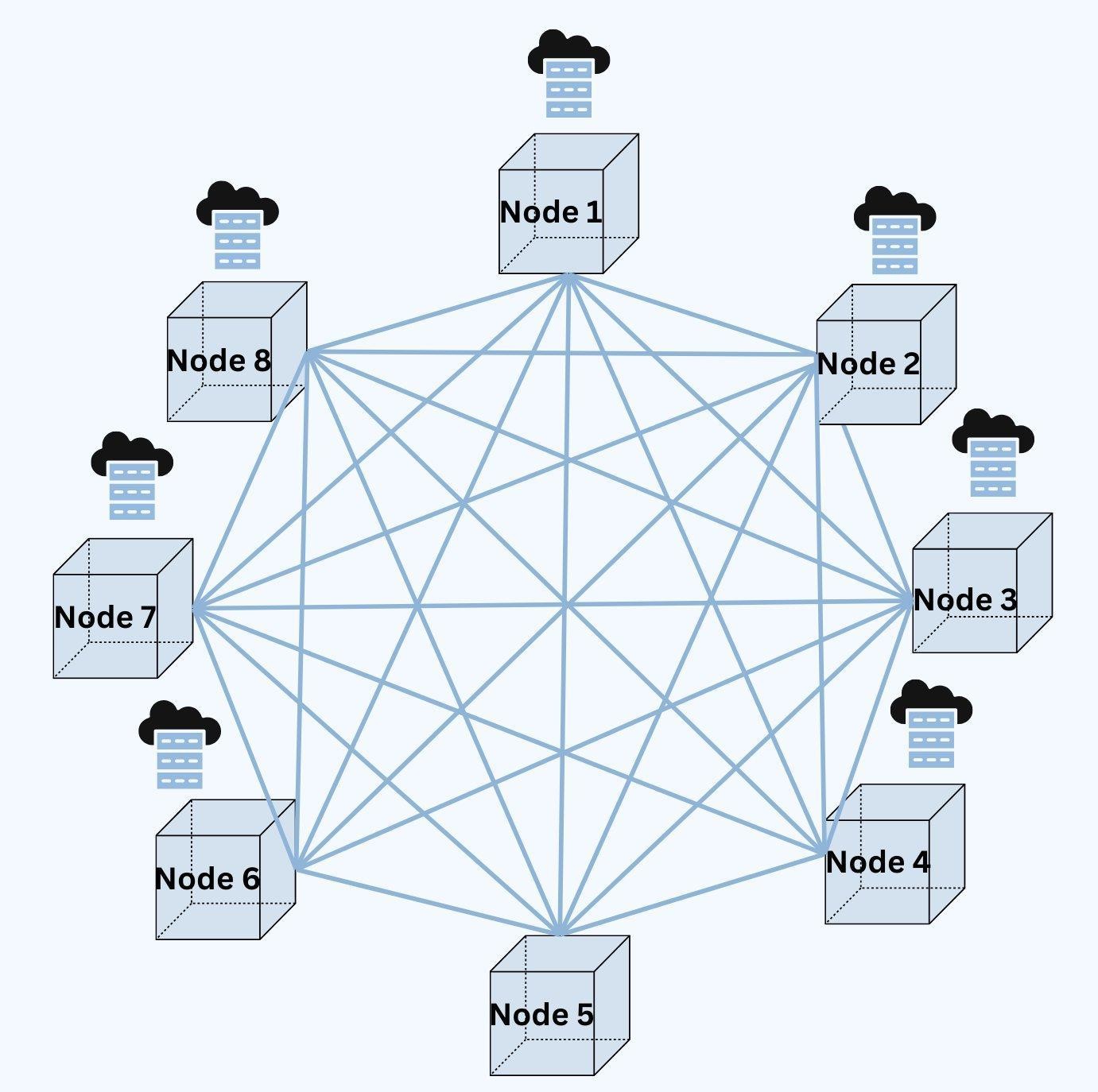
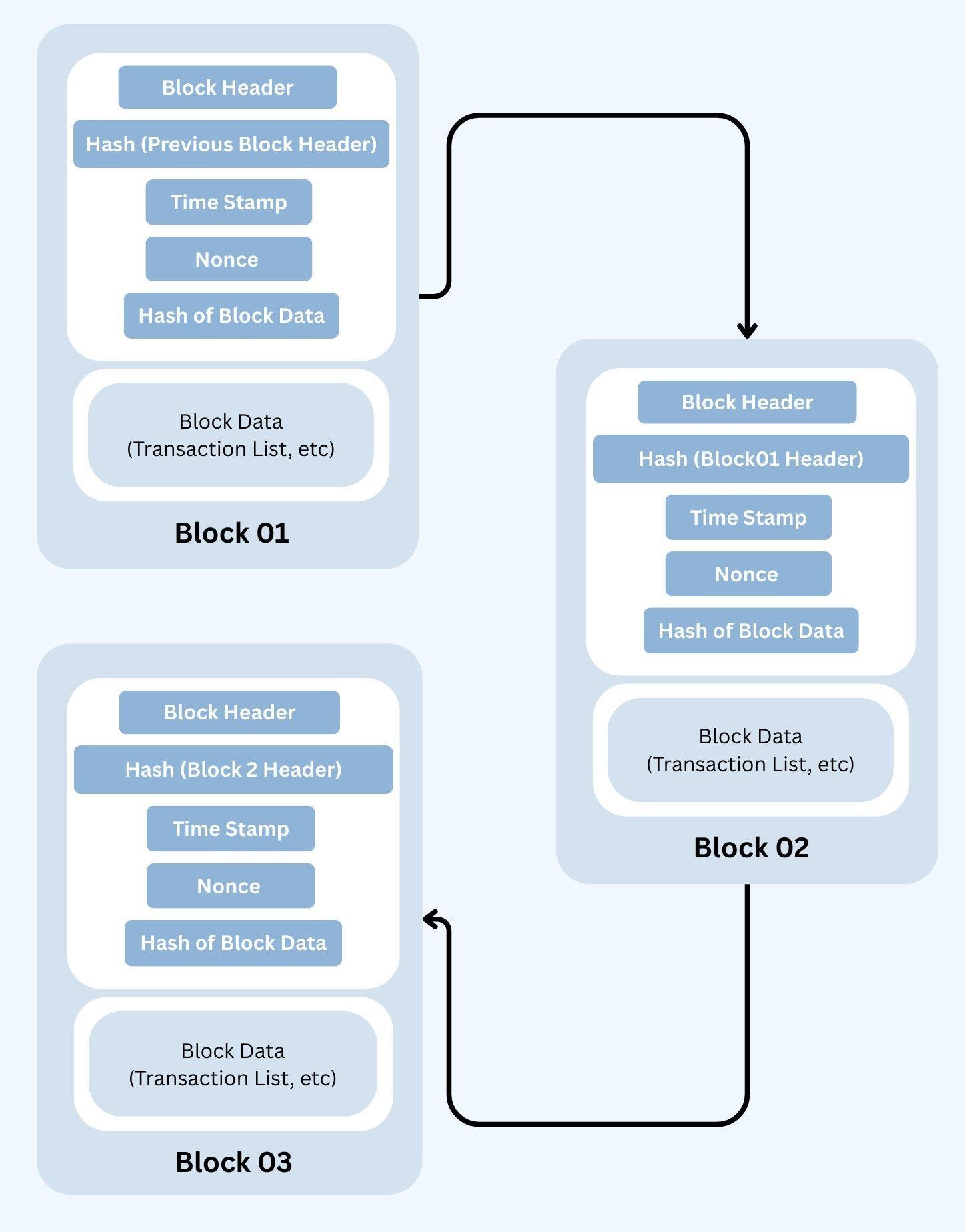
Blockchain is a decentralized and distributed ledger technology [8] that records transactions, which are digitally recorded transfers of value or data between participants on a network, in a secure and tamper-resistant manner [9]. It consists of a continuously growing chain of blocks, where each block contains information such as a cryptographic hash and transaction data. These blocks are linked to their previous blocks, which helps to keep the integrity of the chain intact.
For the network to function correctly, all participants must agree on a common state of the ledger, which is known as consensus. Consensus [10] in the network is ensured through algorithms that eliminate the need for a central authority. Additionally, transactions are considered authentic through the use of digital signatures. Its key characteristics: decentralization and pseudo-anonymity through public and private key systems and a reliable architecture for secure digital transactions. Smart contracts are deterministic computerized transaction protocols that automatically execute the terms of a contract. Because they are deterministic, the same input will always produce the same output. These contracts are executed by all the nodes in a blockchain network, and each node must obtain identical results upon execution. Such contracts consist of code and data that are deployed on the blockchain through cryptographically signed transactions. Using these contracts, it is possible to store data, perform computational tasks, and execute finance-related operations. Additionally, [11] all nodes must agree on the updated state of the network after the contract execution. Smart contracts can only operate on the data provided as input parameters and cannot access external data unless it is explicitly integrated through external mechanisms. In the context of the creator economy, smart contracts enable trustless and instant ownership transfers upon payment. Smart contracts on a public blockchain are transparently verifiable by anyone on the network, which helps reduce the risk of fraud and increases buyer confidence. Furthermore, smart contracts facilitate continuous peer-to-peer marketplaces and automate royalty calculations and distributions, eliminating the need for manual tracking and administrative overhead. [12] Creators can define custom rules through programmable logic, allowing them to set royalty rates, resale conditions, and multi-party payment splits. This capability provides greater flexibility and control over revenue distribution. Despite these advantages, several challenges remain. Legal and regulatory uncertainties persist, particularly regarding dispute resolution, jurisdiction, and compliance. Since smart contracts operate purely as code, they must be carefully designed and thoroughly tested, as errors or vulnerabilities may lead to security exploits and financial losses. Additionally, linking physical assets to their digital representations introduces challenges related to custody, verification, and authenticity. [13]
Effective royalty management ensures that creators are compensated whenever their work is used. Such a process helps creativity remain a long-term and sustainable source of income. It converts legal creative ownership into tangible earnings by ensuring that the payment process is initiated each time the creative work is used. Accurate tracking of content usage and fair distribution of revenue are essential components of royalty management. These processes help reduce income loss caused by errors such as missing data and unclear reporting, which often affect independent creators more severely. Transparent royalty systems further strengthen trust among creators, platforms, and distributors by clearly showing how payments are calculated and distributed. Without efficient royalty management, many creators may struggle to sustain their work. Over time, this could weaken the broader creative arts industry by discouraging continued content production. [14][15]
2. Challenges Of Non-Blockchain Solutions
Platforms such as Instagram Subscriptions and YouTube Channel Memberships illustrate the limitations of centralized, non-blockchain monetization systems for creators. In these models, the platform retains full control over monetization tools, which means creators must operate within the platform's rules, revenue-sharing policies, and the risk of sudden policy changes. This dependence highlights the fundamental challenges of centralized creator economies. Eligibility requirements further restrict access to monetization features. For example, Instagram Subscriptions require creators to be at least 18 years old, maintain a minimum of 10,000 followers, use a professional account, and reside in supported countries. [16][17] Similarly, YouTube retains a portion of creator earnings by paying eligible creators only 70% of the revenue generated through channel memberships and Super Chat features. Music royalty management on such platforms also faces significant challenges. In 2024, YouTube processed over one billion Content ID claims, with more than 99% initiated automatically without human intervention. This heavy reliance on automated systems increases the risk of incorrect or wrongful claims against creators. Additionally, the abrupt termination of monetization programs by major platforms has demonstrated how centralized systems can eliminate creator revenue streams without prior notice. Overall, non-blockchain solutions provide limited ownership, transparency, and control for creators. As a result, creators often have little recourse when disputes arise or when platform policies change. [18][19]
3. Related Work
The music industry continues to face persistent challenges related to royalty transparency, delayed payments [20], and complex rights management. These problems largely arise from centralized distribution platforms and the presence of multiple intermediaries that manage licensing, revenue collection, and payment distribution. As a result, artists often experience limited visibility into how their content is used and how revenues are calculated. Prior research has therefore explored the use of blockchain technology and smart contracts as decentralized mechanisms for managing music ownership, tracking usage, and automating royalty payments. [21][22][23]
One of the early blockchain based approaches is Musicoin, which proposes a decentralized music streaming protocol in which artists are compensated automatically through smart contracts for every stream of their work. By removing intermediaries, the system aims to provide transparent and immediate royalty payments. However, Musicoin relies heavily on a cryptocurrency based economic model. This introduces practical challenges such as token price volatility, dependency on widespread token adoption, and uncertainty in the financial stability of the platform. Another notable platform is Audius, a decentralized music streaming protocol designed to reduce centralized control over content distribution. With Audius, a community-governed infrastructure is introduced in which fans, node operators, and artists collectively manage the network through a token-based incentive system. This model encourages participation from the broader community and supports decentralization, but it also introduces governance complexity. Maintaining consensus within such a large community can be challenging, especially when system performance needs to be preserved. Furthermore, Ujo [13] is another platform that focuses on improving music rights management by recording licensing and ownership details on a blockchain ledger. By maintaining an immutable registry of rights metadata, Ujo enables automated licensing agreements and transparent revenue distribution through smart contracts. While this approach addresses the issue of fragmented ownership records, integration with existing legal frameworks and industry institutions remains a challenge. In addition, the system depends on the accuracy and consistency of externally provided metadata, which is often unreliable in real world music distribution systems. While these platforms demonstrate the potential of blockchain in transforming music royalty systems, several limitations remain. Many existing solutions rely on public blockchain networks and token based economies, which can introduce volatility, governance complexity, and scalability concerns. Furthermore, several platforms focus primarily
on decentralized distribution or rights registration without clearly addressing institutional governance structures and reliable transaction validation.
The DeRo framework addresses these limitations by adopting a permissioned consortium blockchain architecture in which trusted industry stakeholders participate as validator nodes. Instead of relying on volatile token based incentives, the system focuses on structured governance and verifiable transaction validation through the Practical Byzantine Fault Tolerance (PBFT) consensus protocol. By combining automated royalty settlement through smart contracts with a governed validation framework and batch processing of usage data, DeRo aims to provide a more practical and institutionally compatible solution for transparent royalty distribution in the creator economy.
4. Proposed Methodology
4.1 Participants of the Blockchain Network
In a bid to create transparency, accountability and adequate royalty enforcement in the system, DeRo is organized with well defined roles. [3] Each member has a given role, be it to register material and come up with usage information, or to authenticate transactions and guarantee the law. These roles are clearly identified and managed by the system which enhances governance, minimizes confusion and increases trust among the stakeholders. The participants of DeRo and their functions are listed below:
4.2 Blockchain Design and Consensus Protocol
The DeRo framework adopts a permissioned blockchain architecture to achieve an appropriate balance between efficiency, security, transparency, and governance [24]. A fully public blockchain was not selected because public networks often involve high transaction costs, lower processing throughput, and anonymous participation. These characteristics are not suitable for handling frequent streaming micropayments or managing sensitive financial data associated with royalty distribution. At the same time, a fully private blockchain controlled by a single organization would reduce transparency and introduce risks of centralization. To address these limitations, the permissioned model allows multiple trusted stakeholders such as streaming platforms, record labels, and copyright management organizations to jointly participate in transaction validation and network governance. Since the network operates in a permissioned environment, only authorized participants can validate transactions and add new blocks to the ledger. This structure improves performance, reduces energy consumption, and limits the possibility of malicious activities. It also enables faster transaction processing, stronger governance mechanisms, improved regulatory compliance, and higher accountability among participating stakeholders. Overall, the permissioned based approach provides a practical and secure infrastructure for royalty management while maintaining transparency among authorized participants. This design makes the DeRo system more suitable for real world implementation in digital royalty administration. [25][26]
The system uses the Practical Byzantine Fault Tolerance (PBFT) algorithm as its consensus protocol. PBFT is well suited for permissioned blockchain environments because it does not rely on mining and therefore consumes significantly less energy. It also enables faster transaction confirmation compared to traditional proof based mechanisms. Once a block is validated and approved by a majority of the validator nodes, the transaction becomes final and cannot be reversed. This ensures both efficiency and reliability in the transaction validation process. [27][28]
4.3 Block Structure
In a blockchain system designed for music royalty management, each block functions as an immutable and tamper resistant record of royalty transactions. The block is structured into two components, namely the block header and the block body. This structure supports transparency, auditability, and automated royalty distribution through smart contracts. The block header contains essential metadata required for block validation and linkage. A timestamp records the exact moment of block creation and ensures chronological ordering of blocks within the chain. The Merkle root represents a cryptographic hash that summarizes all transactions included in the block, enabling efficient verification of data integrity without storing the complete transaction details. The header also contains a validator signature from the consensus node, which authenticates the validity of the block. In addition, it includes the hash of the previous block, which links blocks together to form a secure chain. Any modification to a block would change its hash and invalidate all subsequent blocks, thereby preserving the integrity of the blockchain. [29][26]
The transaction body in the block captures key royalty event details for transparency and automation:
Artists: Register songs and set royalty percentages for revenue distribution.
Contributors: Producers, lyricists, and composers who receive predefined split shares.
Consumers: Stream or purchase music, generating usage events.
Streaming Platforms: Record usage data and submit transactions to the blockchain.
Validator Node: Approved institutions that verify and approve transactions before they are added to the blockchain.
Regulatory Node: Ensures compliance with copyright and financial regulations.
Auditors: Review smart contracts and transaction history to confirm accurate royalty distribution.
SongID(e.g.,ISRC): Unique song identifier linking to metadata.
Artist Name/ID: Performer details (name or wallet).
Rights Holder Name/ID: Composers, publishers, labels (name or wallet).
Artist Split(e.g.,60%): Predefined artist revenue share.
Streaming Platform Name(e.g.,Spotify): Source of the event.
Number of Streams (orsales/licenses): Event volume.
Total Revenue Generated(e.g.,$5,000): Gross earnings.
Royalty Split Percentages(e.g.,70/20/10):Stakeholder distributions.
Final Payout Amounts(e.g.,$3,500toartist):Net transfers.
Smart Contract Reference:Address for auto-execution.
Usage(Stream: per-play;Sale: downloads;Copyrights: licenses/syncs):Revenue type guiding splits.
4.4 Process Flow
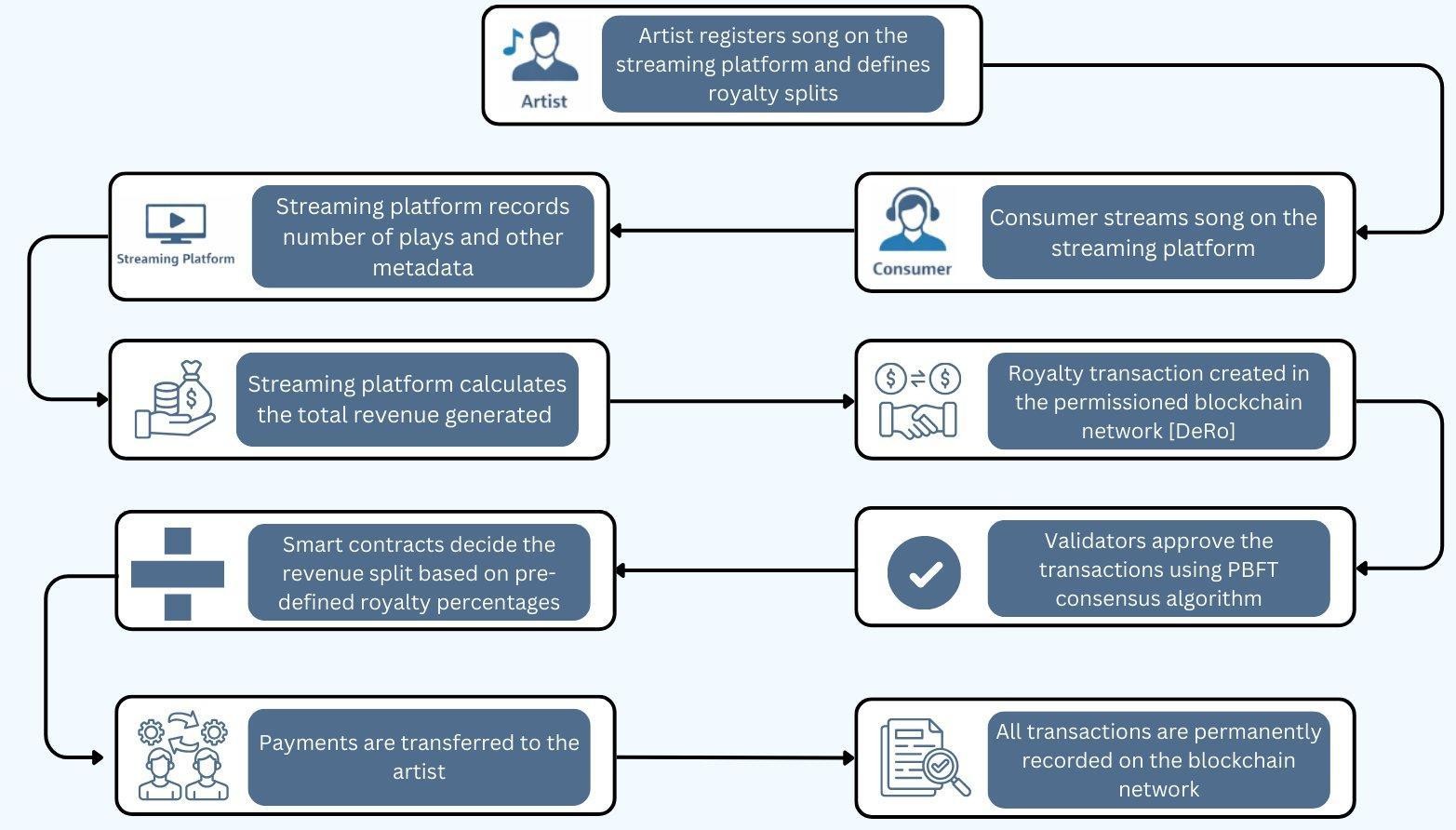
First, an artist registers a musical work on the platform and records the list of contributors associated with the content. During this registration process, the artist defines the royalty distribution among all relevant rights holders, such as performers, composers, and publishers. These terms are encoded within a smart contract deployed on the blockchain, which stores the predefined royalty percentages for each contributor and governs how revenues will be allocated when the work is used. When a listener streams the song on a participating streaming platform, the platform records the number of playback events associated with that track. Over a predefined settlement period, such as daily or weekly, the platform aggregates the verified usage data and calculates the total revenue generated from those streams. A royalty transaction containing the usage information and revenue details is then created and submitted to the permissioned blockchain network. Validator nodes within the network verify the transaction and reach agreement through the Practical Byzantine Fault Tolerance (PBFT) consensus protocol. Once consensus is achieved and the transaction is committed to a block, the corresponding smart contract is triggered. The smart contract automatically calculates the royalty distribution based on the predefined percentages stored during content registration. Following this calculation, the contract executes the payment logic and transfers the respective payouts directly to the digital wallets of the contributors. The finalized transaction is then permanently recorded on the blockchain ledger, ensuring immutability, traceability, and transparent auditing of all royalty payments. [30][31][32][33]
4.5 Comparison Table
| Feature | DeRo | Audius[34] | Royal [3] |
| Blockchain Type | Permissioned blockchain. Only approved music industry members like platforms, labels, and copyright organizations can validate. They will be approved by an entity chosen at random from a group of international bodies dedicated to protecting the rights of the artists. | Primarily Ethereum and smart contracts, with content and protocol elements on Solana for scalability. | Polygon (primary), with support for Ethereum and Solana for tokenization and smart contracts. |
| Consensus Mechanism | Practical Byzantine Fault Tolerance (PBFT)- energy-efficient, no mining, quick confirmations, and irreversible once approved by majority validators. | Proof of Stake (PoS) | Proof of Stake (PoS) |
| Feature | DeRo | Audius[34] | Royal [3] |
| Tokenisationand Ownership | Songs tokenized via smart contracts for ownership; artists set splits for contributors/rights holders. Ownership tracked in arrays/tuples (e.g., Artist ID array, Initial Rights Holder tuple with IDs and dates); no public tokens mentioned, focus on private records. | Uses $AUDIO token for staking, governance, and access to features; artists retain full ownership of their music, with timestamped records on the blockchain. Fans can own artist-specific tokens or NFTs for exclusive content. | Song rights tokenized as NFTs (Song Tokens), allowing fractional ownership; fans co-own percentages of royalties and copyrights, with smart contracts automating distributions. |
| Fees & Economics | Economics will revolve around the royalty splits decided between the stakeholders. There will be fees for uploading in the permissioned blockchain. | Free uploads and streaming; 90% of revenue goes to artists/curators, 10% to node stakers. $AUDIO staking provides ongoing issuance and governance rewards; no ads, with direct P2P sales. | Artists set NFT sale prices; platform facilitates peer-to-peer transactions with blockchain gas fees (low on Polygon). Fans earn royalties automatically via smart contracts; economics focus on shared revenue from streams. |
| Cross-Border Compliance | Regulatory Node ensures legal compliance; auditors review smart contracts. Designed for cross-border transparency within authorized participants, with permanent records to reduce disputes. | Blockchain transparency aids in royalty tracking and payments, reducing disputes; complies with global standards via decentralized governance, but users must handle local regulations. | Uses public blockchains with smart contracts for automated, borderless royalty distributions; terms of service emphasize user responsibility for local laws, with no custody of assets by the platform. |
| Artist-Fan Participation | Artists register songs and set splits; contributors receive shares; consumers (fans) stream/buy. Streaming platforms record usage; no direct fan tokenization, but participation through consumption driving royalties. Validators and auditors ensure fair play. | Direct engagement via playlists, contests, social features, and token rewards; fans can stake/delegate $AUDIO to artists, earn badges, and access VIP perks. Artists control pricing and content unlocks. | Fans invest in NFTs for co-ownership and royalties; artists bundle perks like exclusive tracks, merch, or experiences. Builds communities around shared economic success. |
| Privacy Considerations | Protects financial privacy (public cannot control/access); transparency limited to authorized permissioned members. Pseudonymous within the network, with traceable records for compliance. | Public blockchain for transparency, but uses encryption for user data (e.g., identity service); pseudonymous interactions, though on-chain activity is traceable. | Relies on blockchain pseudonymity; no custody of user assets, with interactions via wallets. Privacy depends on the underlying chain (e.g., Polygon's options for private transactions). |
| Real-World Use Cases | No current real-life deployments mentioned. Potential for music industry consortia involving labels, platforms, and artists for royalty management. | Over 100,000 artists (e.g., Katy Perry, Deadmau5) and 6 million monthly users; used for direct monetization, contests, and community building. Examples include artist-hosted challenges and NFT integrations. | Artists like Nas and 3LAU have sold NFTs for songs (e.g., Nas's "Ultra Black" sold out quickly); fans earn real royalties from streams. Platform raised $55M and focuses on crypto-music intersections. |
5. Performance Analysis Of The Proposed System
Although the DeRo framework is presented as a conceptual architecture, it is important to consider the expected system performance under realistic operational conditions. The use of a permissioned blockchain combined with the Practical Byzantine Fault Tolerance (PBFT) consensus protocol enables efficient transaction processing when compared to traditional public blockchain systems. Key performance aspects of the proposed system include transaction throughput, latency, and scalability.
Transaction Throughput: PBFT-based permissioned blockchains are capable of supporting hundreds to thousands of transactions per second under controlled network environments. In the context of royalty management, such throughput is sufficient because individual streaming events do not necessarily need to be recorded as separate blockchain transactions. Instead, streaming platforms can aggregate usage data over defined periods and submit consolidated royalty transactions to the blockchain network.
Latency: PBFT consensus mechanisms provide relatively low confirmation latency since they do not rely on mining-based validation processes. Transactions can therefore be validated and finalized within a short time frame once agreement is reached among validator nodes. This enables near real-time royalty settlement, representing a significant improvement over traditional royalty systems that typically process payments on monthly or quarterly cycles.
Scalability: The DeRo system can further enhance scalability through batch processing of streaming data. Rather than recording every playback event individually, the system allows streaming platforms to aggregate large volumes of usage data and submit periodic settlement transactions to the blockchain. This batching strategy significantly reduces the number of transactions that must be processed by the network while maintaining transparency, traceability, and auditability of royalty payments.
6. Future Directions
While the DeRo framework demonstrates how a permissioned blockchain can enable transparent and automated royalty distribution, several areas remain for future research and system development. One important direction is the establishment of cross platform royalty standardization. Currently, streaming platforms maintain separate infrastructures for recording content usage and calculating royalty payments. Future work could explore standardized blockchain based protocols that allow multiple platforms to submit usage data to a shared royalty ledger. Such interoperability [35] would improve transparency and reduce inconsistencies in royalty accounting across platforms. Another promising direction involves the creation of decentralized metadata registries for creative works. In many existing systems, ownership records and contributor metadata are stored in
centralized databases. A blockchain based registry could maintain immutable records of song ownership, contributor roles, and royalty splits, ensuring accurate attribution and reducing disputes related to rights management and blockchain adoption expanding across multiple industries. [36] The integration of blockchain based digital identity systems may further strengthen contributor verification within the DeRo ecosystem. Artists, producers, and other rights holders could maintain verifiable digital identities linked to their creative works, enabling secure authentication and simplifying royalty allocation across different platforms and jurisdictions. Future systems may also support chain copyright licensing mechanisms. Smart contracts could enable automated licensing agreements between creators and content distributors, allowing permissions, licensing terms, and royalty conditions to be enforced programmatically. This would extend the DeRo framework from royalty distribution to broader copyright management. Together, these research directions highlight how blockchain based royalty management systems such as DeRo can evolve into a more comprehensive and interoperable infrastructure for the digital creator economy.
7. Conclusion
DeRo is a blockchain-based royalty management framework designed to address the limitations observed in existing royalty distribution systems. While prior research demonstrates that blockchain technology can improve transparency and enable automated payments through smart contracts, many current implementations still face challenges related to governance, scalability, and the potential circumvention of royalty obligations. The DeRo framework addresses these limitations through the use of a permissioned blockchain in which trusted industry stakeholders participate in transaction validation. This structure promotes accountability while maintaining efficient transaction processing. Within the DeRo architecture, royalty distribution rules are embedded directly into the protocol through smart contracts. As a result, once a usage transaction is verified and recorded, royalty payments are automatically executed according to the predefined distribution logic. A key challenge in blockchain-based royalty systems is the oracle problem, where external data sources provide real-world information to the blockchain. In the context of DeRo, streaming platforms act as data providers by reporting content usage statistics that trigger royalty settlements. To mitigate the risk of inaccurate or manipulated reporting, the framework incorporates a multi-source verification mechanism, in which multiple authorized platforms and auditing nodes validate the reported usage data before it is committed to the blockchain ledger. This approach strengthens the reliability of off-chain data inputs while maintaining transparency within the system. The framework further incorporates clearly defined participant roles, a structured block design, and a secure validation mechanism to maintain the integrity of the network. In addition, scalability considerations such as block-based batch processing are integrated to support higher transaction volumes typical of digital content platforms. Overall, the DeRo framework demonstrates how blockchain technology can be practically implemented to support a secure, transparent, and enforceable royalty management ecosystem. By combining automated payment execution with a governed permissioned network and strengthened data verification mechanisms, the system provides a more reliable and equitable approach to royalty distribution within the creator economy.
Section Title
References
- Investopedia. 2026. "Royalty." Accessed March 10, 2026. DOI: 10.55277/researchhub.2zd7j9a4.1
- FreshBooks.2026."Royalties:DefinitionandHowTheyWork."AccessedMarch10,2026. DOI: 10.55277/researchhub.m6ceotip
- Nathaniela, T. C., Princes, E. and Wang, G. 2024. "Royalty Management by Using Blockchain Network: A Multiple Case Study." 2024 International Conference on Information Management and Technology (ICIMTech), pp. 316-321. IEEE. DOI: 10.1109/icimtech63123.2024.10780792
- FasterCapital.2026."TheProsandConsofRoyalties."AccessedMarch10,2026. DOI: 10.55277/researchhub.fbqrhfgy
- Salunkhe, R. 2026. "A Guide to Art Royalties and Licensing for Creative Success." WhataPortrait Blog. Accessed March 10, 2026. DOI: 10.1016/b978-1-84334-333-2.50009-8
- Buterin, V. 2014. "A Next-Generation Smart Contract and Decentralized Application Platform." Ethereum White Paper. DOI: 10.1007/978-981-15-6218-1_9
- Catalini, C. and Gans, J. S. 2016. "Some Simple Economics of the Blockchain." MIT Sloan Research Paper. DOI: 10.3386/w22952
- Nakamoto, S. 2008. Bitcoin: A Peer-to-Peer Electronic Cash System. DOI: 10.2139/ssrn.4993270
- Crosby, M., Pattanayak, P., Verma, S. and Kalyanaraman, V. 2016. "Blockchain Technology: Beyond Bitcoin." Applied Innovation Review, no. 2: 6-19. DOI: 10.18411/d-2016-154
- Zheng, Z., Xie, S., Dai, H. N., Chen, X. and Wang, H. 2017. "An Overview of Blockchain Technology: Architecture, Consensus, and Future Trends." IEEE International Congress on Big Data. DOI: 10.1109/bigdatacongress.2017.85
- Khan, S. N., Loukil, F., Ghedira-Guegan, C., Benkhelifa, E. and Bani-Hani, A. 2021. "Blockchain Smart Contracts: Applications, Challenges, and Future Trends." Peer-to-peer Networking and Applications 14, no. 5: 2901-2925. DOI: 10.1007/s12083-021-01127-0
- Mohanta, B. K., Panda, S. S. and Jena, D. 2018. "An Overview of Smart Contract and Use Cases in Blockchain Technology." 2018 9th International Conference on Computing, Communication and Networking Technologies (ICCCNT), pp. 1-4. IEEE. DOI: 10.1109/icccnt.2018.8494045
- Brennan, R. 2022. "Music Copyright Management Using Smart Contracts and Tokenization on the Ethereum Blockchain." The University of Dublin, Trinity College. DOI: 10.55041/ijsrem36857
- The Legal School. 2026. "What Are Royalties: Meaning, Types, Importance & Examples." Accessed March 10,2026. DOI: 10.55277/researchhub.m6ceotip
- Royalty Solutions Corp. 2024. "The Essential Role of Professional Royalty Management in Today's Music Industry." March 7, 2024. DOI: 10.5220/0013237800004646
- Felin, T. and Lakhani, K. 2018. What Problems Will You Solve with Blockchain? Cambridge, MA: MIT Sloan Management Review. DOI: 10.7551/mitpress/11645.001.0001
- Chillingworth,A.2025."InstagramandTikTokCreatorSubscriptions."EpidemicSoundBlog. DOI: 10.1515/9783111360874-051
- Peck, M. E. 2017. "Blockchain World: Do You Need a Blockchain? This Chart Will Tell You if the Technology Can Solve Your Problem." IEEE Spectrum 54, no. 10: 38-60. DOI: 10.1109/mspec.2017.8048838
- Woodcock, M. 2022. "Music Licensing for YouTube Videos: Everything You Need to Know." Lickd Blog, December 6, 2022. DOI: 10.5040/9781501320705.ch-004
- O'Dair, M. and Beaven, Z. 2017. "The Networked Record Industry: How Blockchain Technology Could Transform the Record Industry." DOI: 10.1002/jsc.2147
- Strategic Change 26, no. 5: 471-480. DOI: 10.1002/jsc.2140
- Singh, S. K., Rani, S., Kumar, S. and Chandra, U. 2023. "Beyond Playlists - The Future of Music Streaming with Blockchain in Spotify." International Journal of Enhanced Research in Science, Technology & Engineering 12, no. 10. DOI: 10.1016/j.mseb.2024.117293
- Brennan, R. 2022. "Blockchain and the Music Industry." Trinity College Dublin, School of Computer Science and Statistics. DOI: 10.5171/2014.977265
- Sharp, A. and Lobel, A. 2023. "Blockchain and the Music Industry." University of New Hampshire School of Law. DOI: 10.2139/ssrn.4338862
- Kshetri, N. 2018. "Blockchain's Roles in Meeting Key Supply Chain Management Objectives." International Journal of Information Management 39: 80-89. DOI: 10.1016/j.ijinfomgt.2017.12.005
- Mendonca, V., Pillai, A., Abraham, E. T., Crasto, K. and Minu, A. 2024. "Decentralized Music Marketplace: A Blockchain-Based Rights Management Approach." International Journal for Multidisciplinary Research 6, no. 2. DOI: 10.36948/ijfmr.2024.v06i02.19080
- Li, Y., Wei, J., Yuan, J., Xu, Q. and He, C. 2021. "A Decentralized Music Copyright Operation Management System Based on Blockchain Technology." Procedia Computer Science 187: 233-238. DOI: 10.1016/j.procs.2021.04.084
- Jiang, Y., Matsumoto, S. and Bischof, T. 2024. "Towards a Blockchain-Based Music Royalty System." International Journal of Student Project Reporting. DOI: 10.1504/ijspr.2024.10067519
- Zhao, S. and O'Mahony, D. 2018. "BMCProtector." International Conference on Blockchain Technology and Application. DOI: 10.1145/3301403.3301404
- Torbensen, A. C. G., Hansen, M. R. P. and Muller-Bloch, C. 2023. "Blockchain-Based Digital Rights Management Systems: Design Principles for the Music Industry." Electronic Markets. DOI: 10.1007/s12525-023-00628-5
- Sahoo, B. and Sakalkar, R. 2024. "Smart Contracts, Smarter Royalties: Tech for India's Music Industry." International Journal for Multidimensional Research Perspectives 2, no. 10. DOI: 10.61877/ijmrp.v2i10.205
- Kim, A. and Kim, M. 2020. "A Study on Blockchain-Based Music Distribution Framework: Focusing on Copyright Protection." DOI: 10.1109/ictc49870.2020.9289184
- International Conference on Information and Communication Technology Convergence. DOI: 10.1109/ictc49870.2020.9289184
- Yu, M., Li, C., He, J., Zhao, Z. and Tang, R. 2024. "Design and Application of Music NFT Trading System Based on Blockchain and Multi-layer Minting." Blockchain and Internet of Things Conference (BIOTC). DOI: 10.1145/3688225.3688242
- Pan, H. and Qian, J. 2024. "Blockchain-Driven Music Copyright Distribution: An Agent-Based Modeling Perspective." International Journal of Global Economics and Management 4, no. 1. DOI: 10.62051/ijgem.v4n1.70
- Rumburg, R., Sethi, S. and Nagaraj, H. 2019. "A Decentralized Protocol for Audio Content." Audius White Paper. DOI: 10.55277/researchhub.avaumhfu.1
- IBM. n.d. "The Future of Blockchain: Five Predictions." IBM Think Insights. DOI: 10.1147/sj.353.0441
- LNCT Group of Colleges. n.d. "Future of Blockchain Technology by 2025." DOI: 10.1201/9781003504559-6