
Abstract
The clinical management of large bone defects remains a major challenge in orthopedic and trauma surgery, despite bone's inherent ability to regenerate. In addition to providing mechanical stability, internal fixation devices such as bone plates facilitate biological healing processes. Various bone plate systems have been evaluated in vivo for their performance, with particular attention being given to design parameters, material properties, and their interaction with the host tissue in this review. The physiological processes of bone healing, the biomechanical environment essential to regeneration, and the way these factors are incorporated into the development of next-generation implants are discussed. Biomaterials with emerging trends, such as biodegradable polymers, magnesium alloys, and composite systems, are critically evaluated for their performance in vivo. A synthesis of current evidence demonstrates the importance of integrating mechanical compliance, biodegradability, and biological functionality to optimize clinical outcomes. In this review, we aim to develop strategies for designing bone plates that are biologically responsive, mechanically optimal, and tailored to individual needs.
Keywords
Biomaterials Bone Plate In vivo Animal models Biometal Polymers biocompatibility
1.Introdaction
Bones play an important role in movement, activity and organ support. Small bone defects are usually healed due to the bones abilities to heal injured tissues. However, larger bone defects remain to present a challenge to doctors and surgeons [1]. One of the most promising approaches to restoring large bone defects is bone tissue engineering. Because bone is a self-healing tissue, small bone fractures tend to heal themselves, whereas large bone lesions often result in impaired bone regeneration. Physiologically, bone remodeling necessitates a dynamic equilibrium between osteoblast function producing new bone and osteoclast activity resorbing bone [2]. The physiological process of bone healing replaces damaged bone with new bone, restoring its mechanical and biological characteristics to pre-injury. Trauma, infections, tumors, and impaired blood supply can all cause bones to be injured. The biological environment near the injury site is affected by mechanical forces, which interact complexly [3]. There are possible complications associated with traditional bone grafting techniques, such as autografts and allografts, such as donor site morbidity, a limited supply, immune response, and the potential transmission of disease. Through the application of bone tissue engineering (BTE) applications and regenerative strategies, large bone defects caused by surgical resections, congenital malformations, and trauma have been repaired [4]. As part of bone repair, bone fixing devices play a crucial role Bone screws, bone plates, bone pins, and so forth are all examples of bone fixing devices. Plates are commonly used to support human bone fractures, and are typically made from titanium alloys, stainless steel, or magnesium alloys [5,6]. A primary objective of compression plates remains the compression of fractures, limiting movement, and facilitating primary bone regeneration. However, compression plates present their own set of challenges, as with many medical advancements. There is a significant risk of bone resorption under the plate as well as an extended healing period [7]. Osteocytes, osteoblasts, osteoclasts, and lining cells are four types of bone cells. The three main bone cell types exhibit varying rates of differentiation. They belong to the osteoblastic lineage, which includes connective tissue cells, while osteoclasts are a member of the hematopoietic cell group, along with all forms of blood cells [8].
1.1 Physiological mechanism for bone development and repair
Bones play a critical role in the physiological function of mammals as evidenced by the body's ability to regenerate bones. As a result, it is restored to a fully functional, pre-injury form through regeneration. As a result of a series of synchronous events, a body scaffold is formed through bone development. As a result of a balanced balance between osteoblasts that form bone and osteoclasts that dissolve bone, bone is capable of repairing itself [9]. The soft tissue surrounding the fracture is inflamed within the first few hours of fracture. Immediately following the fracture, a hematoma appears inside the crack hole. A variety of kinds of cells, including those associated with inflammatory response and immunity, appear from within the hematoma. The cells produce a number of biological compounds, which trigger a cascade of cellular events [10]. Following the inflammatory phase, bone tissue begins to enhance anabolism and repair. This phase involves fibroblasts, chondrocytes, and osteoblasts. As part of bone regeneration, fibroblasts, osteoprogenitor cells, and mesenchymal stem cells (MSCs) are involved. A fibrous matrix is secreted by fibroblasts, progressively exchanging granular tissue for mechanically stronger fibrous tissue [11]. As a result, specialized cells such as osteoblasts and osteoclasts, which are involved in both patterning and remodeling of bones and are influenced by both internal and external signals, such as the effects of gravity, are able to form or fracture bones as a result. If a bone fracture has taken place, the bone may heal itself on its own. Although the repair mechanism involved in bone defects differs from the process associated with bone development, there are similarities between the osteogenesis forms of bone as well.
1.2 The mechanical monitoring of bone healing fractures
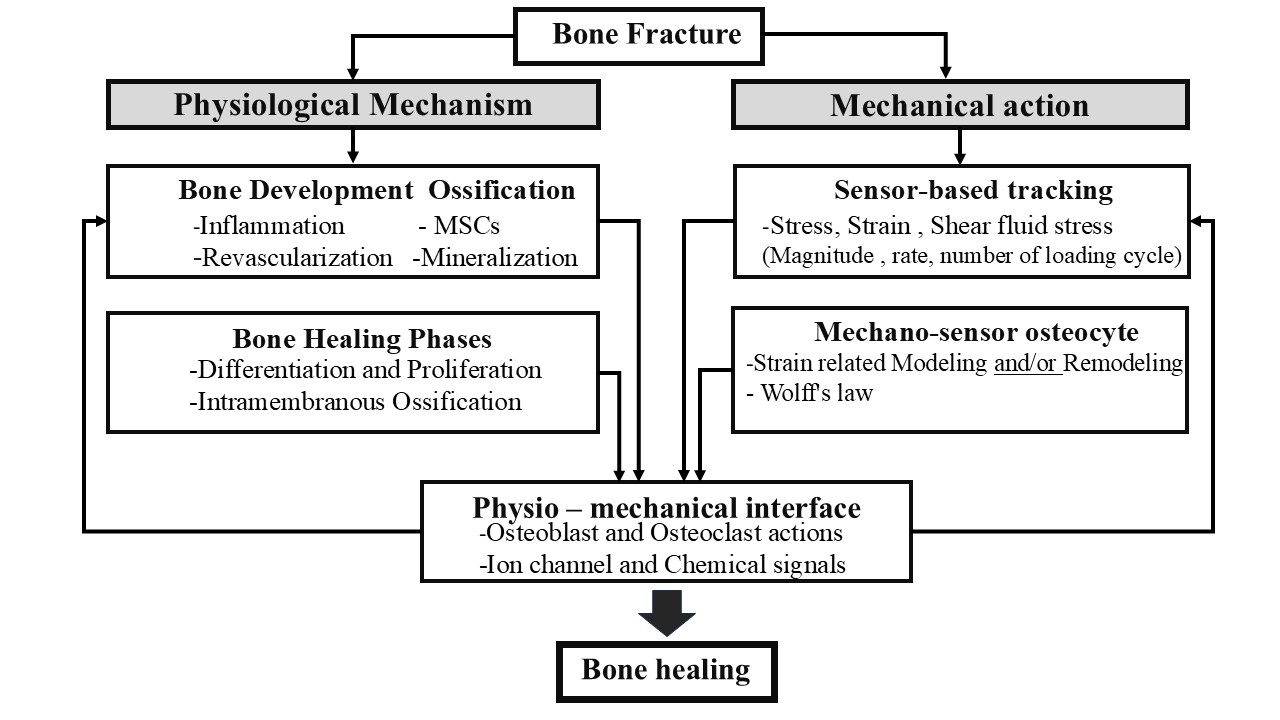
Treatment of bone fractures and defects is successful when the fracture fragments are properly connected and compressed. To accomplish this, intraoperative manipulations are generally carried out, such as bone compression or distraction. In spite of this, none of the bone plates available in common application allow these operations once they have been fixed to the bone, requiring repeated drilling, and screwing operations and refixation [12]. Physiological influences and mechanical forces cause bones to adjust their overall shape, as well as the progressive organization of their skeleton. This is depending on the specific responses of osteoclasts and osteoblasts to biomechanical forces. As a result of remodeling, old deteriorated bone is broken down, and new bone cells are generated; dynamic mechanical loading causes the bones to strain and deform, with strain levels increasing as the loading increases [13]. Mechanical regulation of vascularization suggests that vascular stimulation is significant for bone regeneration. Active vascularization is necessary for bone growth in which stresses, strains, and shear fluid stresses are transmitted to osteoblasts via mechanical signals. The mechanical receptor protein Connexin43 (Cx43) has gained substantial recognition due to its ability to form gap junctions between osteoclasts and transmit signals as a microchannel protein. When shear fluid stress was applied to osteocytes, Cx43 expression and material exchange were increased [14-16]. In addition to detecting external mechanical signals, mechanoreceptors can detect changes in intermediate media caused by pressure and shear forces, such as pressure and shear forces on cell membranes. If external mechanical signals are to be detected, the mechanoreceptors must be directly in interact with the physical surroundings, or be sensitive to variations in the underlying media. There are many types of proteins or membrane structures on the surface of the cell, including integrins, G-protein coupled receptors, connexons, primary cilia and ion channels, that can be affected by mechanical forces [17]. Osteocytes can be considered mechanosensory cells that can convert mechanical forces into chemical signals that are then sent to effector cells such as osteoclasts and osteoblasts. Consequently, osteoclasts play a crucial role in bone biology, specifically in the remodeling process as they control the activity of osteocytes cells [18]. By highlighting the interactions between events and effectors within the cell during bone repair, it will become clear the importance of changing the microenvironment of the cell during the process of removing old bone and maintaining bone mechanics under biophysical stimulation. Consequently, it is important that we understand the relationship between these physical influences and bone defect healing in order to achieve the best results. The current evidence suggests that mechanical loading is beneficial for better callus properties, as well as faster bone regeneration. Improved understanding of how bone tissue is mechanically controlled. Based on the observations outlined above, the Factors affecting bone healing are summarized in Figure 1.
2. Design considerations for bone plates
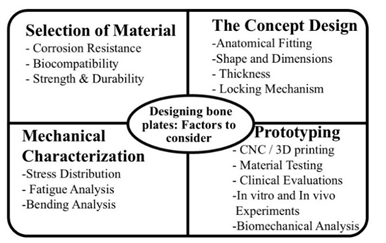
In orthopedic operations, plates play a crucial role in fixing bones following accidents, trauma, or surgery. In addition to providing rigid support and precision placement of broken bones, these plates also exert strains and compressive stresses on the broken area to promote bone healing. [19]. There have been various approaches used to facilitate faster bone healing without fault. Polymers (glass/polypropylene, bioglass /PLA) and metal implants (SS, Ti) have been developed for this application, while biodegradable implants have become a focus for researchers. As they disintegrate into the body, degradable implants do not show up on X-rays, allowing surgeons to understand the fracture location. In spite of this, several biodegradable polymer composites are not suitable for application since they degrade rapidly [20]. A series of surgical procedures were initially employed to prevent infection, including angled blade plates and intramedullary nail fixation antegrade. A fracture reduction or internal fixation can damage soft tissues, cause severe bleeding, require lengthy operative times, have complications such as nonunion, delayed fusion, dissociation of the fixation, infection, nerve damage, blood vessel damage, and nerve damage. The greater trochanter and piriformis fossa represent entry points for anterior intramedullary nailing in distal femoral fractures, with the diaphysis as the main fixation site [21, 22]. In order to minimize fixation failure, biocompatible, durable and inert implants were developed, in combination with an implantation method that minimized fixation failures. As a result of bilateral open surgery and interregnal compression, fixation failure can be reduced; however, this procedure is extremely traumatic. A current fixation plate is designed to be anatomically shaped to ensure a durable fixation in a relatively stable environment, while preserving the tissue at the site of the fracture [23]. Consequently, the entire bone structure becomes osteoporosis, not just the fractured part, due to the absence of callus development, ossification, and bone union after the implant surgery. The "stress shielding" result, a major problem with metal bone plates, causes bone refracture after the plate is removed [24]. A biodegradable, bioactive bone plate replaces a metallic plate. In addition to solving these fundamental problems, this type of plate offers additional benefits, such as transferring stress gradually to the fracture site, eliminating second surgery, and improving bone healing and union. A number of mechano-regulation theories are applicable to bone fracture healing, based on local biomechanical environments. A simple and efficient mechano-regulation theory with deviatoric strain has been proved to be the best at estimating bone healing [25]. Although composite plates made of discontinuous short fibers are easy to fabricate with injection molding, they must be thick enough to prevent fracture, regardless of their ease of fabrication. Therefore, compression plates composed of unidirectional laminate need screw apertures. This results in a reduction in their load bearing ability because fiber continuity is not maintained [26]. An effective means of enhancing bone healing and preventing bone resorption requires a fixation that produces a strain in recently developed bone tissue by permitting gradual interfragmentary displacements parallel to the bone's axial axis [27]. Consequently, the design concepts are highlighted or the mechanical and structural characteristics of the design are understood. By optimizing shape and design variables, bone plates can provide maximum fracture stability while implanting a minimal volume. By using patient-specific bone repositioning plates designed to fit the individual patient's bone anatomy and fix the bone segments in accordance with the preoperative plan, accurate bone repositioning can be achieved. As shown in figure 2, are summarized in the design factors process for bone plates.
3. Biomaterials for bone implants
In tissue engineering, the Design and development of a feasible solution and nonviable tissues are altered so that these constructs are more effective in biological environments. Various technologies have assisted in the development of bone tissue engineering scaffolds, each with its own benefits and drawbacks. To optimize synthetic-based, tissue-engineered scaffolds used in bone regeneration [28]. In order to speed the healing process, the bone-plate introduces critical compressive stresses into fractured bones. There are a number of complications with plate-fixation, including loosening of screws under load, local effects on vascularity in the cortex beneath the plate, and extreme stress shielding. Therefore, bone plates should be biologically and mechanically sound [29]. There are several biocompatible materials used for bone plates, including bioceramics, titanium alloys, stainless steel, cobalt base alloys, pure titanium, polymers (non-resorbable and bioresorbable) and composite materials. These materials can be classified as bioinert, porous, bioactive, and bioresorbable. In general, bioinert materials are selected for bone plates since bioactive materials bond with the bone (along with soft tissues) and can cause problems during removal and correction [30]. In an ideal bone plate, fracture ends are fixed reliably, stress shielding is prevented, an additional surgery is avoided due to implant degradation, biological functions related to fracture repair are activated, and fracture healing is accelerated by the beneficial properties of the degraded bone plate components[10].In light of the fact that all materials have some advantages and disadvantages regarding biological and mechanical characteristics, it is necessary to develop bone-plate systems with adequate mechanical properties. In light of this, the recently designed bone plate system combining low stiffness material with low Young's modulus with stainless steel with high Young's modulus is considered a low stiffness material that exhibits linear elastic characteristics when loaded. As a result, it is essential to be able to provide the best fracture repair with appropriate surgical equipment according to the components and specifications that are appropriate for the specific circumstances.
4. Overview of in vivo investigations on bone plate materials
The purpose of in vivo testing of biomaterial tissue compatibility is primarily to determine whether the biomaterial is compatible with tissue or whether the implant is biocompatibility in a biological environment. The assessment of tissue compatibility in vivo of a biomaterial requires an understanding of its toxicological, chemical, physical, electrical, morphological, and mechanical properties [31]. Currently, in vitro models do not adequately replicate angiogenesis in newly formed tissues, immune responses to biomaterials, and graft functional properties contribute to the complex in vivo environment. Therefore, in vivo models provide a comprehensive picture of the host's response to biomaterials. They are essential for predicting clinical behavior, safety, and biocompatibility. Tests in vivo are critical to in vitro and human testing [32]. Bone plates are now manufactured using bioactive and biodegradable healing facilitators instead of bioinert stabilizers. There have been numerous studies conducted to enhance their biocompatibility, bioactivity, biodegradability, and cellular interaction. In practice, however, certain classes of stainless steel and titanium alloys are primarily used [33]. The materials selected for this review include biometal, polymers, and bioceramics. Their anti-inflammatory, osteoconductivity, biodegradability, and biocompatibility characteristics have been evaluated in vivo. These selective materials possess exceptional chemical properties, which make them particularly suitable for treating bone deformities. Also, the objective of this paper is to provide an overview of the literature on the role of bone implants in fracture treatment, and the effect that this has on the improvement of implant treatments through in vivo studies.
4.1 Metallic Bone Implants
Metal biomaterials are man-made structures that support biological tissues internally. They are used in hip implants and orthopedics. Metals are commonly implanted as biomaterials because of their mechanical characteristics and exceptional heat conductivity. With proper processing, the material provides fracture resistance and high strength, contributing to in long-term component reliability in high load bearing applications [34]. A variety of metallic bone implants with biocompatibility are currently used for bone tissue engineering applications, including stainless steel, titanium, tantalum, cobalt-chromium alloys, zinc, iron, magnesium. Considering their excellent mechanical properties and machinability, these materials are widely utilized [35]. According to their biocompatible properties, the following are in vivo investigations of the most prevalent metallic biomaterials. These include stainless steels, cobalt-chrome alloys, titanium alloys, and biodegradable metals. In general, stainless steel is the most common biomaterial used to manufacture bone plates due to its mechanical strength, low cost, the ability to manufacture implants, and the tendency for the implant to deform during surgery. The stainless-steel material can be used to manufacture temporary implants including fracture plates, screws, and hip nails [36]. Stainless steel corrosion resistance is superior to conventional steel, especially the 316L austenitic stainless steel used for fabricating prosthetic joints and bone plates. A high-staining austenitic stainless steel, such as 316L, is less likely to be hydrogen embrittled than a low-alloy steel, carbon steel, or less stable austenitic stainless steel. In austenitic stainless steels such as 316 L, hydrogen present internally increases yield, tensile strength, and ductility [37]. Chloride ions and proteins present in the body adversely affect stainless steel. Despite being less active in the process of oxidation, low oxygen in fact promotes oxidation by preventing passive oxide films from forming on metal surfaces. As well as not meeting corrosion resistance requirements, 316L stainless steel has a variety of long-term problems, including low wear resistance, toxicity and cancer-causing properties of chromium (Cr) and nickel (Ni) released during processing [10]. According to our review, the first in vivo study of bone plates was conducted by Stephen D. et.al. [38] evaluated the in vivo performance of retrieved stainless steel internal fixation plates. A correlation was also established between corrosion properties and the metallic characteristics of 250 devices. Implant-related pain, nonunions and melunions, infection, loosening, and implant breakage were the primary reasons for symptomatic removal. Stereomicroscopes revealed that 69% of all plates were corroded in some form at the interface crevices, whereas 68% of screws had some degree of corrosion on the surface.
By using steel or other materials as plates, Terje T. et.al. [39] investigated the fixation of tibial shaft fractures in rabbits with varying stiffness characteristics. A radiographic examination and measurement of the periosteal callus were used to evaluate the pattern of bone healing, and a mechanical test was performed to determine the functional condition of the bones. There is evidence that very stiff plates have a stress-protecting effect from day one of the healing process and that this effect is evident even at six weeks, and that a steel plate with a lower stiffness will be more appropriate for bone healing. However, plates that are too flexible may result in mechanical failure and redislocation.
Also, Cheal E. et.al. [40] studied a modified stainless-steel plate for the implantation of a mid-diaphysis osteotomy in sheep's tibias. Histological patterns of fracture healing are influenced in a significant way by specific mechanical strains in the interfragmentary tissue, as hypothesized. During regions of low strain, vascularized soft tissues could grow into the fracture site faster and more rapidly, and they differentiated much more rapidly. On the other hand, callus formation and proliferation were more prominent in the cortex opposite the plate and on the periosteal and endosteal surfaces.
In an eight-week in vivo study by K. Stoffel et.al [41], a standardized osteotomy was performed on 16 sheep's tibias with four variations on the design of tension band plating (overbent and contoured plates without and with an interfragmentary locking screw). Histologically, direct bone healing occurs within three weeks of surgery, particularly with curved plates and long screws. The formation of an attachment callus as soon as a blood supply intact suggests that the osteosynthesis may be unstable in its primary form. Later, it may indicate that the osteosynthesis is unstable in its secondary form. Furthermore, the [42, 43] developed a rat femoral defect model in which ambulatory loads were transmitted through a tissue-engineered implant in order to study the role of mechanical environment in bone healing. As shown by X-rays and mechanical tests, multiaxial plates did not stabilize the defect due to their low stiffness. As part of the evaluation of physiological loading on bone regeneration, an in vivo model was developed, followed by functional loading on segmental defects measuring 6 mm using rigid and compliant fixation plates. Results indicated that structural adaptation occurred only proximally, with location-specific responses to loading resulting in location-specific responses. Also, by using a large animal model, Ladina et.al. [44] examined the biphasic plating strategy in vivo under various conditions. Under varying environmental conditions, including direction and location of an experimental fracture gap, biphasic fracture stabilization is hypothesized to result in robust and reliable fracture consolidation. As a result of the development of fixed plates and less traumatic treatment procedures, fracture fixation has advanced significantly. A significant number of healing complications can be related to poor mechanical factors at the traumatic site in up to 10% of cases.
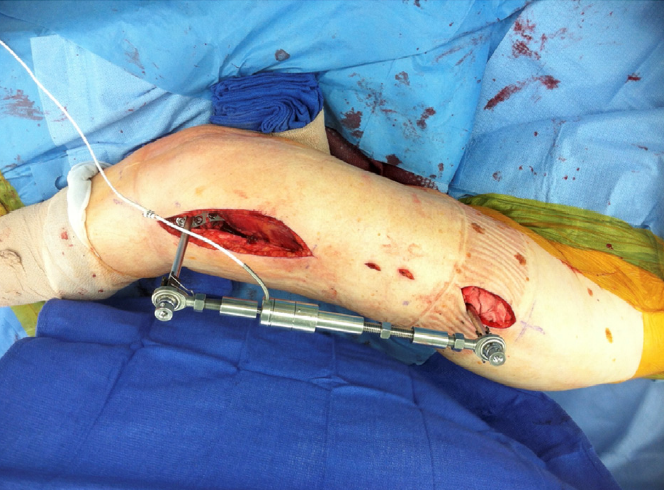
As a model, the [45] developed and validated a device for measuring stiffness based on distal femur fractures with locked plating. All patients were treated with an external stabilization approach, followed by a locking structure after external stabilization. A total of thirteen patients with distal femur cracks were blindly observed using a surgical stiffness measurement tool that was custom-calibrated, shown in figure (3).
During an investigation that was unrelated to the study, the [46] evaluated a large cohort of goats in which bridging locking plates were used to stabilize tibial segmental defects, and examined the factors related to plate-bone orientation correlated with implant performance, such as postoperative fracture complications. A locking plate was used to fix 2 cm tibial diaphyseal segmental defects for 3 to 6 months in order to evaluate bone healing. An increase in fractures was associated with decreased gaps between the distal bone segment and proximal screw, suggesting that the proximodistal position influences the fixation stability.
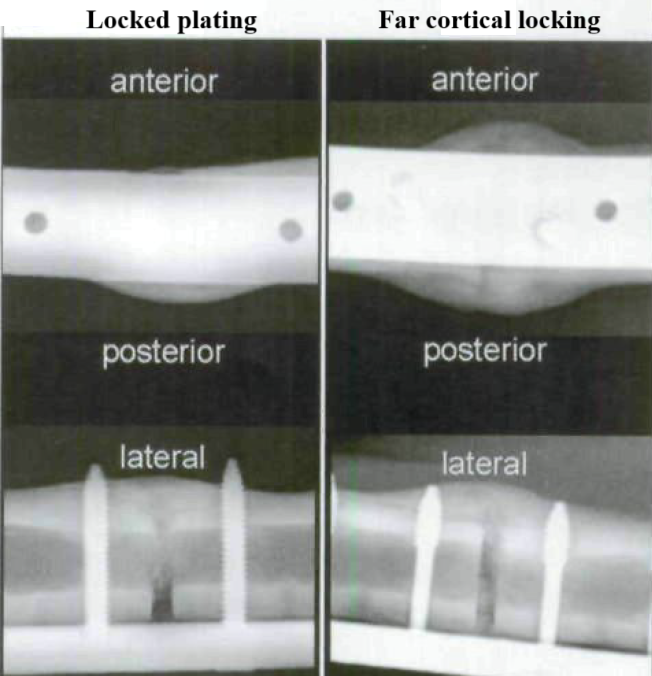
In order to investigate titanium alloy, the study was conducted by [47] assessed the critical threshold stress causing bone resorption through strain measurements in vivo and compared various finite element models with one another. Miniplates used in the treatment of mandibular fractures were measured once a week until strains decreased. For each patient, maximum bite forces were applied to the incisal, right molar, and left molar regions. The strains increased and peaked at 2-4 weeks, while the bite forces increased throughout the measurement period. According to the study [48], fracture healing after a locked plating construct was used in conjunction with far cortical locking constructs in an ovine transverse osteotomy model is evaluated. On weekly radiographs, fracture-healing was compared between the locked plating and far cortical locking constructs. Upon the animals' death at week 9, healed tibiae were imaged, tested mechanically, and histologically examined. A weekly radiograph revealed that the amount of callus in the far cortical locking construct was significantly greater than the amount of callus in the locked plating construct. A comparison between the far cortical locking group and the locked plating group revealed 36% greater callus volume and 44% greater bone mineral composition at week nine, as shown in figure (4).
Also, according to Khaja M's study [49], two titanium reconstruction plates were designed based on a preoperative computed tomography (CT) scan. Both plates with meshes and ones without mesh were custom manufactured. Through electron beam melting (EBM) additive manufacturing technology, the custom-designed reconstruction plates have been clinically implanted in goats, shown in figure (5). Based on the results of this study, custom-designed electron beam melting the manufactured repair plates exhibited improved performance, cosmetic outcomes, and biocompatibility over the long term.
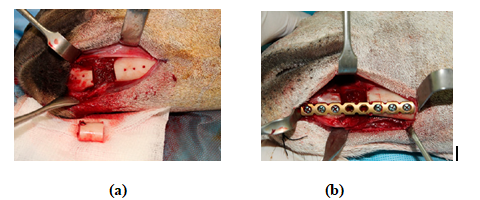
In response to post-surgical implantation, Weilong D [50] investigated the effects of composite coated titanium prostheses in the antibacterial and bone healing process. By incorporating vincristine sulfate (VCR) drug into the polymer-hydroxyapatite composite, a potential implant can be developed that eliminates the shortcomings of the promising materials currently available.
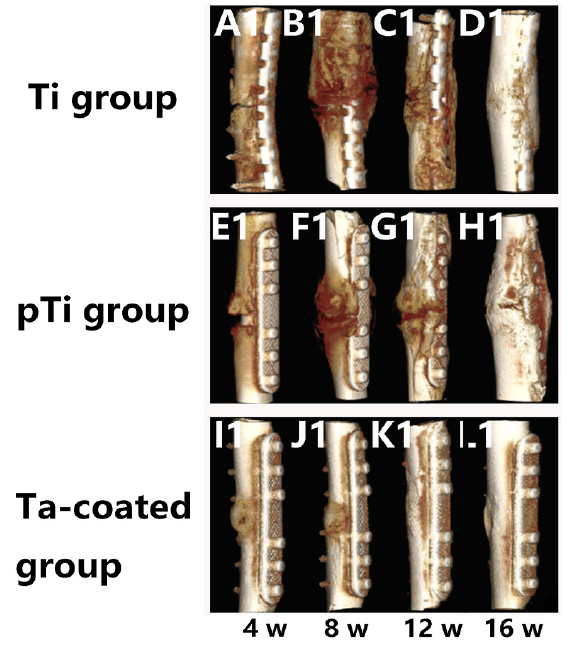
An antibacterial bone plate developed by Lujiao Z. et.al [51] has the characteristics of minimizing bacterial colonization, being highly biocompatible, and releasing antibiotics in response to infection. An open fracture model infected with bacteria was used to evaluate the anti-infection performance in vivo. After five months, it still demonstrated effective antibacterial activity, demonstrating its ability to be sustainable. Using an animal model of infection after fracture fixation, it was demonstrated that the compound possesses anti-infection properties in vivo. As part of the 3D-Printed Ti6Al4V alloy plates, Qi Wang et.al [52] applied selective laser melting (SLM) to manufacture the plates. In order to determine the potential of 3D-Ti plate implantation based on dynamic mechanics and biological motion of the maxillofacial region, a rabbit mandibular fracture model was conducted. In comparison to synthetic titanium plates, 3D-Ti plates showed the same stability and biocompatibility for rigid internal fixation, lower roughness, better mechanical strength, and a higher rate of bone-plate contact. According to Bo Qiao et.al. [53] the nanohydroxyapatite/polyamide 66/glass fiber (n-HA/PA66/GF) plate fixed fractures without breaking and did not interfere with radiographic imaging. As compared to titanium plates, the n-HA/PA66/GF plate facilitated callus formation resulting in secondary fracture healing. In addition, the n-HA/PA66/GF plate integrated well with native bone after long-term implantation without adverse effects on muscle or bone. The porous internal fixation system developed by [54]is made from porous Ti alloy and is suitable for weight-bearing fractures as well as encouraging bone growth. This study evaluated the effectiveness of porous coated bone plates for tibia fractures in goats. It also evaluated bone-forming factors and cells engaged in bone regeneration around the damaged site, shown in figure (6).
As regards stainless steel and titanium alloys, as demonstrated by the experimental study conducted by [55] The variation between the types of plates was insignificant because the plating only slightly influenced the torsion-induced high tissue strain. In addition, titanium plates offer little advantage from a mechanical perspective, and in terms of maintaining normal tissue strains, compared with stainless steel plates. However, titanium may provide benefits in infection prevention and tissue biocompatibility as a potential implant material. At four, twelve-, and 24-weeks following surgery, the [56] examined the presence of metallic stains within nearby soft tissues and analyzed and compared metal ions within the soft and hard tissues surrounding titanium and stainless-steel implants and screws of identical construction with stressed and non-stressed miniplates and screws.
Also, by using a sheep model, Seligson D. et.al [57] compared the in vivo results of bone plates made of titanium alloy (Ti-13Nb-13Zr) and stainless steel 316L. A diffusion-hardened Ti-13Nb-13Zr device was found to have stronger fixation strength at harvest and a greater torque out strength as well as a reduction in loose screws. Furthermore, the study by [58] examined fracture biomechanics and bone healing in a clinically relevant in vivo experiments using implant materials and surface topography. A rabbit humeral fracture model was used to evaluate standard electropolished stainless steel (EPSS), standard titanium (Ti-S), roughened stainless steel (RSS), and surface polished titanium (Ti-P) implants. Infection susceptibility was not significantly different between titanium and steel implants with conventional or modified topographies.
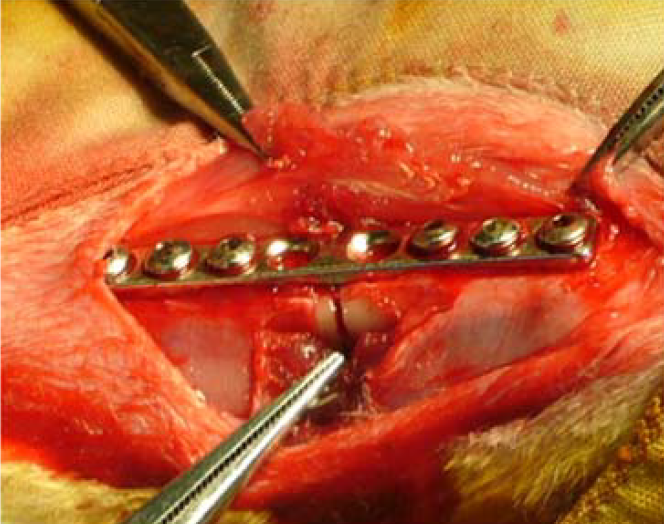
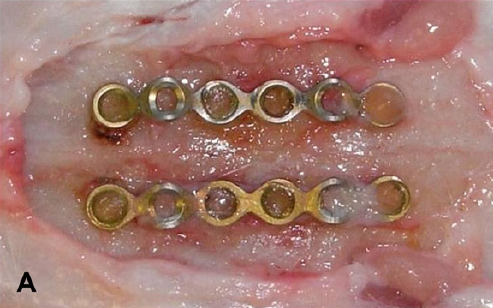
An animal experiment with rabbit was performed by Nozomu Sumitomo [59] in order to investigate bone tissue reaction to titanium alloys with low rigidity such as (Ti/Nb/Ta/Zr), Ti–6Al–4V, and SUS316L in bone plate fixation, as shown in figure (7). In spite of the fact that fracture healing did not differ significantly among the three materials, bone degradation was detected in cortical bone, particularly within the bone plate, with differing time courses between the three materials. In accordance with Wolff's law of structural reconstruction, a bone plate's elastic modulus influences bone tissue's response to fixing.
In terms of research on magnesium alloys, it is investigation [60] conducted a detailed study to investigate the biological effects and degradation behaviors of magnesium fixation devices as well as designing and testing Mg fixation plates and screws in a rabbit ulna fracture model in order to hypothesis test. According to mechanical testing fractures repaired with magnesium devices exhibited similar responses to healthy subjects when bending in three directions. In addition to demonstrating the performance of magnesium implants on load bearing fracture areas, no inhibition was observed for fracture healing, as shown in figure (8). Also, the work by Wua Y. et.al [61] used a 10mm and 20m diameter magnesium plates, a 3mm diameter bone fracture detector was applied to the fracture site of the radius bone of adult New Zealand white rabbits. As a result of the microarc oxidation coatings' good biocompatibility, no detrimental reactions were observed through histological examinations and blood analyses.
In a miniature pig calvaria model, Bruno S. [62] evaluated the in vivo degradation behavior of standard-sized plate/screw constructs to determine their effects on surrounding tissues. As shown in figure (9). He also examined in vivo degradation and tissue degradation due to magnesium alloy WE43 with and without plasma electrolytic coatings. It was performed to evaluate the difference in the degradation process between uncoated and coated implants, and to determine whether coating prevents gas pockets from forming. The results showed that the screw-plate device was well tolerated without disrupting wound regeneration.
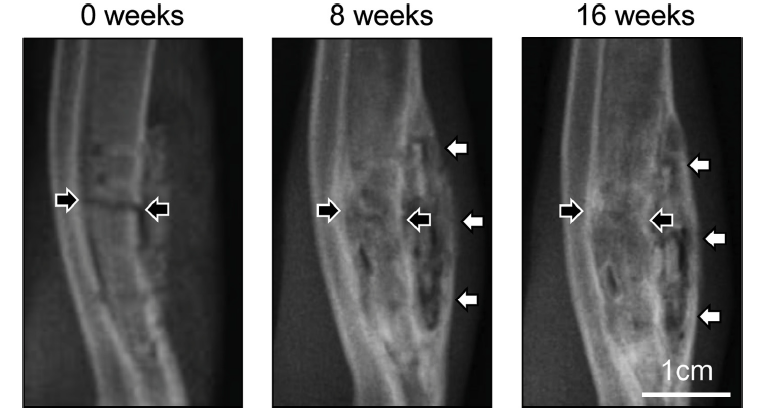
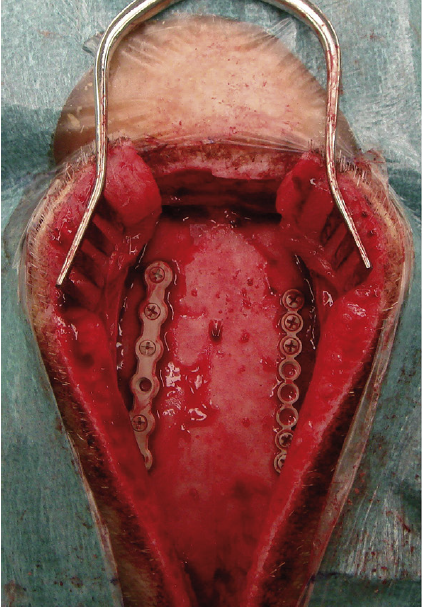
According to the study by Yongping W et.al [63], magnesium alloy plates were manufactured to repair tibia fractures in New Zealand white rabbits, so as to evaluate the osteogenesis and degradation of the plates. Four weeks after surgery, magnesium alloy plate patients developed more callus and expressed greater amounts of BMP-2 than titanium alloy plate patients. Then as part of the comparison of degradation behavior of a WE43-based plate design with and without PEO surface modification, WE43 magnesium screws and plates with or without PEO surface modification have been studied by Carsten R. et.al [64] with implants implanted in pig long bones. Micro-CT and histomorphometric analysis were conducted six and twelve months after surgery. The PEO treatment of WE43 plate systems enhanced significantly and osseointegration decreased the degradation rate within the first six months. Moreover, using miniature pig models, the investigation [65] assessed the efficacy and effectiveness of degradable osteosynthesis components. It is anticipated that the decreased sensitivity of magnesium prosthetics will be preferable over PLGA reference implants. Due to the thickness increase, the corresponding gas emission would increase correspondingly, resulting in a 1.5-fold delay in degradation. In vivo experiments, the study [66] tested and evaluated the biodegradability and biocompatibility of Mg alloy bone plates coated with Sr-D-Ca-P (Sr-doped Ca–P coating) and Sr-D-Ca-P/PLLA-HAp. The result showed, Sr-D-Ca-P/PLLA-HAp coated bone plates exhibited remarkable bone remodeling when compared with bare Mg alloy.
Moreover, compared to a clinically used WE43 magnesium alloy, a highly purified, lean magnesium–calcium alloy (X0) with or without plasma electrolytic oxidation (PEO) surface processing has been evaluated by L Berger et.al [67]. Despite the presence of degradation and hydrogen gas evolution on all implants, the PEO-coated X0 implants showed the least volume loss and the most significant growth of new bone. The timeline of research for metallic bone implants in vivo investigations is presented in Appendix (Table A1).
As a summary, metal bone implants are widely used because stainless steel, titanium alloys, cobalt-chromium alloys, and biodegradable metals such as magnesium are extremely mechanically strong, fracture resistant, and biocompatible. Temporary implants are often constructed from stainless steel, but they are prone to corrosion, nickel toxicity, and stress shielding issues. In comparison with stainless steel, titanium alloys are more biologically compatible and less susceptible to infection. However, their mechanical advantages are limited. The following in vivo studies were reviewed to assess metallic implants' performance. Corrosion and implant-related complications, such as pain and loosening, occurred at a higher rate with stainless steel implants. In addition, titanium alloys demonstrated improved osseointegration, particularly when they were surface-treated or customized through 3D printing. There is potential for biodegradability in magnesium alloys, reducing the need for implant removal and enhancing bone regeneration. However, challenges like gas formation during degradation still remain. In the review, the importance of balancing stiffness, biocompatibility, and custom design is highlighted, along with the increasing trend toward bioactive and biodegradable metals. In the future, alloy composition and surface modification will be improved to optimize healing and minimize complications.
4.2 Polymers Bone Implants
A research study has demonstrated that a high-modulus implant can limit stress shielding and produce desired tissue remodeling by matching its stiffness with the stiffness of the host tissues. In this regard, polymers appear to be an appropriate choice. Due to their low strength combined with low modulus, these polymers are generally not very useful. Fiber reinforced polymers, i.e. polymer composites, on the other hand, are capable of exhibiting both low elastic modulus and high strength, which makes them extremely suitable for orthopedic applications [68].The majority of biometal are unresorbable and can cause toxicity as a result of metal ions accumulating through corrosion. A heterogeneous stress distribution may also lead to premature failure as the elastic modulus of the implant is greater than that of bone, resulting in heterogeneous stress distribution. There have been numerous studies carried out on organic biomaterials and biocomposites, including polymethyl-methacrylate (PMMA), polylactic acid (PLA), poly glycolic acid (PGA), L-PLA (PLLA) and poly ether-ether-ketone (PEEK) [69]. Studies have been conducted in vivo to evaluate the efficacy of polymer and bioceramics composites as bone substitutes [70, 71]. An investigation was conducted to evaluate the biocompatibility of a composite polymer membrane, which offers many applications, including orthopedic applications to achieve the maximum level of performance for bone plates. In a preliminary in vivo deformity study [72] investigated the use of screws and bone plates fabricated from Poly (L-lactide) PLLA for fixing two artificial mandibular defects with a specially designed bone fixture. The fractures healed without any evidence of callus growth. Screws and plates made of PLLA provided sufficient stability for normal fracture healing over a sufficient period of time. Also, an osteosynthesis of mandibular fractures in dogs using plates and screws made of L-PLA has been studied by KL Gerlach [73]. It has been found that poly(L-lactide) has adequate mechanical strength for use in maxillofacial traumatology. A resorbable plate and screw containing this polymer was effectively used to stabilize the mandibular fractures of 12 dogs in another trial.
In his study, J E Bergsma [74] examined the remaining poly (L-lactic acid) material after an implantation period of 3 to 5 years to obtain insight into the swelling characteristics and course. Several patients reported returning to the clinic three years after implantation with swelling at the site of implantation. As a result of disintegration of PLLA particles, PLLA material was absorbed into the body and fibrous tissue was produced. This swelling may have been caused by PLLA disintegration. Additionally, a study conducted by Riitta S. [75] investigated the tissue regeneration and degradation rate of self-reinforced poly-L-lactide (SR-PLLA) multilayer plates in sheep used to fix molar osteotomies. After 5 years in vivo, the reaction to foreign bodies was mild, and the osteotomies were well integrated. Although small amounts of polymer were still evident at the implantation site, the polymer has almost completely resorbed after five years. In the study by Sherin K. [76] evaluated the clinical effectiveness of biodegradable bone plates for treating mandibular body fractures. Eight patients suffered from mandibular body fractures. The healing process was monitored with digital panoramic radiography during the first week after treatment and at one, three, and six months after treatment. As a result of examining broken segments, stabilization within injury locations was determined as well as a visual and quantitative assessment of radiographs. This indicated that the healing process was comparable to that which had previously been reported for titanium bone plates.
The biodegradable interlocking nail must provide adequate support to a fractured limb for a certain period of time. Therefore, M. van der Elsta et.al [77] began investigating polylactic acid (PLA) and polylactic acid/polyglycolic acid copolymers (PLA/PGA) as long-term implants. To simulate a fracture of the femoral shaft, a complete mid-shaft osteotomy was conducted on 21 female sheep. As a fixation method, stainless-steel interlocking nails, PLA rods, or PLA/PGA rods were used. The histological characteristics of these three materials were evaluated after 30 months of implantation. In order to avoid severe foreign body reactions, it is imperative to reduce the volume of polymeric implants inserted into bone. In Kim Y's et.al study[78], bioabsorbable plates were used for treating mandible fractures in the short-term. The broken bone fragments of the mandible in 49 cases were managed with the use of bioabsorbable plates and retaped screws ranging from 2.4 mm to 1.5 mm, as shown in figure (10). All complications, except one, were insignificant and appropriately managed with incisions and sutures, medication, rehabilitation, and elastic traction.
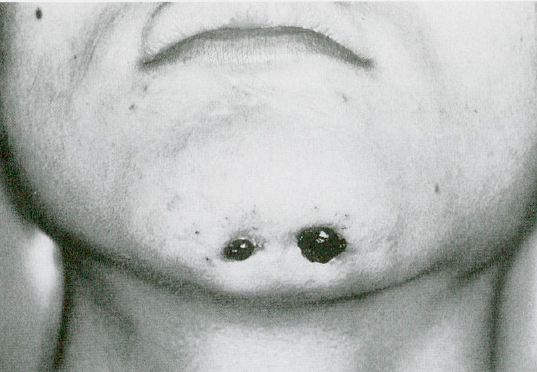
Furthermore, for the application of PLLA composites to bone plates, a study with a rabbit model was conducted by [79] to evaluate the biodegradation and biocompatibility of the dual inorganic/polymeric-ceramic (Sr-DCa-P/PLLA-HAp) coating on a Mg alloy implant (ZK60) used as a stabilizing plate for fractured bones. Based on the results obtained in vivo, it was determined that Sr-D-Ca-P coated bone plates and Sr-D-Ca-P/PLLA-HAp coated bone plates degraded at a slower rate than Mg alloy coated bone plates.
In order to achieve the best possible results in vivo, research has continued on the development of bone plates using a range of polymers in order to achieve the best results. As a result of the combination of reinforcement elements, such as fibers and matrix polymer, P. Tormala [80] used ultra-high strength, self-reinforced (SR) absorbable polymeric composites, with the smallest rods diameter in rabbits implanted in the subcutis, 1.5 mm rods lost mechanical strength within four to five weeks, while the thickest rods retained their strength for eight weeks after implantation. According to Ralf S. [81], the cement used to attach cortical bone particles to osteosynthesis plates contains a bone bonding agent capable of adhering to both hydrophilic bone and hydrophobic cement, shown in figure (11). In vivo, the bond strength of white rabbit craniums was 2.5-4.1 MPa two weeks after surgery, and 1.9-2.5 MPa twelve weeks after placement in control samples without a bone bonding agent.
Additionally, to Joachim A's research [82], a large bone defect model in sheep tibia can sustain duration for up to six months with a reasonable low complication rate when supported with two different types of carbon fiber: polyetheretherketone (CF-PEEK) and locking compression plate (LCP). This is supported by two different types of carbon fiber: polyetheretherketone (CF-PEEK) and a locking compression plate (LCP).
Moreover, it has been proposed that Woojune H [83] develop a bone plate that facilitates bone regeneration by coating a clinically available bone plate (PLT-1031, Inion, Finland) with a mixture of alendronate and a biocompatible polymer, azidobenzoic acid-modified chitosan photocrosslinked by ultraviolet radiation. Also, the plate with alendronate administration demonstrated high biocompatibility when stained with H& E, comparable to the Inion plate currently being applied in clinical settings. Using the model of rabbit bone perforation defects and implanting the implants, Shenquan Z. [84] examined the osteogenic characteristics of scaffolds made of bioactive bone plates in vivo. Using fused deposition modeling (FDM), a PEEK plate scaffold was fabricated and designed to match individual bone structures. Bioactive scaffold significantly accelerated bone tissue regeneration in rabbit femoral defects. The HA-coated PEEK scaffold demonstrated an exceptional ability to regenerate bone tissue. The chronology of investigations into polymer bone implants in vivo studies is presented in Appendix (Table A2).
As a summary, it can be argued that polymer-based bone implants have many advantages for orthopedic applications, including biodegradability, light weight, and tunable mechanical properties, which makes them particularly attractive. However, they are generally less robust and stiffer than metals, which limits their application. Consequently, fiber-reinforced polymer composites combining low elastic modulus with high strength have been developed to overcome this problem. There are several types of polymers and composites that have been evaluated in in vivo studies, including: It has been reported in long-term studies that polylactic acid (PLA) and poly-L-lactic acid (PLLA) have been used successfully for the fixation of mandibular and maxillofacial fractures in both humans and animals. However, late-stage complications, such as swelling due to degradation, have been observed. The use of polymeric composites (e.g., PLA with HAp, or PLLA with Sr-doped calcium phosphate) has been demonstrated to improve biocompatibility, bone remodeling, and degradation control. Clinical trials have demonstrated the effectiveness of bioabsorbable plates and screws in the treatment of mandibular fractures, with acceptable healing and little risk of complications. Using novel bioactive coatings and drug-loaded systems (e.g., alendronate-coated plates) will enhance osteogenesis and local drug delivery.As a result of the review, polymers and their composites are considered promising for next-generation implants, particularly self-reinforced and surface-modified versions. They facilitate gradual load transfer, eliminate the need for removal surgery, and offer customized bone regeneration strategies.
5. Conclusion
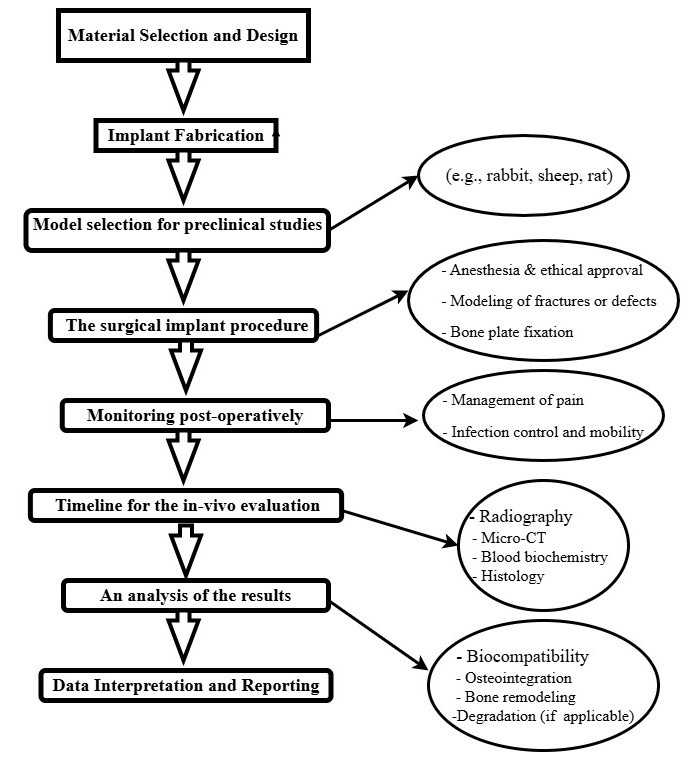
The in vivo study of bone plates offers valuable insights into their biological and mechanical performance, bridging the gap between preclinical innovation and clinical application. Metal plates, even though they offer structural rigidity, often do not adequately accommodate bone healing's dynamic biological environment, which can result in stress shielding and delayed remodeling complications. As a result of recent advances in biodegradable and bioactive materials, particularly magnesium alloys and reinforced polymers, improved integration and osteogenic potential have been demonstrated in vivo. As a result of innovations in plate geometry, surface functionalization, and patient-specific design using additive manufacturing, the role of fixation systems in regenerative orthopedics is being reshaped. As a means of ensuring clinical efficacy, future research should prioritize long-term in vivo validation, mechanobiological modeling, and scalable fabrication approaches. As next-generation bone plates are designed to match the physiological demands of the healing bone, they have the potential to revolutionize fracture treatment and functional rehabilitation. An in vivo evaluation strategy for bone implants in preclinical studies is illustrated in Figure 12. During this process, material selection, implant fabrication, animal model surgery, and postoperative monitoring are performed. Imaging, histology, and biochemical tests are conducted as well as final analyses evaluating biocompatibility, integration, remodeling, and degradation are carried out.
Acknowledgements Prof. Dr. Jenan Sattar Kashan (Professor at University of Technology/ Biomedical Engineering Department) provided valuable suggestions for this article.
Author Contributions: All authors contributed to the conceptualization and design of the review. [A. A. Al-allaq , D S. J.] conducted the literature search and drafted the initial manuscript. [Abdulaziz M. H. , M. A. k.] critically revised the content and contributed to the organization and structure of the manuscript. All authors discussed the content, provided critical feedback, and approved the final version of the manuscript.
Funding: This research received no external funding
Data Availability: All data supporting the findings of this report are available within the manuscript.
Declarations
Competing Interests:The author reports there are no competing interest.
| General comments | Ref./year | Conclusion | Site of implantation | Model | Scaffoldstructure |
| In general, it is highly recommended to remove all internal fixation devices following fracture healing whenever possible, except in cases of contra-indications such as patients with advanced age or devices adjacent to major neurovascular structures. | 38/1987 | The results of this study indicate that stainless steel internal fixation devices are not suitable for use as permanent implants, based on the clinical and metallurgical data examined. It is also possible to avoid pain associated with devices that have a higher corrosion rate as well as a relatively long implantation period by removing the implants earlier. | hip screw-plates,hip nail-plates | Human | Stainless Steel |
| The disadvantage of overly flexible plates is that they may lead to mechanical failure and redislocation. | 39-1988 | When the most rigid plates were utilized, there was a significant decrease in strength and stiffness in tibiae, compared to those with less rigid plates. The stress-protecting effect of very stiff plates begins early in the healing process and is noticeable even at 6 weeks, indicating that a steel plate with a lower stiffness is more suitable for bone healing. | Tibia | Rabbit | Stainless Steel |
| There is evidence of an earlier and more vigorous ingrowth of vascularized soft tissue into the interfragmentary gap, along with an enhanced level of differentiation of this tissue in lower-pressure regions of the body | 40-1991 | A high rate of callus formation was observed on the periosteal and endosteal regions of the cortex opposite the plate. Approximately four weeks after fracture healing, the bone-plate complex increased in stiffness, resulting in a marked reduction in gap deformation. | Tibia | Sheep | Stainless Steel |
| It is desirable to conduct further research on diffusion hardened Ti-13Nb-13Zr as an alternative material for osteosynthesis. | 57-1997 | The results of this study showed that, after removal of the implanted femurs, the femurs with diffusion hardened Ti-13Nb-13Zr plates had higher torsional strengths. This suggests that diffusion hardened Ti-13Nb-13Zr might represent a viable alternative material for osteosynthesis. | Femur | Sheep | Stainless steel + Titanium alloy |
| After plate fixation, the biomechanical data obtained through this "in vivo" study will be compared with the biological reaction of cortical bone. | 55-2000 | In terms of purely mechanical advantage, titanium has no significant advantage over steel when utilized in a plate-bone construct, however it may have biological benefits regarding infection prevention and tissue compatibility. | Tibia | Sheep | Stainless steel + Titanium alloy |
| In order to determine the stability of the osteosynthesis, it is necessary to determine the time at which osteons appear and the number and location of osteons. As indirect fracture reduction and stabilization are being implemented with minimally invasive techniques and implants, additional methods must be sought for clinical assessment. | 41-2000 | It has been shown that callus formation is directly correlated with plate strain, as indicated by radiographs. A rapid bone healing process is observed histologically three weeks after the surgery, especially for fixations with contoured plates and lag screws. When a fixation callus occurs early after an intact blood supply has been established, the osteosynthesis is considered primary unstable. | Tibia | Sheep | Steel |
| It appears that poor contouring of miniplates does not affect the extent to which metal is released into adjacent tissues. | 56-2000 | A clear relationship was not observed between pigmentation of soft tissue in close proximity to the miniplates and screws and metal concentrations. | Skull | Dog | Stainless steel+ Titanium |
| Tensile strain was observed at all occlusal points during the healing period, and the values of tensile strain were greater in ipsilateral or contralateral occlusions than they were in incisal occlusion. The strains changed in a monophasic manner; they reached their peak after two and four weeks. | 47-2000 | Two to four weeks after surgery, load bearing to the miniplate reached its maximum. Finite element analysis indicates that a compressive stress weaker than approximately -40 MPa is physiologically beneficial to the cortical bone. There is a critical threshold of compressive stress that induces bone resorption that should be around -50 MPa (3,000 strain). | Mandible | Human | Titanium |
| The investigation suggests that titanium alloys with low rigidity are promising and potentially useful metal materials for fracture fixation. | 59-2008 | A study has confirmed that the elastic modulus of the bone plate will naturally affect the response of the bone tissue to the implantation of the bone plate, according to Wolff's law of functional restoration. | Tibia | Rabbit | Stainless steel + Titanium alloy |
| According to the hypothesis, loading may affect the functional integration of a tissue-engineered construct by altering the amount, arrangement, or mineralization of newly formed bone. Further studies need to be performed in order to test this hypothesis on a larger sample size. | 42-2009 | After implanting the uniaxial plates for a period of 12 weeks, the defect-maintained integrity. Postmortem micro CT scans revealed a 19% increase in bone density in the axially loaded limb compared with the contralateral standard control limb, and postmortem mechanical testing revealed a 26.56-fold increase in torsional strength and 3.9-fold increase in stiffness compared with the control limb. | femurs | Rat | Stainless Steel |
| In this study, it was suggested that clinical studies will be necessary in order to establish whether far cortical locking may improve fracture healing and outcomes following locked plating osteosynthesis. | 48-2010 | The results of this investigation indicate that the amount of interfragmentary motion that is allowed by a locked bridge plating construction influences callus formation and fracture healing. Several factors contribute to the inconsistent and asymmetric formation of callus with locked plating constructs, including the high stiffness of the plates, as well as their asymmetric gap closure, which dampens interfragmentary motion toward the adjacent cortex. | Tibia | Sheep | Titanium alloy |
| Biomechanical factors play a significant role in bone tissue differentiation, formation, and remodeling, so awareness of the mechanical conditions may improve clinical treatment of challenging bone defects | 43-2012 | The modulation of fixation plate stiffness in relation to functional transfer of axial loads significantly altered the repair of large bone defects by increasing bone formation and distribution, while modulating tissue organization and differentiation. However, structural strength was not affected by the increase in defect stiffness. | femurs | Rat | Stainless Steel |
| As a result of these studies, it appears that Mg devices can provide stabilization to promote healing, while simultaneously degrading and promoting the formation of new bones. | 60-2015 | As a result of this study, bone surrounding Mg devices showed complete overgrowth at a 2-week time point, and bend tests show that there are no differences in flexural loads between the healed rabbit bones with Mg devices compared to intact bones. | Ulna | Rabbit | Magnesium (Mg) alloys |
| As shown in the fracture model used in the investigation, polished titanium implants are expected to reduce complications associated with tissue adhesion but are not predicted to affect infection rates or implant stability. | 58-2016 | According to the findings of this study, there is no significant difference in susceptibility to infection between titanium and steel implants when compared with conventional implants (as they are currently used in clinics) or modified topographies. | Humerus | Rabbit | Stainless steel + Titanium alloy |
| In this study, it has been demonstrated that coated magnesium implants could be used for osteosynthesis of the facial skeleton in the future. | 62-2016 | It was observed that the magnesium plate and screw combination remained in place even after being remodeled from the outside to the inside. The plates and screws remained in place and there was no evidence of screw loosening. X-rays revealed gas pockets within one week of the implantation for uncoated implants, whereas coated implants had a delayed or less marked gas formation. | Frontal bone | Pig | Magnesium + Titanium alloy |
| A preliminary investigation suggests that microarc oxidation coated magnesium could serve as a temporary load-bearing application | 61-2017 | A study has demonstrated that Mg2+ released by the degradation of implants implanted into the fracture site improved bone fracture healing, as magnesium promotes osteogenic differentiation via the calcitonin gene-related polypeptide. By using a microarc oxidation coating with different thickness, the degradation of magnesium and the promotion of bone fracture healing can be tailored for potential clinical application. | Radius | Rabbit | Magnesium (Mg) alloys |
| Methodology and results of this study may serve as the basis for further investigations into this prevalent clinical problem, in addition to allowing future research into other relevant factors, including bone mineral density and body mass index. | 45-2018 | In this study, the hypothesis is that a surgeon may be able to measure intraoperative stiffness, and once the optimal stiffness range has been determined through observational studies, the construct may then be modified accordingly. As a result, surgeons will be able to obtain valuable information in real time to reduce the risk of delays and nonunion. | femurs | Human | Stainless steel |
| As a result of its superior biocompatibility and implant fitting accuracy, the electron beam melting produced mesh plate has become a practical substitute to commercial mesh plates. | 49-2019 | In the animal studies, electron beam melting fabricated mesh plates were found to provide superior statistical results. Therefore, it can be stated that EBM-fabricated mesh plates with interconnected channels of pores are essential to the formation of bone and tissue as well as the resulting anchorage of biomechanical structures. | Mandible | Goat | Titanium alloy |
| In the application of loading-bearing bone fractures, the composite n-HA/PA66/GF shows good potential. | 53-2019 | Using the n-HA/PA66/GF plate to fix fractures effectively has been demonstrated in gross observation, radiographics, and histological analyses. The titanium plate leads to primary (direct) union due to rigid fixation, while the n-HA/PA66/GF plate results in indirect union with obvious callus forming. In addition, histological findings indicate that new bone grows at the interface and that the n-HA/PA66/GF plate integrates with native bone tissue. | Femur | Dog | Titanium alloy + HA |
| An evaluation of the feasibility and clinical potential of the biphasic plate concept has been conducted on a large animal model. It was demonstrated that the concept can improve the biomechanics of locked plating. The findings of the study demonstrated that the concept can improve the biomechanics of locked plating. | 44-2020 | In this large animal study, the concept has been demonstrated preclinically to be viable. Bones stabilized by a biphasic plate demonstrated robust callus formation for transverse, oblique, and offset fractures. There was no histological evidence of additional metal wear due to the biphasic feature, and all sheep operated with a biphasic plate accepted it well and no implant failures occurred. | Tibia | Sheep | Stainless steel |
| Material-specific dimensions were used to achieve comparable fracture fixation and stabilization. The application of identical dimensions would result in an inequitable load sharing situation and discriminate against one of the materials. | 65-2020 | Magnesium WE43 implants degraded uniformly and the effect of the chosen implantation site appeared to be negligible. The corrosion of the investigated alloy was not observed as a result of contact between the plate and screw or plastic deformation during implantation. In spite of the degradation of a large quantity of magnesium implants, no accumulation of alloying elements was noted in the minipig's organs. | Skull | Pigs | Magnesium |
| According to the results of the study, magnesium alloy plates can be successfully applied in vivo to repair bone fractures. | 63-2021 | suggesting that the magnesium alloy plate can stimulate the formation of callus in vivo and lead to osteogenesis in the process. However, the magnesium alloy plate was progressively absorbed in the process. | Tibia | Rabbit | Magnesium |
| It is recommended that in the future, studies should be conducted to investigate whether PEO surface modified WE43 implants are suitable for load-bearing procedures and whether they may have a beneficial effect on fracture healing. | 64-2021 | A plasma electrolytic oxidation surface modification of WE43 plates resulted in significant improvement in osseointegration and a significant reduction in degradation rates after the first six months of implantation. After prior plasma electrolytic oxidation surface modification was completed, WE43 magnesium implants resulted in increased bone growth as a result of osteoconductive and osteogenic stimulation. | Femur | Pigs | Magnesium |
| Based on the results of clinical evaluation, HAP-Se/LA-PEG-AS/VCR composites may be suitable for the implantation of bone to repair defected bones | 50-2021 | A study in in-vivo animals has revealed that composites coating Titanium plates with HAP-Se/LA-PEG-AS/VCR are capable of forming new bone. | Tibia | Rat | Titanium alloy |
| In this study, a bio-functional tantalum (Ta) coated bone plate is presented which offers enhanced osteogenic and osseointegration performance for orthopaedic implants. | 54-2022 | A number of in vivo experiments have demonstrated that the bone plate can be used to fix fractures without creating stress shielding. As compared to traditional metal bone plates, this new bone plate can promote fracture healing, and after prolonged implantation, the structure is able to integrate into the bone tissue without damaging it, thus requiring no removal from the host bone. | Tibia | Goat | Titanium alloy |
| Following diaphyseal gap fixation, optimizing plate-to-tibia coverage might reduce the risk of fracture morbidity. | 46-2023 | Based on data obtained from a population of goats participating in ongoing orthopedic research, we assessed the effects of plate length, positioning, and relative tibial coverage in vivo. It was found that 57% of goats stabilised with 14 cm plates suffered any cortical fractures, compared with 3% of goats stabilised with 18 cm plates. There was no significant association between cranocaudal and mediolateral angular positioning variables and failure of fixation. | Tibia | Goat | Stainless Steel |
| As a result of this work, an efficient and widely applicable approach for fabrication of a variety of antibacterial orthopedic devices has been developed that promises to prevent and treat infection after fracture fixation. | 51-2023 | A rabbit tibial infected open fracture model was used to demonstrate coated bone plates (Ti-GOG3's anti-infection) performance. Due to the acidic micro-environment produced by bacterial metabolism, Ti-GOG3 demonstrated self-adaptive release profiles of GS in early stages to eliminate infection. Ti-GOG3 promoted new bone formation at late stages after infection and infection-associated inflammation had been inhibited. | Tibia | Rabbit | Titanium alloy |
| Results obtained from this study indicate the feasibility of using 3D-Ti plates in clinical settings for irregular shapes and complex anatomical structures. | 52-2023 | As a result of both the study in vivo and in vitro, there were shallow and non-significant differences in biocompatibility between the 3D-Ti plate and the Synthes-Ti plate, however the 3D-Ti plate exhibits superior mechanical characteristics and accuracy. Additionally, 3D-Ti plates are an attractive alternative to conventional Ti plates. | Mandibular | Rabbit | Titanium alloy |
| As a result of these findings, it is suggested that Mg alloy bone plates coated with Sr-D-Ca-P/PLLA-HAp may be useful as orthopedic implants with a lower degradation and greater biocompatibility. | 66-2023 | Based on in vivo results, dual Sr-D-Ca-P/PLLA-HAp coated bone plates remained stable in vivo, while bone growth in a rabbit model significantly increased after two months. In comparison with bare magnesium alloy and Sr-DCa-P coated bone plates, dual coated bone plates showed superior bone remodeling capabilities. | Femur | Rabbit | Magnesium alloy |
| As a result of these findings, plasma electrolytic oxidation coated lean magnesium-calcium alloy implants have significant potential as absorbable and biocompatible implant materials. | 67-2025 | As a result, the ultra-pure, lean magnesium-ca metal alloy X0, especially when modified by plasma electrolytic oxidation, offers an attractive solution for absorbable bone implants, as it combines slow degradation, enhanced biocompatibility, and strong mechanical properties. This study provides further insight into magnesium-based implants and their potential for clinical application. | Sheep | Pelvic | Magnesium alloy |
Table A2 A summary of the in vivo experiments conducted on polymers
| General comments | Ref./year | Conclusion | Site of implantation | Model | Scaffoldstructure |
| The use of polymerized PLLA may provide a useful method of internal fixation of fractures in the maxillofacial region, as well as for fractures elsewhere in the body. | 72-1989 | A microporous PLLA of high molecular weight has exceptional mechanical properties. As a result of its excellent mechanical properties, sheep tolerate it very well after implanting it and artificially implanting it mandibular fractures have healed uneventfully after internal fixation with these bone plates and screws. As the fracture heals, the PLLA material begins to degrade, but this does not appear to interfere with normal bone formation. | Mandibular | Sheep | PLLA |
| As a result of these studies, the ultra-high-strength SR-PGA rods have been found to be suitable for fixing cancellous bone fractures, osteotomies, and epiphyseal plate fractures, assuming that the fixation is not subject to significant mechanical stress. | 80-1991 | Rods with a diameter of 1.5 mm lost their mechanical strength in 4-5 weeks after implantation in rabbit subcutis, while rods with a diameter of 8 mm retained their strength for eight weeks following implantation. | Subcutaneous | Rabbit | Self-reinforced polyglycolide (SR-PGA) |
| According to the results of the study, L-PLA could be an alternative to traditional metallic osteosynthesis devices in the treatment of maxillofacial trauma because it is biocompatible and has a high initial strength, as well as a long power retention time during fracture healing. | 73-1993 | Poly(L-lactide) has been found to have suitable mechanical properties for use in maxillofacial traumatology. In another trial, 12 dogs' mandibular fractures were successfully stabilized using resorbable polymeric plates and screws. | Skull | Dog | PLLA |
| It was concluded from this study that future investigations should focus on biodegradable polymers that do not disintegrate into highly crystalline particles so as to avoid very long degradation periods, which could result in medically detectable swelling in some applications. | 74-1995 | While the non-degraded PLLA particles do not irritate the cells greatly, they do trigger a cellular reaction, despite not being very irritable. A number of studies have demonstrated the biocompatibility of the non-degraded PLLA material. While degraded PLLA particles do not cause significant cell injury, they are capable of inducing and maintaining clinically detectable swelling, which may indicate that these particles cannot be considered fully biocompatible. | zygomatic bone (Skull) | Human | PLLA |
| In spite of the long degradation period, the healing process does not seem to be affected by the long degradation period. | 75-1998 | SR-PLLA plates are stable for a long period of time in vivo, which appears to be a disadvantage in maxillofacial surgery, since most fractures treated with biodegradable implants heal within a few months. | Mandibular | Sheep | PLLA |
| The results of this study indicate that there must be a reduction in the volume of polymeric implants implanted in bone tissue in order to eliminate severe foreign body reactions. Further research is required on immunologic reactions and clinical consequences. The degradation process of the polymer is not fully controlled. | 77-1999 | Despite the fact that both polymers were degrading much more rapidly than the suggested ultimate period of two years, the tissue response was pronounced, which may indicate repulsion risks. In order to avoid severe foreign body reactions, the study concludes that the volume quantity of polymeric implants in bony tissue must be reduced as much as possible. Moreover, the immunologic reactions and the clinical effects require further investigation. The degradation behavior of the polymer is still unresolved. | Femoral | Sheep | PLA/PGA |
| - Mandibular fractures can be internally fixed with bioabsorbable plates, with the advantages of not requiring removal.- Among the findings of this study, a prospective long-term clinical study and a basic science study involving stress testing should be included in future investigations | 78-2002 | As a result of this study, the results indicate that some mandibular fractures can be reduced and fixed satisfactorily with bioabsorbable plates. Despite stronger bone plates, they do not always ensure a stable fixation. Loss of stable fixation may result from bending of the plate, loosening of the screws, or other factors. | Mandibular | Human | PLLA/PDLLA(BioSorb FX) |
| According to this study, this model can serve as a standard model for evaluating new tissue engineered treatments for the correction of large bone defects. | 82-2011 | The experimental animal model described here is capable of serving as a standard model in comparative research. A well-defined standard model would reduce the number of animals needed in future studies, thereby contributing to ethical concerns. | Tiba | Sheep | PEEK |
| It is possible that this new adhesive fixation method of osteosynthesis plates could be integrated into clinical practice in cases where conventional methods of plate and screw fixation are not feasible or adequate. | 81-2013 | After 2 weeks of surgery, white rabbit cranium bonds were 2.5–4.1 MPa and 12 weeks after implantation, respectively. As a result of the obtained bonding strengths, it is recommended to use this technique in nonload bearing areas, such as the central midface or frontal sinus, in order to facilitate immobilization until bone reunion has been completed. | Skull | Rabbit | PMMA |
| A significant material-related problem, the foreign body reaction warrants further research, as suggested in the present study. | 76-2015 | There has been significant advancement in the field of open reduction and internal fixation of mandibular fractures with a bioresorbable fixation system and brief intermaxillary fixation, where the mechanical characteristics are sufficient to withstand the post-operative loads necessary for fracture repair of the mandibular body. | Mandibular | Human | Inion CPSTM(PLA) |
| A study suggests that a bone plate that delivers alendronate locally and sustainably may be a promising system for combining bone fixation and bone repair. | 83-2016 | After eight weeks, the group implanted with the plate with continued alendronate delivery demonstrated significantly greater bone growth than the group implanted with the plate without the drug delivery. Additionally, the plate with alendronate formulation also demonstrated good biocompatibility when stained with H&E, comparable to the Inion plate that is already in use in clinical practice. | Skull | Rat | (PLT-1031), composedof poly(trimethylene carbonate), polylactide and polyglycolide |
| In this study, it was demonstrated that the dual Sr-D-Ca-P/PLLA-HAp coating on Mg alloy is a highly effective strategy for enhancing bone regeneration and controlling degradation of bone implants. | 79-2023 | According to in vivo results, double Sr-D-Ca-P/PLLA-HAp coated bone plates exhibited resistance to degradation in vivo and significantly enhanced bone formation after two months of implantation in rabbits. The dual Sr-D-Ca-P/PLLA-HAp coated bone plates achieved superior bone remodeling rates in comparison to bare Mg alloy and Sr-DCa-P coated bones. | Femur | Rabbit | PLLA-Hap(Mg) |
| It is proposed in this study that bone plate scaffolds can be customized in a comprehensive manner, which is a promising development for precision medicine based on personalized treatment. | 84-2025 | It has been shown that HA-PEEK scaffolds effectively covered bone defects and promoted bone regeneration, outperforming other types of scaffolds in vivo. | Femur | Rabbit | PEEK |
References
- Allaq, A. A., Kashan, J. S., Mahmood, A. I., & Abdul-Kareem, F. M. (2025). 1370 Development and Characterization of Poly (methyl methacrylate)/Hydroxyapatite Bio-composites Treated with Antimicrobial Agent as a Bone Analogue Material. Materials and Technology, 59(2), 315-323. DOI: 10.17222/mit.2024.1370
- Bauso, L. V., La Fauci, V., Longo, C., & Calabrese, G. (2024). Bone tissue engineering and nanotechnology: a promising combination for bone regeneration. Biology, 13(4), 237. DOI: 10.3390/biology13040237
- Sun, J., Xie, W., Wu, Y., Li, Z., & Li, Y. (2024). Accelerated bone healing via electrical stimulation. Advanced Science, 2404190. DOI: 10.1002/advs.202404190
- Al-allaq, A. A., Kashan, J. S., Jijan, D. S., Hasan, M. L., & Fouad, H. (2025). Toward Smart Bone Healing: A Review of In Vivo Evidence and Translational Perspectives on Bioelectronic Scaffolds and Piezoelectric Biomaterials. International Journal Of Engineering And Computer Science, 14(11). DOI: 10.18535/ijecs/v15i03.5446
- Nasr Azadani, M., Zahedi, A., Bowoto, O. K., & Oladapo, B. I. (2022). A review of current challenges and prospects of magnesium and its alloy for bone implant applications. Progress in Biomaterials, 11(1), 1-26. DOI: 10.1007/s40204-022-00182-x
- Ceddia, M., Solarino, G., Tucci, M., Lamberti, L., & Trentadue, B. (2024). Stress analysis of tibial bone using three different materials for bone fixation plates. Journal of Composites Science, 8(9), 334. DOI: 10.3390/jcs8090334
- Xu, W., Nassehi, A., & Liu, F. (2023). Metal additive manufacturing of orthopedic bone plates: An overview. Materials Science in Additive Manufacturing, 2(4), 2113. DOI: 10.36922/msam.2113
- Šromová, V., Sobola, D., & Kaspar, P. (2023). A brief review of bone cell function and importance. Cells, 12(21), 2576. DOI: 10.3390/cells12212576
- Salhotra, A., Shah, H. N., Levi, B., & Longaker, M. T. (2020). Mechanisms of bone development and repair. Nature reviews Molecular cell biology, 21(11), 696-711. DOI: 10.1038/s41580-020-00279-w
- Li, J., Qin, L., Yang, K., Ma, Z., Wang, Y., Cheng, L., & Zhao, D. (2020). Materials evolution of bone plates for internal fixation of bone fractures: A review. Journal of Materials Science & Technology, 36, 190-208. DOI: 10.1016/j.jmst.2019.07.024
- Zhu, G., Zhang, T., Chen, M., Yao, K., Huang, X., Zhang, B., ... & Zhao, Z. (2021). Bone physiological microenvironment and healing mechanism: Basis for future bone-tissue engineering scaffolds. Bioactive materials, 6(11), 4110-4140. DOI: 10.1016/j.bioactmat.2021.03.043
- Huri, G. (2020). Adjustable bone plate: State of art. Turkish journal of medical sciences, 50(10), 1723-1727. DOI: 10.3906/sag-2002-69
- Al‐allaq, A. A., & Kashan, J. S. (2023). A review: In vivo studies of bioceramics as bone substitute materials. Nano Select, 4(2), 123-144. DOI: 10.1002/nano.202200222
- Burra, S., Nicolella, D. P., Francis, W. L., Freitas, C. J., Mueschke, N. J., Poole, K., & Jiang, J. X. (2010). Dendritic processes of osteocytes are mechanotransducers that induce the opening of hemichannels. Proceedings of the National Academy of Sciences, 107(31), 13648-13653. DOI: 10.1073/pnas.1009382107
- Matsuzaki, H., Wohl, G. R., Novack, D. V., Lynch, J. A., & Silva, M. J. (2007). Damaging fatigue loading stimulates increases in periosteal vascularity at sites of bone formation in the rat ulna. Calcified tissue international, 80, 391-399. DOI: 10.1007/s00223-007-9031-3
- Song, L. (2022). Effects of exercise or mechanical stimulation on bone development and bone repair. Stem cells international, 2022(1), 5372229. DOI: 10.1155/2022/5372229
- Wang, L., You, X., Zhang, L., Zhang, C., & Zou, W. (2022). Mechanical regulation of bone remodeling. Bone research, 10(1), 16. DOI: 10.1038/s41413-022-00190-4
- Wawrzyniak, A., & Balawender, K. (2022). Structural and metabolic changes in bone. Animals, 12(15), 1946. DOI: 10.3390/ani12151946
- Brouwer de Koning, S. G., de Winter, N., Moosabeiki, V., Mirzaali, M. J., Berenschot, A., Witbreuk, M. M. E. H., & Lagerburg, V. (2023). Design considerations for patient-specific bone fixation plates: a literature review. Medical & Biological Engineering & Computing, 61(12), 3233-3252. DOI: 10.1007/s11517-023-02900-4
- Zaheer, M. U., Mehboob, H., Mehboob, A., & Chang, S. H. (2022). Evaluation of the effect of bone plate modulus on the early bone healing of fractured tibia. Composites Part B: Engineering, 233, 109668. DOI: 10.1016/j.compositesb.2022.109668
- Hake, M. E., Davis, M. E., Perdue, A. M., & Goulet, J. A. (2019). Modern implant options for the treatment of distal femur fractures. JAAOS-Journal of the American Academy of Orthopaedic Surgeons, 27(19), e867-e875. DOI: 10.5435/jaaos-d-17-00706
- Kim, H. S., Yoon, Y. C., Lee, S. J., & Sim, J. A. (2024). Which fixation produces the best outcome for distal femoral fractures? Meta-analysis and systematic review of retrograde nailing versus distal femoral plating in 2432 patients and 33 studies. European Journal of Trauma and Emergency Surgery, 50(3), 763-780. DOI: 10.1007/s00068-023-02393-8
- Augat, P., & von Rüden, C. (2018). Evolution of fracture treatment with bone plates. Injury, 49, S2-S7. DOI: 10.1016/s0020-1383(18)30294-8
- Huang, Z. M., & Fujihara, K. (2005). Stiffness and strength design of composite bone plates. Composites science and technology, 65(1), 73-85. DOI: 10.1016/j.compscitech.2004.06.006
- Mehboob, H., & Chang, S. H. (2015). Optimal design of a functionally graded biodegradable composite bone plate by using the Taguchi method and finite element analysis. Composite Structures, 119, 166-173. DOI: 10.1016/j.compstruct.2014.08.029
- Kharazi, A. Z., Fathi, M. H., & Bahmany, F. (2010). Design of a textile composite bone plate using 3D-finite element method. Materials & Design, 31(3), 1468-1474. DOI: 10.1016/j.matdes.2009.08.043
- Caiti, G., Dobbe, J. G., Bervoets, E., Beerens, M., Strackee, S. D., Strijkers, G. J., & Streekstra, G. J. (2019). Biomechanical considerations in the design of patient-specific fixation plates for the distal radius. Medical & Biological Engineering & Computing, 57, 1099-1107. DOI: 10.1007/s11517-018-1945-6
- Al-allaq, A. A., Kashan, J. S., Abdul-Kareem, F. M., & Alani, A. M. (2024). Review of In Vivo Investigations on Metal Implants for Bone Tissue Engineering. Regenerative Engineering and Translational Medicine, 1-25. DOI: 10.1007/s40883-024-00352-2
- Benli, S., Aksoy, S., Havıtcıoğlu, H., & Kucuk, M. (2008). Evaluation of bone plate with low-stiffness material in terms of stress distribution. Journal of Biomechanics, 41(15), 3229-3235. DOI: 10.1016/j.jbiomech.2008.08.003
- Ganesh, V. K., Ramakrishna, K., & Ghista, D. N. (2005). Biomechanics of bone-fracture fixation by stiffness-graded plates in comparison with stainless-steel plates. Biomedical engineering online, 4, 1-15. DOI: 10.1186/1475-925x-4-46
- A. Al-allaq, A., Kashan, J. S., & Abdul-Kareem, F. M. (2024). In vivo investigations of polymers in bone tissue engineering: A review study. International Journal of Polymeric Materials and Polymeric Biomaterials, 73(18), 1664-1684. DOI: 10.1080/00914037.2024.2305227
- Frazão, L. P., Vieira de Castro, J., & Neves, N. M. (2020). In vivo evaluation of the biocompatibility of biomaterial device. In Biomimicked Biomaterials: Advances in Tissue Engineering and Regenerative Medicine (pp. 109-124). Singapore: Springer Singapore. DOI: 10.1007/978-981-15-3262-7_8
- Malekani, J., Schmutz, B., Gu, Y., Schuetz, M., & Yarlagadda, P. (2011). Biomaterials in orthopedic bone plates: a review. In Proceedings of the Annual International Conference on Materials Science, Metal and Manufacturing (pp. 71-76). Global Science and Technology Forum. DOI: 10.5176/2251-3701_1.1.23
- Thanigaivel, S., Priya, A. K., Balakrishnan, D., Dutta, K., Rajendran, S., & Soto-Moscoso, M. (2022). Insight on recent development in metallic biomaterials: Strategies involving synthesis, types and surface modification for advanced therapeutic and biomedical applications. Biochemical Engineering Journal, 187, 108522. DOI: 10.1016/j.bej.2022.108522
- Garimella, A., Ghosh, S. B., & Bandyopadhyay-Ghosh, S. (2024). Biomaterials for bone tissue engineering: achievements to date and future directions. Biomedical Materials, 20(1), 012001. DOI: 10.1088/1748-605x/ad967c
- Deshmukh, R. M., & Kulkarni, S. S. (2015). A review on biomaterials in orthopedic bone plate application. Int. J. Curr. Eng. Technol, 5(4), 2587-2591. DOI: 10.22159/ijcpr.2025v17i5.7021
- Al-Shalawi, F. D., Mohamed Ariff, A. H., Jung, D. W., Mohd Ariffin, M. K. A., Seng Kim, C. L., Brabazon, D., & Al-Osaimi, M. O. (2023). Biomaterials as implants in the orthopedic field for regenerative medicine: metal versus synthetic polymers. Polymers, 15(12), 2601. DOI: 10.3390/polym15122601
- Cook, S. D., Thomas, K. A., Harding, A. F., Collins, C. L., Haddad Jr, R. J., Milicic, M., & Fischer, W. L. (1987). The in vivo performance of 250 internal fixation devices: a follow-up study. Biomaterials, 8(3), 177-184. DOI: 10.1016/0142-9612(87)90060-3
- Terjesen, T., & Apalset, K. (1988). The influence of different degrees of stiffness of fixation plates on experimental bone healing. Journal of orthopaedic research, 6(2), 293-299. DOI: 10.1002/jor.1100060218
- Cheal, E. J., Mansmann, K. A., Digioia III, A. M., Hayes, W. C., & Perren, S. M. (1991). Role of interfragmentary strain in fracture healing: ovine model of a healing osteotomy. Journal of Orthopaedic Research, 9(1), 131-142. DOI: 10.1002/jor.1100090116
- Stoffel, K., Klaue, K., & Perren, S. M. (2000). Functional load of plates in fracture fixation in vivo and its correlate in bone healing. Injury, 31, 37-86. DOI: 10.1016/s0020-1383(00)80042-x
- Boerckel, J. D., Dupont, K. M., Kolambkar, Y. M., Lin, A. S., & Guldberg, R. E. (2009). In vivo model for evaluating the effects of mechanical stimulation on tissue-engineered bone repair. DOI: 10.1115/1.3148472
- Boerckel, J. D., Kolambkar, Y. M., Stevens, H. Y., Lin, A. S., Dupont, K. M., & Guldberg, R. E. (2012). Effects of in vivo mechanical loading on large bone defect regeneration. Journal of Orthopaedic Research, 30(7), 1067-1075. DOI: 10.1002/jor.22042
- Hofmann-Fliri, L., Epari, D. R., Schwyn, R., Zeiter, S., & Windolf, M. (2020). Biphasic Plating–In vivo study of a novel fixation concept to enhance mechanobiological fracture healing. Injury, 51(8), 1751-1758. DOI: 10.1016/j.injury.2020.04.032
- Parks, C., McAndrew, C. M., Spraggs-Hughes, A., Ricci, W. M., Silva, M. J., & Gardner, M. J. (2018). In-vivo stiffness assessment of distal femur fracture locked plating constructs. Clinical Biomechanics, 56, 46-51. DOI: 10.1016/j.clinbiomech.2018.05.012
- Bowers, K. M., Wright, E. M., Terrones, L. D., Sun, X., Rifkin, R., Grzeskowiak, R., ... & Mulon, P. Y. (2023). In vitro analysis and in vivo assessment of fracture complications associated with use of locking plate constructs for stabilization of caprine tibial segmental defects. Journal of Experimental Orthopaedics, 10(1), 38. DOI: 10.1186/s40634-023-00598-9
- Sugiura, T., Horiuchi, K., Sugimura, M., & Tsutsumi, S. (2000). Evaluation of threshold stress for bone resorption around screws based on in vivo strain measurement of miniplate. Journal of musculoskeletal & neuronal interactions, 1(2), 165-170. DOI: 10.17816/vto58512-33301
- Bottlang, M., Lesser, M., Koerber, J., Doornink, J., von Rechenberg, B., Augat, P., ... & Marsh, J. L. (2010). Far cortical locking can improve healing of fractures stabilized with locking plates. JBJS, 92(7), 1652-1660. DOI: 10.2106/jbjs.i.01111
- Moiduddin, K., Hammad Mian, S., Alkindi, M., Ramalingam, S., Alkhalefah, H., & Alghamdi, O. (2019). An in vivo evaluation of biocompatibility and implant accuracy of the electron beam melting and commercial reconstruction plates. Metals, 9(10), 1065. DOI: 10.3390/met9101065
- Diwu, W., Dong, X., Nasif, O., Alharbi, S. A., Zhao, J., & Li, W. (2021). In-vivo investigations of hydroxyapatite/Co-polymeric composites coated titanium plate for bone regeneration. Frontiers in Cell and Developmental Biology, 8, 631107. DOI: 10.3389/fcell.2020.631107
- Zhang, L., Yang, Y., Xiong, Y. H., Zhao, Y. Q., Xiu, Z., Ren, H. M., ... & Xu, F. J. (2023). Infection-responsive long-term antibacterial bone plates for open fracture therapy. Bioactive Materials, 25, 1-12. DOI: 10.1016/j.bioactmat.2023.01.002
- Wang, Q., Telha, W., Wu, Y., Abotaleb, B., Jiang, N., & Zhu, S. (2023). Evaluation of the properties of 3D-printed Ti alloy plates: in vivo and in vitro comparative experimental study. Journal of Clinical Medicine, 12(2), 444. DOI: 10.3390/jcm12020444
- Qiao, B., Zhou, D., Dai, Z., Zhao, W., Yang, Q., Xu, Y., ... & Jiang, D. (2019). Bone Plate composed of a ternary nanohydroxyapatite/polyamide 66/glass fiber composite: biocompatibility in vivo and internal fixation for canine femur fractures. Advanced Functional Materials, 29(22), 1808738. DOI: 10.1002/adfm.201808738
- Liu, B., Ma, Z., Li, J., Xie, H., Wei, X., Wang, B., ... & Zhao, D. (2022). Experimental study of a 3D printed permanent implantable porous Ta-coated bone plate for fracture fixation. Bioactive Materials, 10, 269-280. DOI: 10.1016/j.bioactmat.2021.09.009
- Gautier, E., Perren, S. M., & Cordey, J. (2000). Strain distribution in plated and unplated sheep tibia an in vivo experiment. Injury, 31, 37-93. DOI: 10.1016/s0020-1383(00)80030-3
- Matthew, I. R., & Frame, J. W. (2000). Release of metal in vivo from stressed and nonstressed maxillofacial fracture plates and screws. Oral Surgery, Oral Medicine, Oral Pathology, Oral Radiology, and Endodontology, 90(1), 33-38. DOI: 10.1067/moe.2000.107224
- Seligson, D., Mehta, S., Mishra, A. K., FitzGerald, T. J., Castleman, D. W., James, A. H., ... & Nawab, A. (1997). In vivo study of stainless steel and Ti-13Nb-13Zr bone plates in a sheep model. Clinical Orthopaedics and Related Research®, 343, 213-223. DOI: 10.1097/00003086-199710000-00032
- Metsemakers, W. J., Schmid, T., Zeiter, S., Ernst, M., Keller, I., Cosmelli, N., ... & Richards, R. G. (2016). Titanium and steel fracture fixation plates with different surface topographies: Influence on infection rate in a rabbit fracture model. Injury, 47(3), 633-639. DOI: 10.1016/j.injury.2016.01.011
- Sumitomo, N., Noritake, K., Hattori, T., Morikawa, K., Niwa, S., Sato, K., & Niinomi, M. (2008). Experiment study on fracture fixation with low rigidity titanium alloy: plate fixation of tibia fracture model in rabbit. Journal of Materials Science: Materials in Medicine, 19, 1581-1586. DOI: 10.1007/s10856-008-3372-y
- Chaya, A., Yoshizawa, S., Verdelis, K., Myers, N., Costello, B. J., Chou, D. T., ... & Sfeir, C. (2015). In vivo study of magnesium plate and screw degradation and bone fracture healing. Acta biomaterialia, 18, 262-269. DOI: 10.1016/j.actbio.2015.02.010
- Wu, Y. F., Wang, Y. M., Jing, Y. B., Zhuang, J. P., Yan, J. L., Shao, Z. K., ... & Zhou, Y. (2017). In vivo study of microarc oxidation coated biodegradable magnesium plate to heal bone fracture defect of 3 mm width. Colloids and surfaces B: Biointerfaces, 158, 147-156. DOI: 10.1016/j.colsurfb.2017.06.031
- Schaller, B., Saulacic, N., Imwinkelried, T., Beck, S., Liu, E. W. Y., Gralla, J., ... & Iizuka, T. (2016). In vivo degradation of magnesium plate/screw osteosynthesis implant systems: Soft and hard tissue response in a calvarial model in miniature pigs. Journal of Cranio-Maxillofacial Surgery, 44(3), 309-317. DOI: 10.1016/j.jcms.2015.12.009
- Wang, Y., Liang, W., Liu, X., Li, Q., Xie, Y., & Jiang, Y. (2021). Osteogenesis and degradation behavior of magnesium alloy plate in vivo. European Journal of Inflammation, 19, 20587392211034078. DOI: 10.1177/20587392211034078
- Rendenbach, C., Fischer, H., Kopp, A., Schmidt-Bleek, K., Kreiker, H., Stumpp, S., ... & Heiland, M. (2021). Improved in vivo osseointegration and degradation behavior of PEO surface-modified WE43 magnesium plates and screws after 6 and 12 months. Materials Science and Engineering: C, 129, 112380. DOI: 10.1016/j.msec.2021.112380
- Imwinkelried, T., Beck, S., & Schaller, B. (2020). Pre-clinical testing of human size magnesium implants in miniature pigs: implant degradation and bone fracture healing at multiple implantation sites. Materials Science and Engineering: C, 108, 110389. DOI: 10.1016/j.msec.2019.110389
- Park, S. S., Farwa, U., Park, I., Moon, B. G., Im, S. B., & Lee, B. T. (2023). In-vivo bone remodeling potential of Sr-d-Ca-P/PLLA-HAp coated biodegradable ZK60 alloy bone plate. Materials Today Bio, 18, 100533. DOI: 10.1016/j.mtbio.2022.100533
- Berger, L., Dolert, S., Akhmetshina, T., Burkhard, J. P., Tegelkamp, M., Rich, A. M., ... & Löffler, J. F. (2025). In vivo performance of lean bioabsorbable Mg–Ca alloy X0 and comparison to WE43: Influence of surface modification and alloying content. Bioactive Materials, 44, 501-515. DOI: 10.1016/j.bioactmat.2024.09.036
- Ramakrishna, S., Mayer, J., Wintermantel, E., & Leong, K. W. (2001). Biomedical applications of polymer-composite materials: a review. Composites science and technology, 61(9), 1189-1224. DOI: 10.1016/s0266-3538(00)00241-4
- Malekani, J., Schmutz, B., Gu, Y., Schuetz, M., & Yarlagadda, P. (2014). Orthopedic bone plates: Evolution in Structure, Implementation technique and biomaterial. GSTF Journal of Engineering Technology (JET), 1(1). DOI: 10.5176/2251-3701_1.1.23
- Wang, W., Wei, J., Lei, D., Wang, S., Zhang, B., Shang, S., ... & Feng, S. (2023). 3D printing of lithium osteogenic bioactive composite scaffold for enhanced bone regeneration. Composites Part B: Engineering, 256, 110641. DOI: 10.1016/j.compositesb.2023.110641
- Aya M. Alani, Taha S. Mohammed Hasan, Fadia N. Noori, Jenan S. Kashan, Ali A. Al‑allaq (2025). A Study on the In Vivo Bioactivity of Nano‑biocomposite for Bone Tissue Engineering. Regenerative Engineering and Translational Medicine. (11)3. DOI: 10.1007/s40883-025-00444-7
- Bos, R. R. M., Rozema, F. R., Boering, G., Nijenhuis, A. J., Pennings, A. J., & Jansen, H. W. B. (1989). Bone-plates and screws of bioabsorbable poly. British journal of oral & maxillofacial surgery, 27(6), 467-476. DOI: 10.1016/s0266-4356(89)80004-x
- Gerlach, K. L. (1993). In-vivo and clinical evaluations of poly (L-lactide) plates and screws for use in maxillofacial traumatology. Clinical materials, 13(1-4), 21-28. DOI: 10.1016/0267-6605(93)90085-l
- Bergsma, J. E., De Bruijn, W. C., Rozema, F. R., Bos, R. R. M., & Boering, G. (1995). Late degradation tissue response to poly (L-lactide) bone plates and screws. Biomaterials, 16(1), 25-31. DOI: 10.1016/b978-008045154-1.50014-9
- Suuronen, R., Pohjonen, T., Hietanen, J., & Lindqvist, C. (1998). A 5-year in vitro and in vivo study of the biodegradation of polylactide plates. Journal of Oral and Maxillofacial Surgery, 56(5), 604-614. DOI: 10.1016/s0278-2391(98)90461-x
- Elhalawany, S. K., Tarakji, B., Azzeghaiby, S. N., Alzoghaibi, I., Baroudi, K., & Nassani, M. Z. (2015). Clinical and radiographic evaluation of biodegradable bone plates in the treatment of mandibular body fractures. Nigerian Medical Journal, 56(1), 48-53. DOI: 10.4103/0300-1652.149171
- Van der Elst, M., Klein, C. P. A. T., de Blieck-Hogervorst, J. M., Patka, P., & Haarman, H. T. M. (1999). Bone tissue response to biodegradable polymers used for intra medullary fracture fixation: a long-term in vivo study in sheep femora. Biomaterials, 20(2), 121-128. DOI: 10.1016/s0142-9612(98)00117-3
- Kim, Y. K., & Kim, S. G. (2002). Treatment of mandible fractures using bioabsorbable plates. Plastic and reconstructive surgery, 110(1), 25-31. DOI: 10.1097/00006534-200207000-00006
- Park, S. S., Farwa, U., Park, I., Moon, B. G., Im, S. B., & Lee, B. T. (2023). In-vivo bone remodeling potential of Sr-d-Ca-P/PLLA-HAp coated biodegradable ZK60 alloy bone plate. Materials Today Bio, 18, 100533. DOI: 10.1016/j.mtbio.2022.100533
- Törmälä, P., Vasenius, J., Vainionpää, S., Laiho, J., Pohjonen, T., & Rokkanen, P. (1991). Ultra‐high‐strength absorbable self‐reinforced polyglycolide (SR‐PGA) composite rods for internal fixation of bone fractures: In vitro and in vivo study. Journal of biomedical materials research, 25(1), 1-22. DOI: 10.1002/jbm.820250102
- Smeets, R., Endres, K., Stockbrink, G., Hanken, H., Hermanns‐Sachweh, B., Marx, R., ... & Kolk, A. (2013). The innovative application of a novel bone adhesive for facial fracture osteosynthesis—in vitro and in vivo results. Journal of Biomedical Materials Research Part A, 101(7), 2058-2066. DOI: 10.1002/jbm.a.34505
- Hahn, J. A., Witte, T. S., Arens, D., Pearce, A., & Pearce, S. (2011). Double-plating of ovine critical sized defects of the tibia: a low morbidity model enabling continuous in vivo monitoring of bone healing. BMC musculoskeletal disorders, 12, 1-6. DOI: 10.1186/1471-2474-12-214
- Hur, W., Park, M., Lee, J. Y., Kim, M. H., Lee, S. H., Park, C. G., ... & Choy, Y. B. (2016). Bioabsorbable bone plates enabled with local, sustained delivery of alendronate for bone regeneration. Journal of Controlled Release, 222, 97-106. DOI: 10.1016/j.jconrel.2015.12.007
- Zhang, W., Shi, D., Huang, S., Li, S., Zeng, M., & Wei, Y. (2025). Personalised 3D-printed bioactive peek bone plate scaffold for treating femoral defects. RSC advances, 15(7), 5060-5072. DOI: 10.1039/d4ra07573k