
Abstract
Self-awareness tools are increasingly becoming part of digital education and mental wellness ecosystems. The Myers-Briggs Type Indicator (MBTI) have gained global popularity due to their accessibility, non-clinical framing, and intuitive typology. Although mobile self-awareness tools are proliferating, Arabic-speaking users still lack access to culturally adapted applications that reflect their linguistic and social realities. This study aims to develop and evaluate an Arabic-language MBTI-based mobile application designed to enhance self-awareness and personality reflection among youth aged 15–24 in the Arab context. The application was built using user-centered design (UCD) principles, right-to-left (RTL) interface support, and semantic localization to ensure cultural relevance and usability. The study involved 417 participants from displaced camps, community centers, and youth programs in Gaza. Evaluation combined application usage analytics and a validated Arabic satisfaction questionnaire to measure engagement, clarity, and perceived value. Findings revealed a consistently high satisfaction level, with an average score of 4.12 out of 5 across all user groups, indicating strong acceptance of the application's interface, language, and personalization. The most common personality types identified were ENTP (7.7%), INFP (7.0%), and ENFP (6.7%), reflecting global MBTI trends among youth favoring intuitive and feeling traits. Open-ended feedback further emphasized the application’s emotional resonance, accessibility, and peer-sharing impact. The study contributes to digital psychology and educational technology by demonstrating the feasibility and effectiveness of culturally localized MBTI tools. It recommends expanding such applications within educational and counseling environments to support youth reflection, identity development, and social dialogue in Arabic-speaking communities.
Keywords
MBTI user-centered design self-awareness.
Introduction
Over the past decade, the rapid advancement of mobile technologies has enabled the development of digital tools aimed at enhancing self-awareness, personality insight, and personal development—particularly among young users.
The increasing reliance on mobile technology across the Arab world has opened new avenues for delivering personalized educational and developmental tools. Among these, self-awareness applications based on psychological models such as the Myers-Briggs Type Indicator (MBTI) have gained global popularity due to their accessibility, non-clinical framing, and intuitive typology. However, despite the broad use of MBTI-based platforms in Western contexts, Arabic-speaking populations remain significantly underserved. Most available applications are designed for English-speaking users and fail to accommodate cultural semantics, linguistic nuance, and Right-to-Left (RTL) interface requirements .
The Arab region is home to one of the youngest populations in the world. According to the UNDP, over 60% of the population in MENA countries is under the age of 30. These users are highly active on mobile platforms, making them ideal candidates for digital interventions that promote emotional and cognitive development. However, the current market offers few evidence-based tools that facilitate structured self-awareness through native language applications. The integration of MBTI in mobile app form for Arabic-speaking adolescents thus fills an urgent gap in educational and developmental resources.
The goal of the study is to deliver a culturally relevant, linguistically adapted, and user-centered mobile experience that supports self-reflection and identity discovery among Arabic users. Grounded in the principles of User-Centered Design (UCD) , the application was co-developed with input from young Arab users and evaluated using a translated and thematically structured user satisfaction instrument.
While the study does not attempt to validate MBTI as a psychometric construct in Arabic, it treats the model as a popular, reflective framework appropriate for informal digital learning. The focus is not clinical diagnosis, but accessibility, cultural relevance, and user engagement. However, while the MBTI has been utilized extensively in global education and HR practices , its application in Arabic-language digital platforms remains underexplored in both academic literature and industry practice. Prior research has emphasized the importance of cultural localization in psychological and educational technologies, particularly in non-Western contexts where values, communication styles, and digital behavior differ significantly . Moreover, studies highlight that designing for cultural alignment—especially in mobile UX—enhances not only usability but also emotional trust and personal relevance .
While MBTI is widely used in organizational settings for leadership and recruitment , this study focuses on Arabic-speaking youth aged 15–24, in alignment with international definitions of youth by the United Nations and the World Health Organization . This age group represents a formative period for identity development and self-awareness, making it particularly relevant for reflective tools like MBTI-based applications .
Furthermore, adolescents in Arabic-speaking societies face a critical lack of culturally tailored psychological development tools, especially those that are digitally accessible, linguistically appropriate, and emotionally engaging . By situating the MBTI model within a reflective, educational, and non-clinical digital environment, this study extends its value beyond business or diagnostic domains. The aim is not to use MBTI for classification or selection, but rather to foster personal insight in a culturally responsive manner suitable for informal learning and developmental contexts.
This distinction is critical: the application is not a professional assessment tool, but a personal exploration tool for Arabic-speaking youth. Therefore, the study deliberately excludes employment-related applications or psychometric validation for organizational decision-making.
By addressing this socio-technical and cultural design gap, this study contributes to the growing field of localized digital self-development tools and demonstrates the value of Arabic-first digital psychology platforms. The findings have broader implications for the design of culturally responsive mobile apps in the Arab world and for the field of Information Technology for Social Impact (ITSI).
Foundations of MBTI And Self-Awareness
The MBTI is one of the most widely used personality classification systems globally, built upon Carl Jung’s theory of psychological types. The instrument classifies individuals along four dichotomies—Extraversion (E) vs. Introversion (I), Sensing (S) vs. Intuition (N), Thinking (T) vs. Feeling (F), and Judging (J) vs. Perceiving (P)—yielding sixteen personality types . While the MBTI has faced criticism regarding its psychometric limitations , its ease of understanding and practical applications have made it highly popular in educational and developmental contexts.
Self-awareness, as a psychological and educational construct, refers to the ability to recognize and understand one’s thoughts, emotions, and personality traits . Research has shown that self-awareness in adolescents is positively correlated with academic motivation, emotional intelligence, and social functioning Digital platforms have increasingly been used to support self-reflection and personality exploration among youth .
In Western contexts, numerous MBTI-based mobile apps offer gamified assessments, visual profiles, and personalized feedback . However, few of these tools are translated into Arabic or designed with attention to the cultural and linguistic complications of Arab users. The absence of digital tools tailored to the Arabic-speaking population limits access to modern self-development technologies for millions of users.
Recent research emphasizes the importance of cultural localization in the development of digital psychological tools . Localization extends beyond language translation and includes adapting interaction models, visual metaphors, color preferences, and narrative structures that align with users’ cultural values. Particularly in Arabic-speaking societies, where collectivist values and expressive norms differ from Western individualism, culturally resonant design is critical to user engagement.
Arabic mobile UX poses unique design challenges due to the RTL text direction, unique typography, and culturally informed color symbolism. UCD practices must be sensitive to these differences when building applications for Arab youth. For example, feedback from users in Jordan and Saudi Arabia shows that interface layout, tone of language, and symbolism significantly influence perceived usability and trust. Therefore, the development of personality assessment tools for Arabic users must integrate both psychological theory and culturally aligned design methodologies.
User-Centered Technological Approach
The development of the MBTI-based mobile application followed a UCD framework, a foundational approach in human-computer interaction (HCI) which emphasizes designing around user needs, expectations, and contextual realities. This approach has shown significant effectiveness in educational and psychological technology platforms globally and is increasingly recommended for mobile application development targeting non-Western populations .
In this study, UCD was adapted to the Arabic-speaking adolescent demographic by integrating cultural considerations, linguistic patterns, and usability preferences. A particular focus was given to Right-to-Left (RTL) interface design, which is central to Arabic UI/UX development. Studies have demonstrated that when Arabic interfaces are not designed natively—with appropriate reading flow, typographic hierarchy, and iconography—user engagement and satisfaction decline sharply .
To guide the design process, participatory design workshops were held with potential users aged 15 to 24 in Gaza, where participants provided insights on layout preferences, terminology, metaphors, and emotional tone. This participatory model aligns with regional findings suggesting that Arab users favor simplified visual feedback, contextual language cues, and structured exploration paths in mobile environments . The prototype went through three iterative cycles involving:
At each stage, user feedback informed UI adjustments and content restructuring.
The design process also integrated cultural usability heuristics drawn from existing Arabic digital education research. For instance, young users in MENA contexts tend to value relational learning—preferring personalized avatars, guided journeys, and culturally resonant feedback . The MBTI content in the app was thus rephrased using simplified Arabic rooted in educational psychology terminology, avoiding direct Western archetypal references which might not resonate. The Mobile application’s name, "Shakhsiyti", was also derived through user feedback to ensure cultural relevance, aligning with UCD principles of personalization and language familiarity.
Notably, instead of using the original MBTI labels such as “Thinking” or “Perceiving” directly, these were presented with behavioral descriptors and metaphorical examples from everyday Arab life. This mirrors best practices in intercultural design, which stress semantic adaptation over literal translation.
Consistent with emerging evidence from gamified personality-based applications, emotional engagement is enhanced through interactive feedback features like character‑based animations, mood‑coded indicators, and journaling prompts. These techniques reflect global UCD trends toward affective computing in ed-tech , and are especially vital for Arab youth with limited access to formal psychological development tools.
The design philosophy behind the “Shakhsiyti” mobile application is firmly grounded in the principles of User-Centered Design (UCD) as defined in ISO 9241-210:2019 Ergonomics of human-system interaction — Human-centred design for interactive systems. This international standard emphasizes the iterative development of interactive systems that place users’ needs, limitations, and preferences at the core of every design stage (International Organization for Standardization, 2019; Shneiderman et al., 2017) .
In regions affected by prolonged conflict and infrastructural collapse—such as the Gaza Strip following the onset of war in October 2023 and continuing through 2025—UCD principles assume not only practical necessity but also ethical significance. With persistent disruptions in electricity, mobile connectivity, and internet access, ensuring full offline functionality became essential to maintain accessibility and usability in such severely constrained environments .
The application operates fully offline, a deliberate design decision informed by the limited and unstable internet access affecting many users in Gaza during and following the war. This approach not only ensures accessibility but also reflects principles of inclusive digital design, which advocate for minimizing technological dependencies in low-resource environments .
At the heart of the user journey is a welcoming and motivational interface that invites users to discover their MBTI personality type in a non-judgmental, strengths-based tone. This motivational framing resonates with Self-Determination Theory, which posits that autonomy and intrinsic motivation are key factors in sustaining user engagement and self-driven learning . Users are guided to answer based on their authentic behaviors rather than perceived expectations, reinforcing the ecological validity of their self-assessments and aligning with best practices in personality measurement (McCrae & Costa, 2010).
Moreover, the “Shakhsiyti” application integrates concise educational modules introducing the theoretical foundations of the MBTI, including its Jungian roots, historical development, and its contemporary applications. These modules serve to empower users by framing personality typologies as reflective tools for self-awareness and personal development. This pedagogical strategy aligns with constructivist learning theory, which posits that individuals actively construct meaning by integrating new conceptual frameworks into their lived experiences .
Importantly, users are given the option to share their personality type results via social media, not as a gamified feature, but as a way of affirming identity and fostering connection—especially relevant in adolescent populations, where social identity construction plays a central role (boyd, 2014). By embedding this option after results are displayed, the application supports digital self-expression without pressuring disclosure, maintaining user privacy while offering agency.
In this sense, “Shakhsiyti” is more than just a localized digital translation of MBTI; it is a culturally adapted, psychologically grounded, and ethically designed tool that leverages mobile technology to foster personal insight in underserved youth populations. It reflects an intentional integration of psychological theory, human-computer interaction, and sociotechnical awareness to meet the real-world challenges of Arab users in constrained environments.
Personality Tests And Comparative Frameworks
The MBTI has maintained widespread popularity as a non-clinical personality assessment framework for over five decades. The MBTI’s appeal lies in its simplicity, accessibility, and intuitive categorization, making it particularly attractive for adolescent users in informal educational contexts ).
While the MBTI has faced scrutiny for its lack of clinical rigor compared to instruments like the Big Five Personality Inventory (Costa & McCrae, 1992), it remains highly adopted in career counseling, personal development, and educational environments . For mobile applications targeting youth, MBTI’s interpretability and gamifiability give it an advantage over trait-based models, which require more nuanced interpretation (Hidayatullah & Widiastuti, 2022).
However, digital implementations of personality frameworks have become increasingly common, with MBTI-themed apps ranked among the most downloaded self-assessment tools globally (App Annie, 2022). These apps often integrate interactive elements such as visualized results, relationship matching, and behavioral recommendations (D’Mello & Graesser, 2015). However, a content analysis by Omar found that nearly 95% of these tools are English-based, with minimal adaptation for Arabic-speaking audiences. This lack of localization hinders usability and reduces perceived relevance among Arab users.
In contrast, the “Shakhsiyti” application adapts the MBTI both linguistically and semantically, addressing this critical gap. Medjedel demonstrated that MBTI personality types among Arab university students were significantly associated with second-language reading performance, suggesting culturally nuanced cognitive preferences. This highlights the importance of culturally adapted personality tools for Arab youth.
A major limitation of many mainstream personality applications is their Western-centric language, examples, and analogies. According to Kramsch , psychological constructs are not culture-free, and their expression often varies across language communities. In Arab cultures, for example, emotional restraint is culturally encoded, and personality introspection may be influenced by family dynamics, religious values, and collectivist norms .
Therefore, the adaptation of MBTI in the application included culturally resonant metaphors. For instance, instead of the generic “Introvert–Extrovert” dichotomy, the Arabic labels emphasized community engagement versus self-contemplation using real-life youth scenarios in local dialects.
Methodology
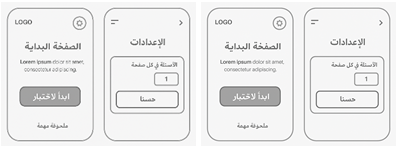
To ensure a seamless user experience aligned with both the theoretical framework (MBTI typology) and the contextual characteristics of Arab youth, the design phase of the “Shakhsiyti” mobile application was initiated with the creation of a wireframe that served as a visual and structural prototype of the mobile interface.
The wireframe presented in Fig. 1 reflects a cognitive scaffolding approach consistent with constructivist learning theory and the cognitive load theory. Each screen was deliberately simplified to minimize distractions and reduce extraneous mental effort, ensuring higher engagement through concise instructions and binary (either/or) response formats. This design strategy supports the gradual internalization of reflective concepts, while maintaining emotional clarity and user autonomy—principles aligned with both Self-Determination Theory and educational UX heuristics for adolescent populations.
While the MBTI framework is not validated for clinical diagnostics, its adaptation in this study serves a reflective and developmental purpose. The translated items underwent expert review and pilot testing for clarity and cultural resonance, ensuring face validity within the target population.
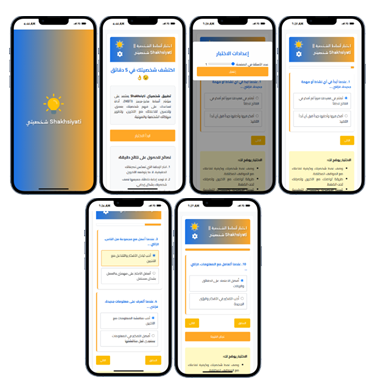
The “Shakhsiyti” mobile application was developed to ensure compatibility with low-resource environments and offline use. The interface adheres to User-Centered Design (UCD) principles and supports right-to-left (RTL) Arabic language presentation. The design is minimalist, displaying one to five questions per screen to reduce cognitive load, with progress bars to indicate user advancement. Visual and textual elements were localized to reflect culturally familiar terminology and layouts for Arab youth, ensuring higher engagement and comprehension, see Fig. 2.
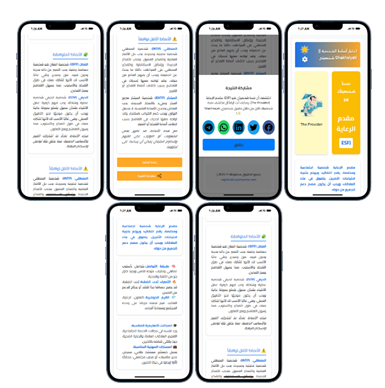
The built-in logic determined personality types based on accumulated preferences across MBTI dichotomies, visualized using type-specific icons and textual summaries. As shown in Fig. 3, Result screens presented localized Arabic descriptions, culturally relevant communication styles, and practical guidance for education and career planning. This interactive feedback model, embedded in the app, likely contributed to the high satisfaction ratings and the short completion time. The application’s responsiveness and real-time feedback further reinforced user engagement, especially among post-secondary participants.
A quantitative descriptive design was employed using user-centered interaction analytics. A structured Arabic-language satisfaction questionnaire was developed to evaluate the impact and usability of a mobile MBTI application for adolescents. Furthermore, modern UX evaluation approaches were integrated, emphasizing naturalistic interaction data and perceived value assessments.
The selection of Gaza-based youth was intentional due to the unique sociopolitical context and the lack of psychological support systems. This makes the population ideal for studying the impact of self-guided mobile tools under infrastructural constraints.
The evaluation questionnaire comprised two sections: demographic information (age, gender, education level) and user satisfaction metrics. The latter was adapted from the System Usability Scale (SUS) and enriched with selected items from the User Engagement Scale (UES) , covering four core dimensions: ease of use, clarity, perceived self-understanding, and engagement. Each item was rated on a 5-point Likert scale. These dimensions provided a comprehensive structure to assess the mobile application’s overall usability and perceived impact on users.
The original English survey was professionally translated into Modern Standard Arabic using Brislin’s back-translation method . Content was validated by local experts in educational psychology and Arabic linguistics.
The reliability of the user satisfaction questionnaire was assessed using Cronbach’s alpha (α) to determine internal consistency across the four key conceptual dimensions evaluated in the study. These dimensions included Ease of Use, Design Attractiveness, Engagement and Interactivity, and Perceived Personal Value.
As shown in Table 1, all variable exceeded the commonly accepted threshold of α ≥ 0.70, indicating strong internal consistency and acceptable reliability levels . The ease of use scale yielded the highest alpha coefficient (α = .89), followed closely by Design Attractiveness (α = .86). Both Engagement and Perceived Value also demonstrated satisfactory reliability levels (α = .83 and α = .78, respectively).
| Variable | Number of Items | Cronbach’s α |
| Ease of Use | 6 | .890 |
| Design Attractiveness | 5 | .861 |
| Engagement and Interactivity | 5 | .832 |
| Perceived Personal Value | 4 | .784 |
| Overall Instrument | 20 | .880 |
The instrument overall demonstrated a high degree of internal reliability, with a composite Cronbach’s alpha of 0.88, confirming the coherence and stability of the items used to evaluate user satisfaction in the target population . This naturalistic evaluation approach aligns with regional models of mobile technology adoption in higher education, where user acceptance is influenced by context-aware, language-specific, and infrastructure-sensitive design .
Each participant accessed the app individually and completed the MBTI journey in one or two sessions. Following completion, the questionnaire with no personal identifiers were collected beyond demographics. All analysis conducted using IBM SPSS v22 that include the following tests and technique:
Low-fidelity wireframes
Interactive click-through mockups
Functional beta with live analytics
Descriptive statistics: mean, standard deviation, frequencies.
Inferential: ANOVA and t-tests to detect satisfaction differences across age, gender, and education.
Correlation: between time spent and satisfaction.
Distribution of MBTI types.
Results And Findings
The final sample consisted of 417 participants aged between 15 and 24 years (M = 16.3; SD = 1.8). As shown in Table 2, gender distribution was nearly even, with 52% female and 48% male. In terms of educational background, 54% of participants were enrolled in high school, while 46% were pursuing post-secondary education, including diploma and undergraduate university programs.
These figures reflect the application’s intended target group—older adolescents and young adults—positioned at a formative stage of identity development and psychological self-reflection. The distribution further supports the study's objective to assess mobile self-awareness tools across a range of youth educational contexts.
| Variable | Mean | SD | Min | Max |
| Age (years) | 15.96 | 1.99 | 13 | 19 |
| Satisfaction Score | 4.12 | 0.58 | 2.5 | 5.0 |
| Time Spent (minutes) | 3.6 | 0.8 | 2.0 | 5.0 |
Satisfaction with the “Shakhsiyti” application was consistently high, with a mean rating of 4.12 out of 5 (SD = 0.58). Due to the offline nature of the application, necessitated by local infrastructure limitations, completion time was self-reported via the evaluation questionnaire rather than automatically logged. Participants were asked to estimate the duration required to complete the 20-item MBTI short-form assessment.
Results showed that 82% of participants completed the 20-item assessment within 3 to 5 minutes, with a mean self-reported duration of 3.6 minutes (SD = 0.8). This completion time is consistent with the test's lightweight design and binary-choice format, which reduced cognitive load and decision latency. Several participants attributed the speed to the clarity of language and contextual relevance of the items, which made the process intuitive and streamlined.
Although self-reported durations are subject to recall bias , this metric still provides useful insight into user-perceived cognitive load and fluency. The short completion time likely contributed to the overall high satisfaction scores observed across all evaluation dimensions. The high levels of reported satisfaction mirror similar findings in prior work on mobile learning acceptance in the Palestinian HEI context, where users placed significant value on usability, language clarity, and contextual relevance .
Table 3 illustrates the distribution of MBTI personality types among the 417 Arabic-speaking youth who completed the assessment. The most common type was ENTP (n = 32; 7.7%), followed by INFP (7.0%), ENFP (6.7%), and ISFJ (6.5%). Together, these four types accounted for nearly 28% of the sample, highlighting a trend toward Intuitive (N) and Feeling (F) dimensions among participants. These findings are consistent with localized patterns observed in previous mobile-based studies among Arab students, which suggest a preference for introspective and intuitive tools in environments with limited access to guided counseling .
Overall, Intuition-based types (N) were more prevalent than Sensing types (S), representing approximately 51% of the sample, while Feeling-oriented types (F) outnumbered Thinking types (T) by a margin of 5.5%. This trend aligns with prior literature suggesting that adolescents often gravitate toward N and F preferences, reflecting a developmental focus on identity, idealism, and emotional processing.
Notably, types associated with structured, assertive profiles—such as ESTJ (2.6%) and ENTJ (3.8%)—were among the least frequent. This supports findings that youth may be less inclined toward task-oriented, hierarchical roles, especially in sociocultural contexts that value relational and reflective interactions.
These results suggest that the “Shakhsiyti” application effectively captured a realistic and theoretically grounded distribution of personality types, affirming its cultural and developmental relevance for Arab youth.
MBTI Distribution
| MBTI Type | Count (n) | Percentage (%) |
| ENTP | 32 | 7.7% |
| INFP | 29 | 7.0% |
| ENFP | 28 | 6.7% |
| ISFJ | 27 | 6.5% |
| ISTJ | 24 | 5.8% |
| INTJ | 22 | 5.3% |
| ESFJ | 21 | 5.0% |
| INFJ | 20 | 4.8% |
| ESTP | 20 | 4.8% |
| ISFP | 19 | 4.6% |
| INTP | 18 | 4.3% |
| ISTP | 18 | 4.3% |
| ESFP | 17 | 4.1% |
| ENTJ | 16 | 3.8% |
| ENFJ | 15 | 3.6% |
| ESTJ | 11 | 2.6% |
Correlational Analysis
A moderate positive correlation (r = 0.41) was found between time spent in-app and satisfaction score, suggesting that users who spent more time exploring the application features—such as interactive feedback, personalized insights, and localized UI—were more satisfied (p < 0.001). No significant gender differences were observed in satisfaction (t(415) = 0.87, p = 0.38), indicating that the application’s linguistic tone and gender-neutral design resonated equally across users.
| Education Level | Mean Satisfaction Score | SD |
| High School | 4.05 | 0.62 |
| Diploma | 4.17 | 0.55 |
| University (Bachelor) | 4.25 | 0.49 |
However, as shown in Table 4, a one-way ANOVA revealed significant differences in satisfaction across educational levels (F(2, 414) = 4.23, p = 0.015). Post-hoc comparisons (Tukey HSD) indicated that university students reported the highest satisfaction (M = 4.25, SD = 0.49), followed by diploma students (M = 4.17, SD = 0.55), while high school students showed lower scores (M = 4.05, SD = 0.62). This trend may reflect how users with higher academic exposure found greater relevance in the application’s reflective structure, goal-oriented feedback, and alignment with digital self-development frameworks. These findings underscore the importance of adapting MBTI-based tools to accommodate users’ cognitive maturity and digital expectations—particularly in mobile environments serving diverse educational profiles.
In addition to quantitative feedback, open-ended user comments revealed valuable insights into the application’s emotional and interpersonal impact. Participants expressed appreciation for the humanized tone of the interface, with remarks such as “I liked how it talks to me like a person, not a quiz”. Others highlighted the depth of self-reflection enabled by the tool, stating “I understood more about myself than I did in school”. The app also stimulated peer engagement and social sharing, as shown by a comment: “I shared my result with my cousin, and she wanted the app too”.
These themes reflect findings in prior research that link MBTI-based tools to identity exploration and digital peer connection among youth , reinforcing the social relevance and motivational potential of personalized self-assessment platforms in mobile learning environments. Moreover, prior studies have emphasized that culturally appropriate feedback mechanisms in mobile tools—especially those that respect collectivist values and educational structure—are key to psychological adoption . Similar challenges were noted in cloud-based platforms in Palestinian industries, where usability and infrastructure must be tightly aligned with contextual limitations .
Conclusion
Quantitatively, this study designed, developed, and empirically evaluated an Arabic-language mobile application based on the MBTI framework, targeting youth aged 15–24 in the Gaza Strip. By integrating user-centered design (UCD) principles with culturally localized content and RTL-compatible interfaces, the “Shakhsiyti” mobile application successfully provided an accessible, reflective, and engaging digital tool for self-awareness and personality insight among Arabic-speaking youth living in conflict-affected environments.
While the present study was conducted exclusively within the Gaza Strip—an area characterized by unique geopolitical, infrastructural, and psychosocial conditions—it provides culturally grounded insights relevant to Arabic-speaking youth more broadly. The application’s design incorporated universal principles of Arabic language usability, right-to-left (RTL) interface conventions, and culturally familiar metaphors, which are likely to resonate across other Arab regions. Nevertheless, contextual variations in access to digital tools, education systems, and social norms necessitate caution in generalizing the findings. Future studies should replicate this research across diverse Arabic-speaking populations to confirm cross-contextual applicability and to refine localization strategies accordingly. Thus, the results may be viewed as contextually transferable but not universally generalizable.
Quantitative findings demonstrated strong user satisfaction, with an overall average exceeding 4.12/5, and the most frequent personality types being ENTP (7.7%), INFP (7.0%), and ENFP (6.7%)—consistent with international youth MBTI trends. The dominance of intuitive (N) and feeling (F) profiles aligns with developmental theories emphasizing emotional exploration and identity formation in young people. Qualitative feedback further reinforced the application’s emotional resonance and peer-sharing potential, with participants expressing a sense of connection, personal relevance, and eagerness to share results within their social circles.
As a culturally tailored mobile platform that blends psychological theory, intuitive UX, and Arabic linguistic relevance, this app contributes meaningfully to the growing domain of digital personality assessment for non-Western users. Its success demonstrates the feasibility and importance of localized self-development tools that respect linguistic, cognitive, and cultural dimensions.
Future iterations should also build upon mobile usability frameworks validated in regional mobile contexts, ensuring that Arabic-speaking youth are equipped not only with reflective tools but also with culturally safe digital environments. This is particularly relevant in post-conflict education settings where psychological tools need to be adaptive and accessible offline.
Future development of the application should maintain its dual-mode flexibility—offering both a concise “Quick Personality Insight” experience and a more in-depth “Advanced Personality Profiler” mode—tailored to users’ time and reflection preferences. On both individual and group levels, the tool can support youth development, academic advising, and community-based mentoring, especially when connected with adaptive feedback systems and educational integration. Policymakers and curriculum designers in Arab education systems are encouraged to incorporate such tools into youth counseling programs, providing students with culturally resonant frameworks for identity formation and peer connection.
Funding
This research did not receive any specific grant from funding agencies in the public, commercial, or not-for-profit sectors.
References
- A. Furnham, „Myers-briggs type indicator(MBTI),“ in Encyclopedia of Personality and Individual Differences, Springer International Publishing, 2020, p. 3059–3062. DOI: 10.1007/978-3-319-24612-3_50
- Myers Briggs Foundation, „Scientific Validity of Personality Assessments: Why is it important?,“ 2025. [Online]. Available: DOI: 10.52340/spectri.2025.11.01.06
- I. Veiga, "Transistórias: how a critical and speculative perspective contributes to rethink sustainability education in product design," Interaction Design & Architecture(s) Journal, vol. 51, pp. 52-80, 2021. DOI: 10.55612/s-5002-051-003
- S. Alhejji, A. Albesher, H. Wahsheh und A. Albarrak, „Evaluating and comparing the usability of mobile banking applications in saudi arabia,“ Information, Bd. 13, Nr. 12, 2022. DOI: 10.3390/info13120559
- A. Al-Sa'di, D. Parry und P. D. Carter, „User interface preferences of young Jordanians using tablet devices,“ International Journal of Technology Enhanced Learning (IJTEL), Bd. 10, Nr. 3, 2018. DOI: 10.1504/ijtel.2018.092703
- UNDP, " DOI: 10.18356/9789210019293c002
- B. Shneiderman, C. Plaisant, M. Cohen, S. Jacobs, N. Elmqvist und N. Diakopoulos, Designing the User Interface: Strategies for effective human-computer interaction, Bd. Sixth edition, Pearson Education (US), 2017. DOI: 10.1080/10447310903187949
- C. Kramsch, „Culture in foreign language teaching,“ Iranian Journal of Language Teaching Research, Bd. 1, Nr. 1, pp. 57-78, 2013. DOI: 10.2307/j.ctv62hgw3.4
- H. L. O'Brien und E. Toms, „The development and evaluation of a survey to measure user engagement,“ Journal of the American Society for Information Science and Technology, Bd. 61, Nr. 1, p. 50–69, 2010. DOI: 10.1002/asi.21229
- I. B. Myers, M. H. McCaulley, N. L. Quenk und A. L. Hammer, The MBTI Manual: A Guide to the Development and Use of the Myers-Briggs Type Indicator, Palo Alto: Consulting Psychologists Press, 1998. DOI: 10.1525/jung.1.1981.2.3.18
- B. A. S. Dajani, M. K. A. Zulkepli und M. Z. A. Hamid, „The Impact of Mobile Applications on Arabic Language Acquisition: A Pedagogical Perspective,“ International Journal of Research and Innovation in Social Science, Bd. 8, Nr. 8, pp. 4443-4451, 2024. DOI: 10.47772/ijriss.2024.8080340
- D. J. Pittenger, „Cautionary comments regarding the myers-briggs type indicator,“ Consulting Psychology Journal: Practice and Research, Bd. 57, Nr. 3, p. 210–221, 2005. DOI: 10.1037/1065-9293.57.3.210
- UNDESA, „World Youth Report,“ 2023. [Online]. Available: DOI: 10.18356/66b5c30f-en
- WHO, „Adolescent and young adult health,“ 2024. [Online]. Available: DOI: 10.1016/j.jadohealth.2024.07.024
- D. Goleman, Social intelligence: The new science of human relationships, New York, NY: Bantam Books, 2007, p. 416. DOI: 10.1080/00223890701468667
- C. Sebastian, S. Burnett und S.-J. Blakemore, „Development of the self-concept during adolescence,“ Trends in Cognitive Sciences, Bd. 12, Nr. 11, p. 441–446, 2008. DOI: 10.1016/j.tics.2008.07.008
- A. Al-Azawei, F. Serenelli und K. Lundqvist, „Universal Design for Learning (UDL): A Content Analysis of Peer-Reviewed Journal Papers from 2012 to 2015.,“ Bd. 16, Nr. 3, pp. 39-56, 2016. DOI: 10.14434/josotl.v16i3.19295
- Q. I. Almeqdad, A. M. Alodat, M. F. Alquraan, M. A. Mohaidat und A. K. Al-Makhzoomy, „The effectiveness of universal design for learning: A systematic review of the literature and meta-analysis. Cogent Education,“ Bd. 10, Nr. 1, 2023. DOI: 10.1080/2331186x.2023.2218191
- B. M. A. B., M. D. C. Pérez-Fuentes, M. D. M. Molero Jurado, Á. Martos Martínez, M. D. M. S. M. Simón Márquez und J. J. Gázquez Linares, „Emotional intelligence and academic engagement in adolescents: The mediating role of self-esteem,“ Psychology Research and Behavior Management, Bd. 14, p. 307–316, 2021. DOI: 10.2147/prbm.s302697
- K. Medjedel, „Personality types and l2 reading: Correlation between university students mbti profiles and reading proficiency,“ Technium Social Sciences Journal, Bd. 25, p. 429–446, 2021. DOI: 10.47577/tssj.v25i1.5059
- T. Puspa Rinjeni, N. Aini Rakhmawati und R. Nadlifatin, „Design of academic gamification model based on myers-briggs type indicator (MBTI) through pre-experimental design,“ Journal of Information Technology Education: Research, Bd. 23, 2024. DOI: 10.28945/5314
- A. E. Ibisu, „Development of a gamification model for personalized e-learning (No. arXiv:2404.15301). arXiv.,“ 2024. [Online]. Available: DOI: 10.5194/gmd-2018-33-ac4
- N. A. Amer, S. M. Shohieb, W. Eladrosy, S. N. Y. Liu und S. Abdelrazek, „A gamified cognitive behavioral therapy for Arabs to reduce symptoms of depression and anxiety: A case study research,“ Digital Health, Bd. 10, 2024. DOI: 10.1177/20552076241263317
- L. Meegahapola, W. Droz, P. Kun, A. d. Gotzen, C. Nutakki, S. Diwakar, S. R. Correa, D. Song und H. Xu, „Generalization and Personalization of Mobile Sensing-Based Mood Inference Models: An Analysis of College Students in Eight Countries,“ Computer Science: Human-Computer Interaction, 2022. DOI: 10.1145/3569483
- A. Omar, „An Evaluation of the Localization Quality of the Arabic Versions of Learning Management Systems,“ International Journal of Advanced Computer Science and Applications, Bd. 12, Nr. 2, 2021. DOI: 10.14569/ijacsa.2021.0120256
- D. Yahiaoui, S. F. Nakhle und E. Farndale, „Culture and performance appraisal in multinational enterprises: Implementing French headquarters' practices in Middle East and North Africa subsidiaries,“ Human Resource Management, Bd. 60, Nr. 5, p. 771–785, 2021. DOI: 10.1002/hrm.22063
- M. Nunes, A. Oliveira und F. Fidalgo, „Gamification and emotional intelligence: Development of a digital application for children,“ Education Sciences, Bd. 15, Nr. 4, 2025. DOI: 10.3390/educsci15040453
- S. D’Mello und A. Graesser, „Feeling, thinking, and computing with affectaware learning technologies,“ in The Oxford handbook of affective computing, Oxford University, 2015, p. 419–434. DOI: 10.1093/oxfordhb/9780199942237.013.032
- International Organization for Standardization, „ISO 9241-210:2019 Ergonomics of human-system interaction — Human-centred design for interactive systems,“ Geneva, Switzerland: ISO, 2019. [Online]. Available: DOI: 10.3403/30464855u
- OCHA, „Hostilities in the Gaza Strip and Israel: Flash Update #163,“ 2024. [Online]. Available: DOI: 10.4324/9781032645797-2
- R. M. Ryan und E. L. Deci, „Self-determination theory and the facilitation of intrinsic motivation, social development, and well-being,“ American Psychologist, Bd. 55, Nr. 1, p. 68–78, 2000. DOI: 10.1037//0003-066x.55.1.68
- J. S. Bruner, The Culture of Education, Harvard University Press, 1996. DOI: 10.4159/9780674251083
- F. Paas, T. van Gog und J. Sweller, „Understanding cognitive load in digital and online learning: A new perspective on extraneous cognitive load,“ Educational Psychology Review, Bd. 34, p. 171–196, 2022. DOI: 10.1007/s10648-021-09624-7
- J. Sweller, P. Ayres und S. Kalyuga, Cognitive Load Theory, Springer, 2011, p. 274. DOI: 10.1007/978-1-4419-8126-4
- J. Brooke, „SUS: A “quick and dirty” usability scale,“ in Usability Evaluation in Industry, Taylor & Francis, 1996, p. 189–194. DOI: 10.1201/9781498710411-35
- J. Sauro und J. R. Lewis, Quantifying the User Experience: Practical Statistics for User Research, Bd. 2nd, Morgan Kaufmann, 2016. DOI: 10.1016/b978-0-12-802308-2.00002-3
- R. W. Brislin, „Back-translation for cross-cultural research,“ Journal of Cross-Cultural Psychology, Bd. 1, Nr. 3, p. 185–216, 1970. DOI: 10.1177/135910457000100301
- J. C. Nunnally und I. H. Bernstein, Psychometric theory, Bd. 3rd, McGraw-Hill, 1994. DOI: 10.1177/014662169501900308
- B. Pallant, SPSS Survival Manual: A Step by Step Guide to Data Analysis Using IBM SPSS, Bd. 7th, London: Routledge, 2020. DOI: 10.4324/9781003117452
- J. F. Hair, W. C. Black, B. J. Babin und R. E. Anderson, Multivariate data analysis, Bd. 7th, Pearson Prentice Hall, 2009, p. 816. DOI: 10.1007/978-3-030-06031-2_16
- N. S. Alzaza, „Opportunities for utilizing mobile learning services in the Palestinian higher education,“ International Arab Journal of e-Technology, Bd. 2, Nr. 4, p. 216–222, 2012. DOI: 10.12816/0012314
- N. S. Alzaza und Z. K. Al-Kayyali, „Net Benefits Quality Factors of Using Mobile Services from the Perspective of Students at Al-Quds Open University,“ UP journal for Research and Studies, Bd. 7, Nr. 1, p. 151–157, 2018. DOI: 10.21275/v5i2.nov161314
- R. Tourangeau, L. J. Rips und K. Rasinski, The psychology of survey response, Cambridge University Press, 2000. DOI: 10.1017/cbo9780511819322
- N. S. Alzaza, "Assessment of the Contingency Theory on Performance Mobile Learning in the Palestinian Higher Education Institutions during Coronavirus Pandemic: Moodle Case Study," International Journal of Novel Research in Engineering and Science (IJNRES), vol. 9, no. 1, p. 14–23, 2022. DOI: 10.4324/9781003264026-8
- A. E. Almabhouh und N. S. Alzaza, „Barriers for adoption of cloud computing in the Palestinian industries,“ European Journal of Computer Science and Information Technology, Bd. 3, Nr. 4, p. 43–57, 2015. DOI: 10.15520/ajcsit.v5i7.29